Plains & Rains in Spain

We are in North America right now, but there’s still a little catching up to do from the European tour. In the last post we were heading East in central Portugal…

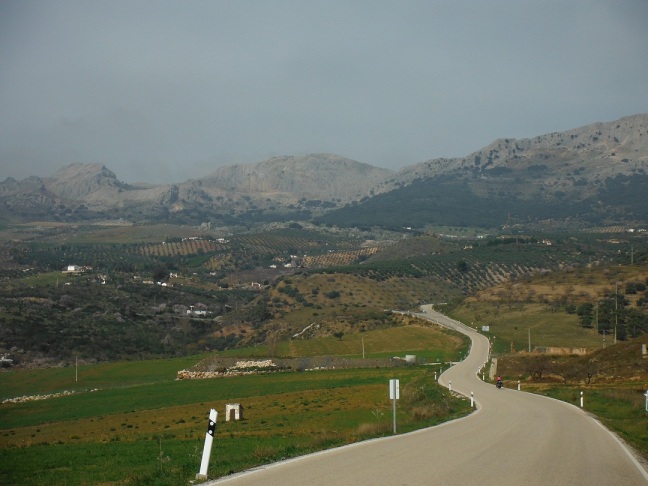
Back in Spain there were immediate cycling improvements, better surface, shoulder to ride in, kinder traffic. We were on roads that had previously been the main road, but were now secondary to the expensive newer auto pistes. The two ran almost completely parallel and there was hardly any traffic on either. On the high plains we could see for miles, mainly flat but occasionally snowy mountain tops were clear in the distance. 
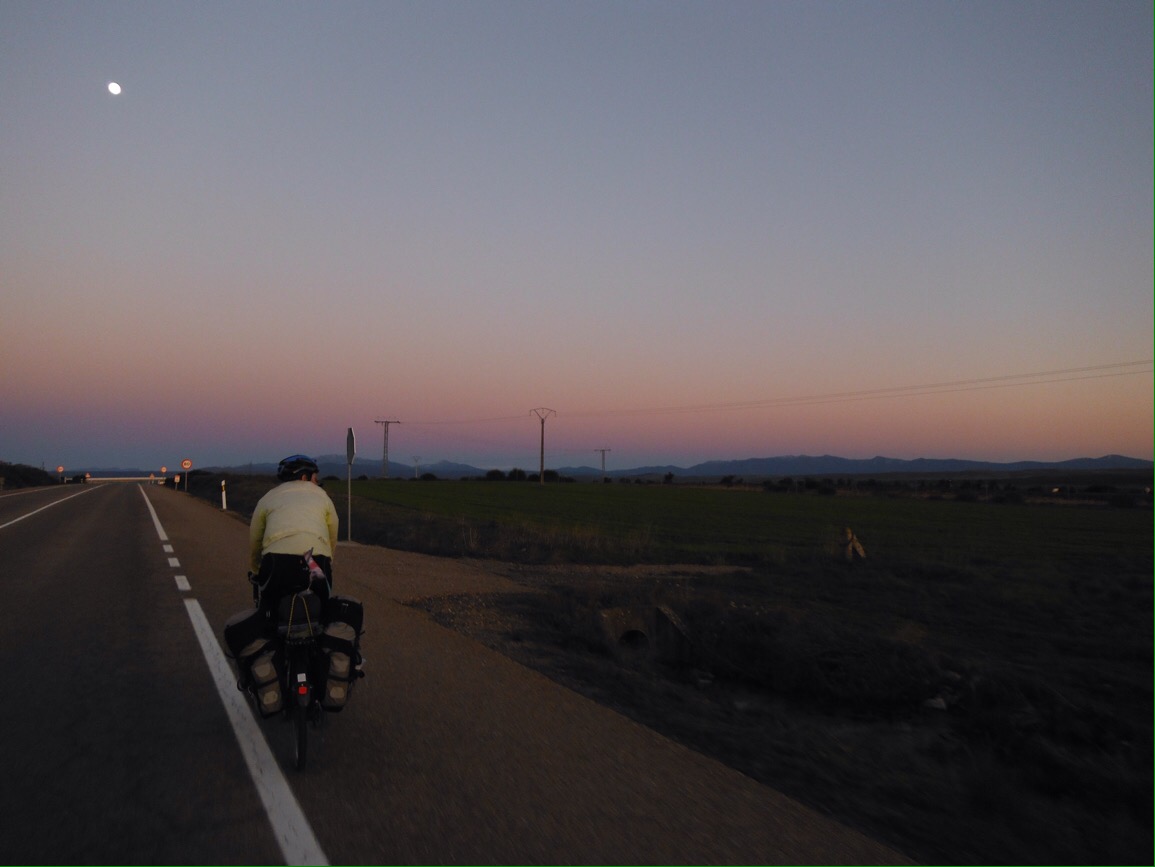
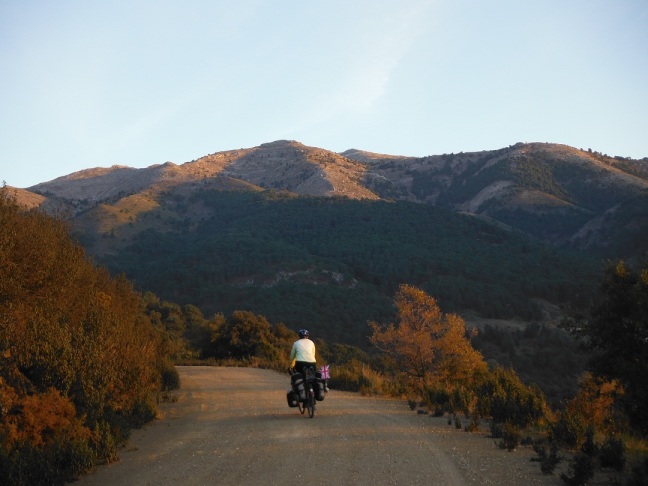
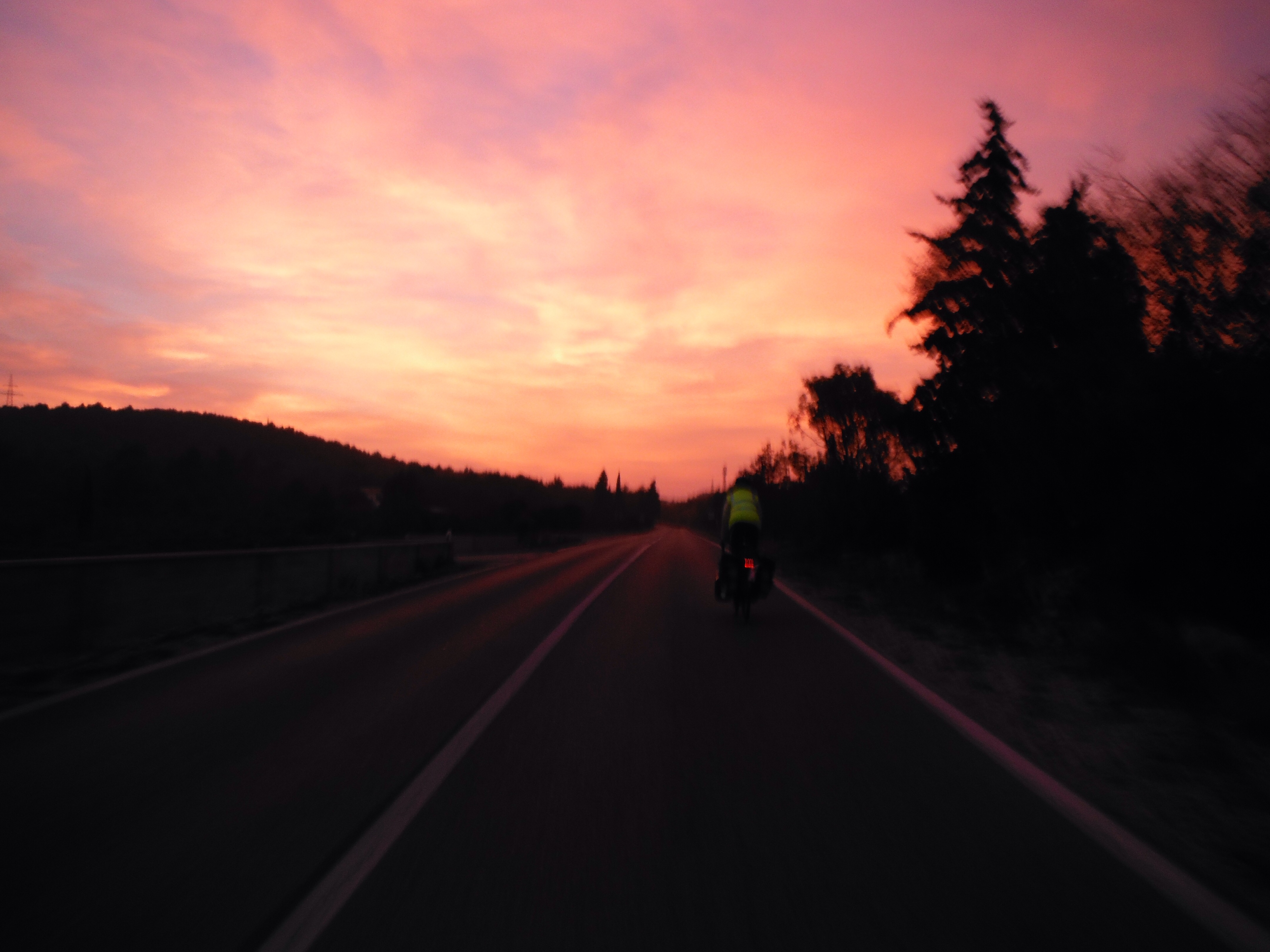
Sunset riding on an empty highway
 
The sun took ages to set, we had 360 degree orange, and arrived at the campsite in Ciudad Rodrigo in the dark. Unsurprisingly there were no other tents. The walled city looked magical lit up at night, a great back drop to our quickly-eat-before-it-gets-cold dinner. The campsite had a bar which steadily emptied as we were cooking. We went in for hot chocolate and saw the debris of a rip-roaring Saturday night. Napkins and cocktail sticks littered the floor. Some serious tapas had been eaten that evening.

After a painfully frosty tent pack up we rode up to the city and around some of the walls. The Parador (state-run hotels in Spain) was very impressive and had lots of suits of armour in. Back on the road to Salamanca the no traffic plainness continued. We entertained ourselves with classic road games, such as:

Which direction will the next car pass us in?

How many minutes/kms until the next field of cows?

How many cars will pass us before the village of some saints head?

When the excitement got too much we returned to naming songs by a group/artist until you can’t think of any more. 
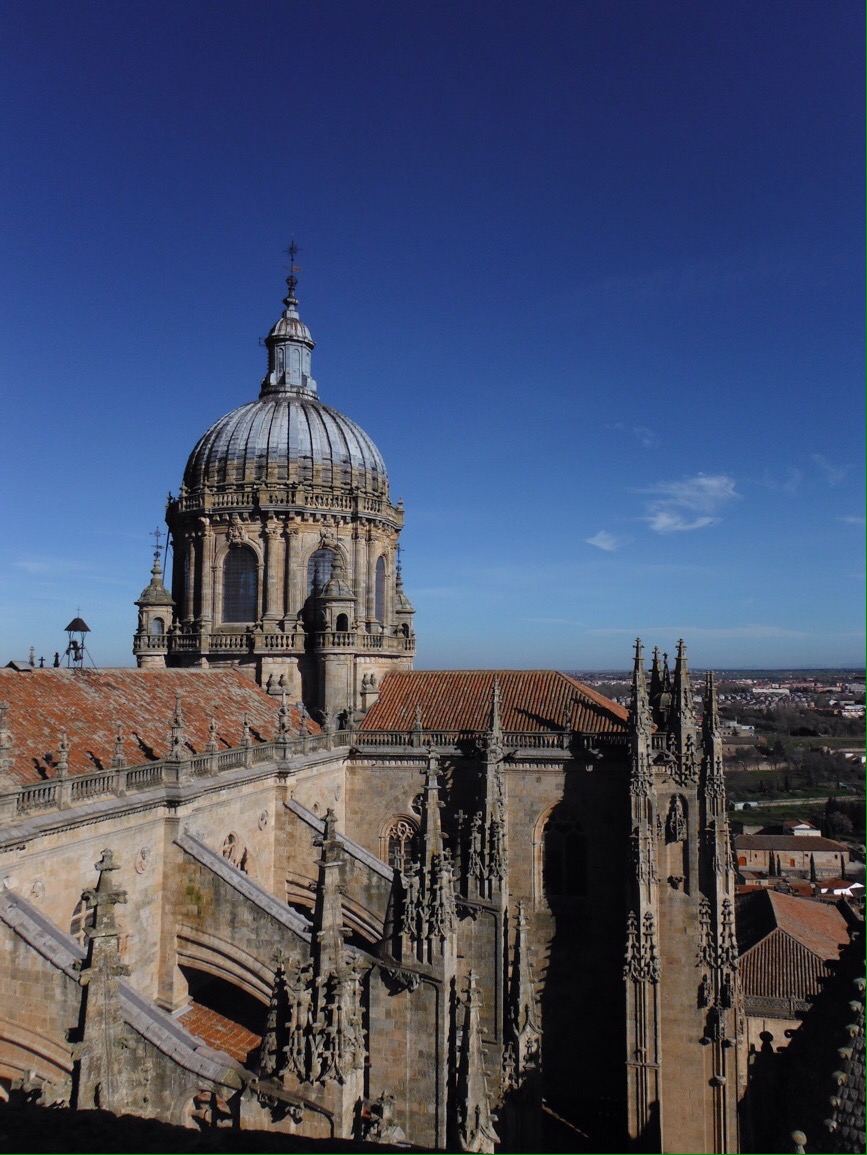
  

Visiting the cathedral included an outdoor walk up by the towers
  
 Fortunately when we finally saw Salamanca it looked awesome. Even from a distance it was clear there were plenty of impressive buildings. Most of the city centre was made of similar stone, sandy coloured and very well maintained. The Plaza Mejor was super-fancy – probably the most pleasing of all the squares we had seen. The city looked great by night and day, helped by blue skies and sunshine. Our amazing hosts Javier and Pedro showed us some great tapas places, and the mystery of the debris on the floor of the tame campsite bar was solved, this is what you do with your Pinchos litter. We also caught up with our Christmas presents via Catherine from New Zealand whose month studying in Salamanca coincided with our visit. 
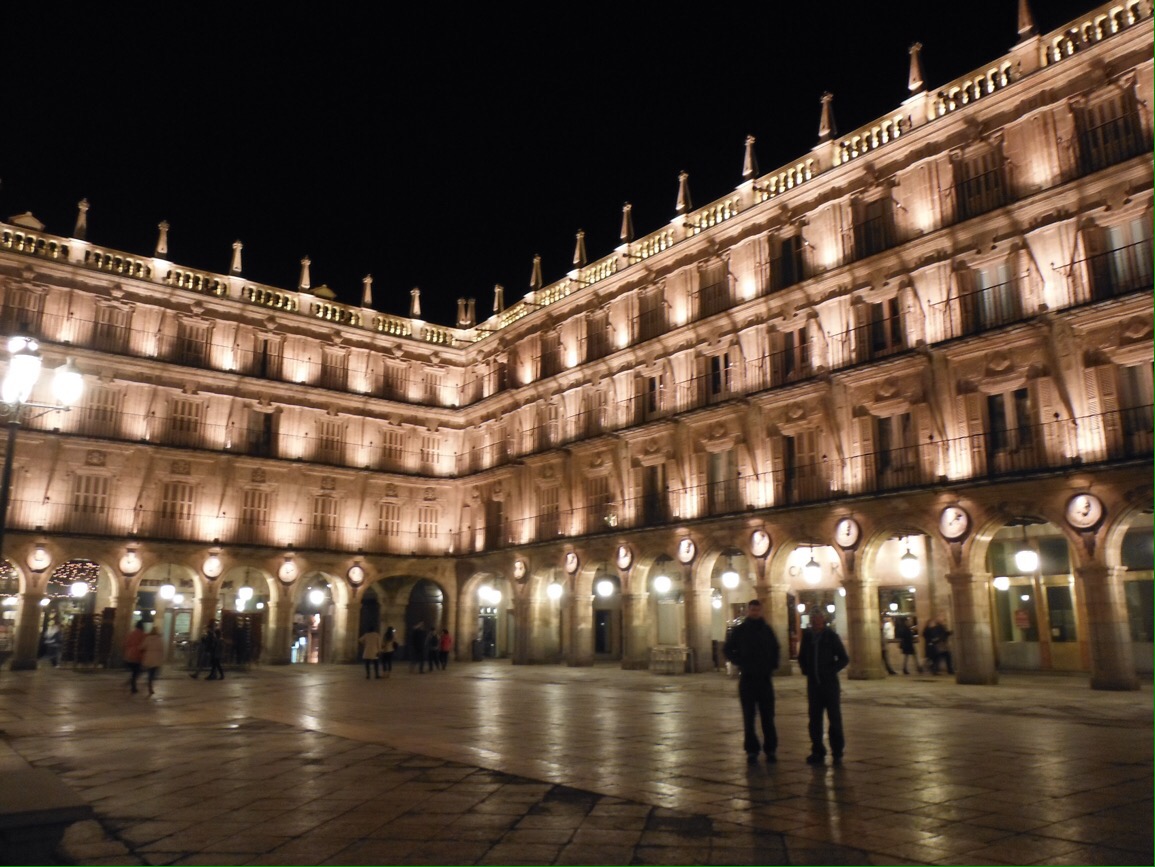
The best square of the trip?

Salamanca seemed a very liveable Spanish city. The downside is that it is still a long way from anywhere. This was particularly important for us as weather reports showed that cold was about to get colder and more unpleasant in every way. Snow storms were forecast for Northern Spain, with much snow above 300m in the region that separated us from the coast and our ferry home. As we were still over 800m with some passes to ride over before dropping down, it was time to get a shift on.
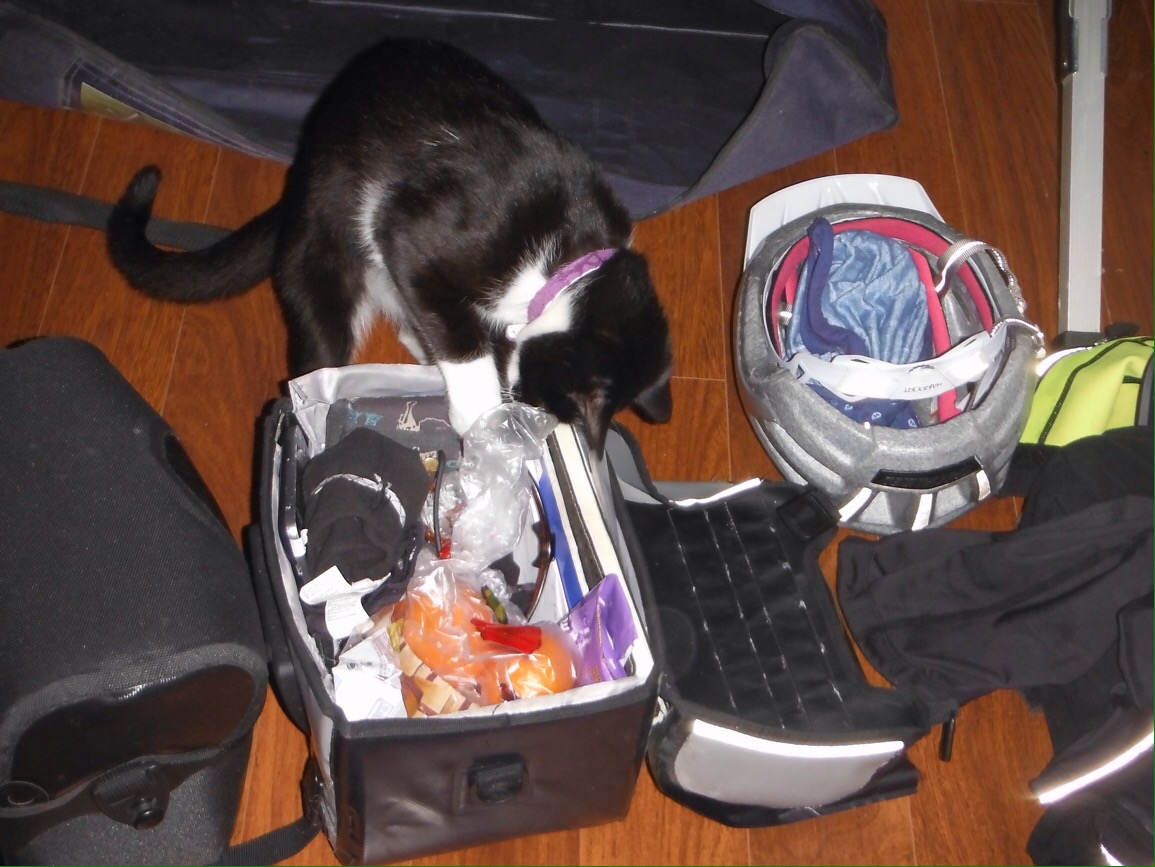
Inquisitive and adorable

For the first time in Spain the wind agreed and we rode the easiest fifty miles of the trip. We arrived in Medina del Campo in time to look at the castle and enjoy relaxing at Paco’s with two very cute cats. The weather was not to be our friend for long, the rain heavy and the wind strong. It was clear that to get to Bilbao safely we needed some help. Cutting out some of the distance with a fifty minute train journey gave us a 50km ride to the end of Bilbao’s commuter rail line. Unfortunately the 50km included a 500m+ climb and the most technical descent of the trip in rain and fog. Not far from Bilbao, the descent we did has been a climb in the Vuelta.
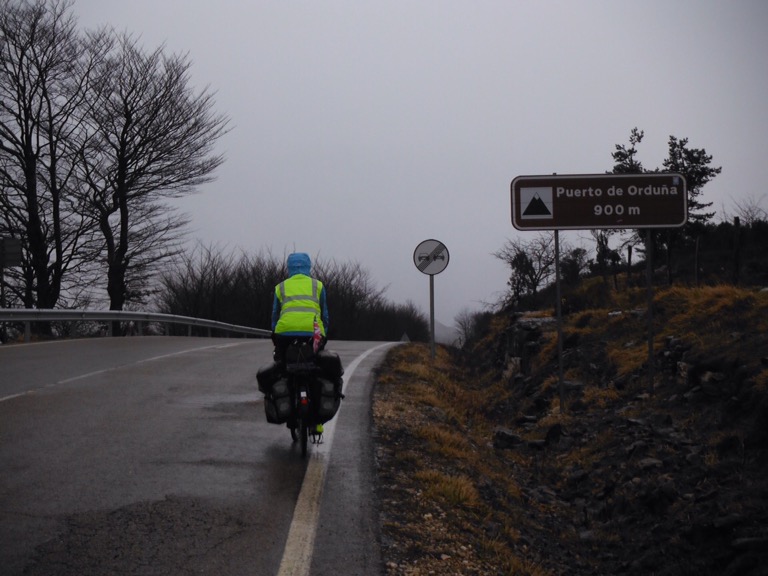
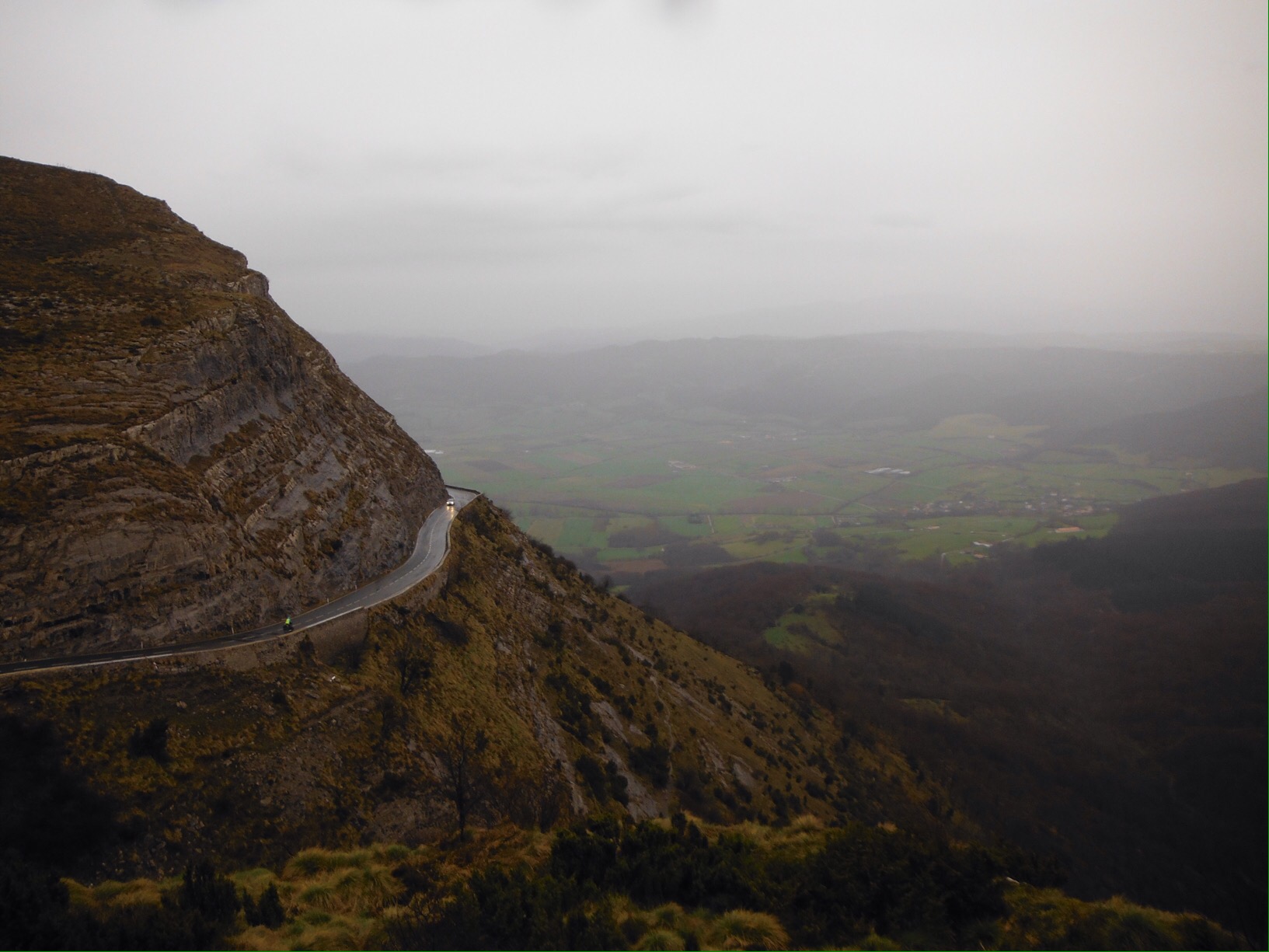
 

A dash up a pass in the rain
 
 
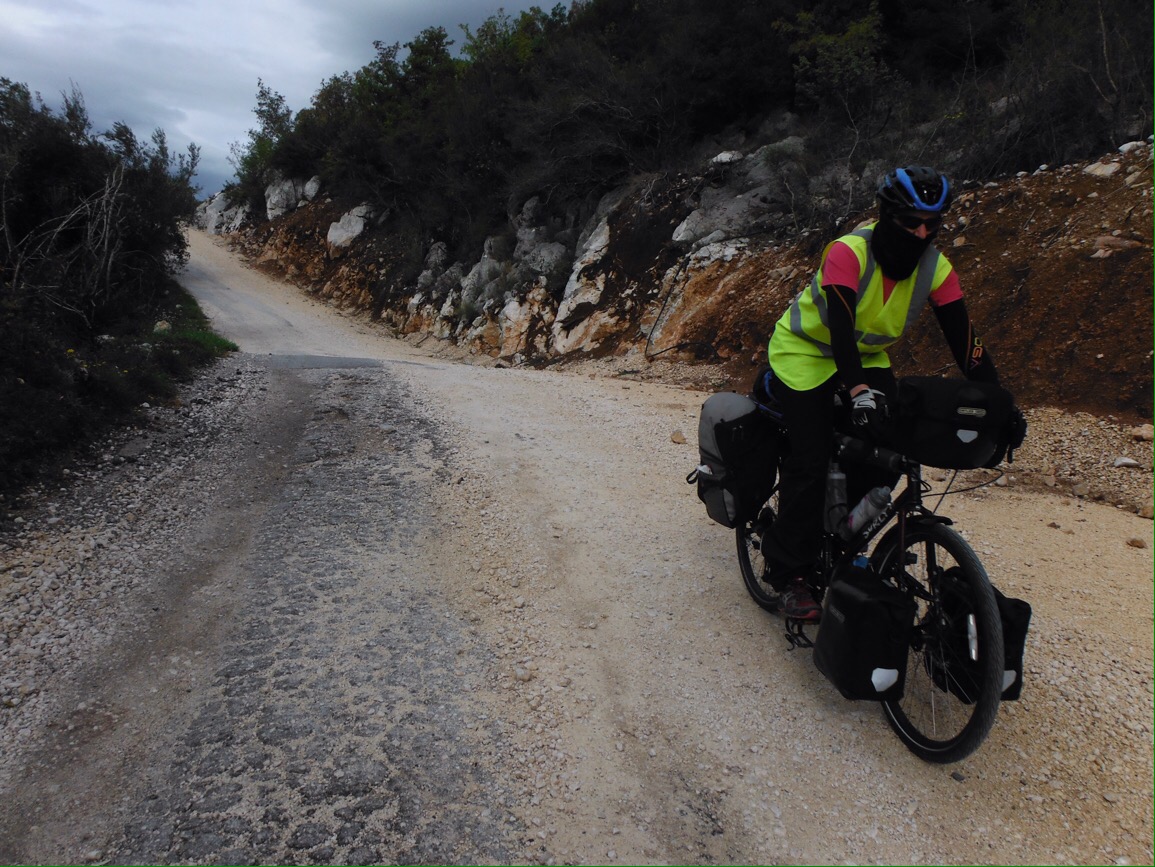
Spot the hi-vis jacket
  

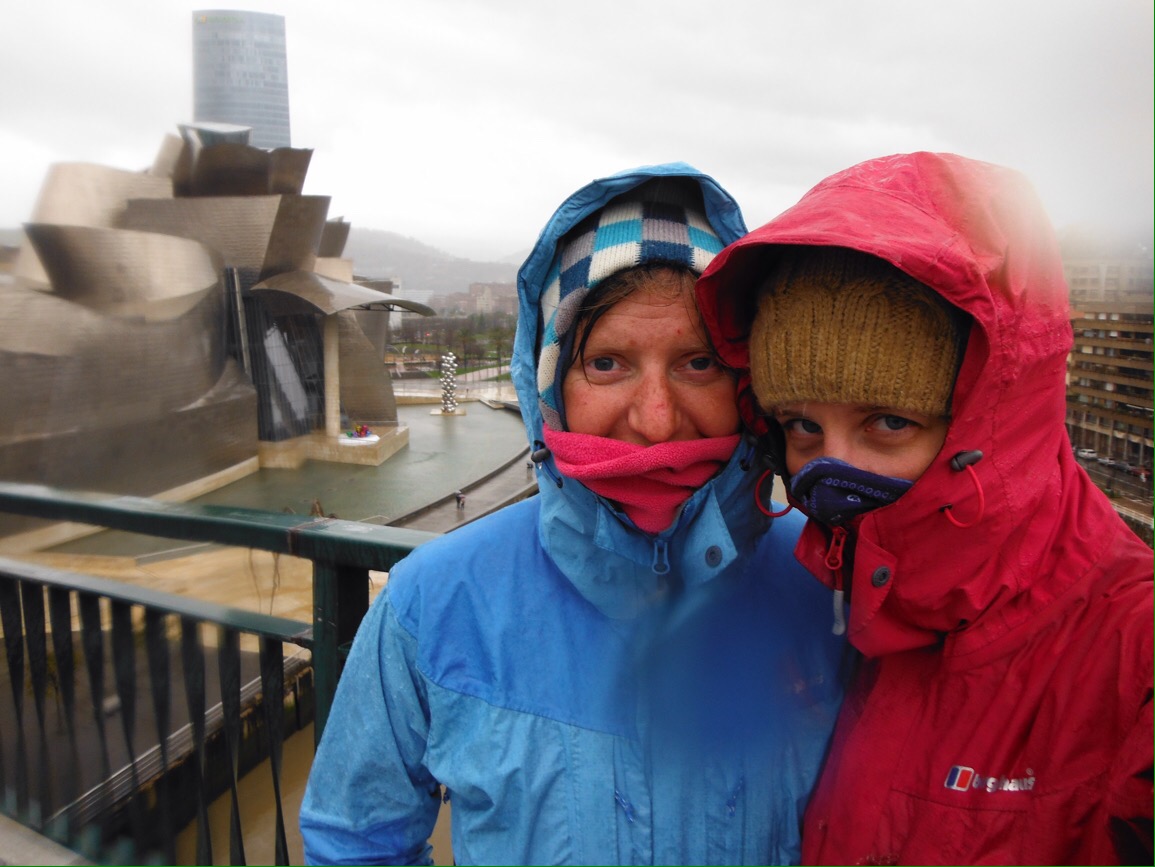
Never has a warm house been more welcome than that Friday night. The rain was relentless and continued until all weekend. Being stubborn we went for a soggy walk but the deluge made it difficult to enjoy the sights. Cycling to the ferry we experienced a very unique bridge. It had been included directions given to us by a local cyclist, who described it as ‘not usual’. Definitely not, but I won’t spoil the surprise if you haven’t been. The rain began again as we rode through the endless port area and we were very relieved when the ferry staff waved us straight onto the boat and out of the rain on Sunday afternoon.
  

I’m not sure I can fully explain the relief and relaxation of a long boat or train journey after a lot of moving around. You know exactly where you will sleep. You have packed yourself an excellent and extensive array of picnic food. You have books to read, and if you are lucky (we were) the ferry has board games so you can spend an entire day playing scrabble. If you are really lucky you can speak to people in your own language who think your cycling trip is really interesting (thanks Brits on tour). If your luck is at maximum you have some family who live close to the port at the end of your journey for food, sleep and great conversation (amazing stay in Hampshire). Home time!

Thanks for this ride to: Javi & Pedro, Paco, Raul, Rafa & family, Shelagh, Joss, Emma & Alex.

Tapas and tarts: Eating (and cycling) towards Portugal

Arriving in Granada meant that for the first time since arriving in Barcelona three weeks ago we had finally reached one of the places on our must-see list. Ever since seeing a picture of the mighty Alhambra palace in front of snow-topped mountains this was one place we wanted to work into the trip. We just hoped the gravel road trek across inland Andalucia was worth it….
DSCF0454
The Alhambra, with the Sierra Nevada mountain range as a backdrop

It was. Although taking a couple of days to rest in a city where the sun always shines and every time you order a beer it comes with a side of food was unlikely to disappoint. First up was a visit to the Alhambra itself, the 13th century walled complex/palace/castle/fortress that stands high above the city. The fort and old walls were cool to wander around, the palaces and gardens unbelievably intricate and fancy and being perched on top of a hill there were several different vantage points across the city. We were pleased we booked an early slot as by lunchtime the place was full of school trips and coach groups. Although early in the morning up close to 1000m above sea level it was pretty cold and so we were pleased to beat the queues for the hot chocolate machine.

Granada, being fairly close as the crow flies to Africa, has strong Moorish and Arabic influences and so is a nice place to see a different side of Spain. We’d also been told it was the best place to have tapas – although this is popular across the country, Granada bars have kept the tradition of serving free tapas dishes (small plates of food – bread, meat, olives etc) with every drink bought. On a sunny Saturday afternoon the cobbled streets were full of people spilling out of bars but we managed to squeeze into a few and have our own pub crawl Granada-style.

DSCF0486
Andalucian scenery – not bad to look at for a few days

DSCF0492

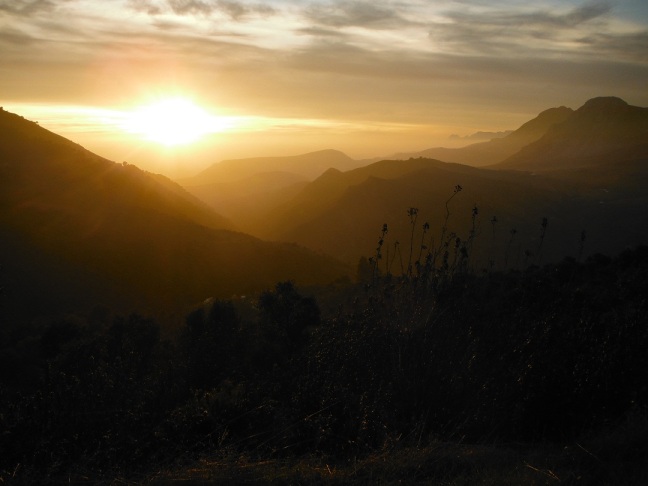
Back on the bikes we started pedalling towards Portugal, knowing that we were only a week or so away from a holiday on the Algarve. Plans to take in Gibraltar on the way were shelved in favour of the more direct inland route to Sevilla and the Portuguese border. There is some seriously hilly terrain in Andalucia and for a couple of days we rode either up or down steep hills – no sign of flat ground or even a slight incline. But as is always the case, these roads have the best scenery and we joined up small white-washed towns that the region is famous for. The first night after Granada we stayed in an empty lodge on the edge of a natural park, and in trying to take a short cut through the park to get there ended up riding a steep downhill gravel road for the last hour. The view across the park and down into the valley we were aiming for as the sun set was magical but the last 10km in the dark was not so fun.

DSCF0507
Sunset over Sierras de Tejeda

DSCF0509

The small inland towns and villages we were passing through could not have been more different to the coastal resorts that were only a 30 minute car ride away. We always stopped in one mid-morning for a break/toilet/50 cent coffee and even at this hour bars were full of men drinking coffee and spirits simultaneously. At one particularly memorable bar stop, an old guy was wobbling around at the bar drinking tequila trying to insist that I tried some – being an athlete in my prime this was not what my body needed for a hilly days ride but he was not taking no for an answer. He ended up spilling most of it on the floor which was a sad waste but probably the best outcome all round.

DSCF0538
Do you ever get bored of cycling? When the roads look like this… not so much

DSCF0561

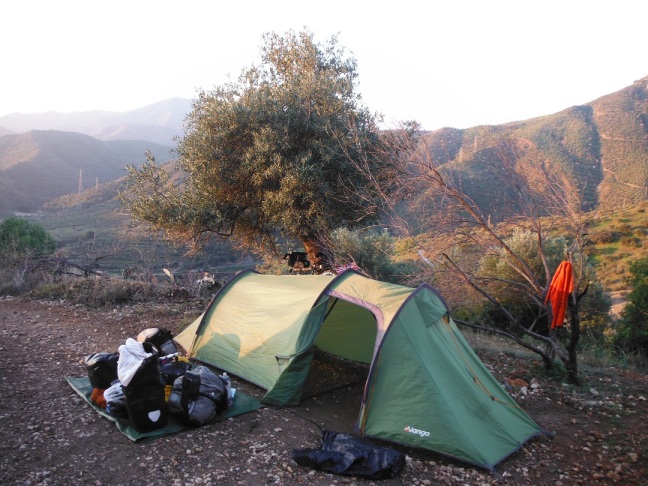
The sun continued to shine, and we camped at the dramatic El Chorro gorge but were so tired from riding up so many hills to get there (much more total climbing than the day we crossed the Alps) we had to take a day to rest. Lucky we did as mid-afternoon the next day the sky turned black and it rained and hailed for over an hour, so loud that all conversations inside stopped as it was impossible to hear. Our tent was at the bottom of a path that soon turned into a river, and our porch was the most direct way for the water to get to the other side. All we could do was watch from our undercover vantage point and cross our fingers that the tent would pass its first serious wet-weather test. Aside from the river running through the porch and trying to wash away everything we had left in there, all seemed ok. Waterproofing test, passed; decision-making regarding tent pitching position, requires improvement.

DSCF0570
El Chorro gorge

DSCF0579

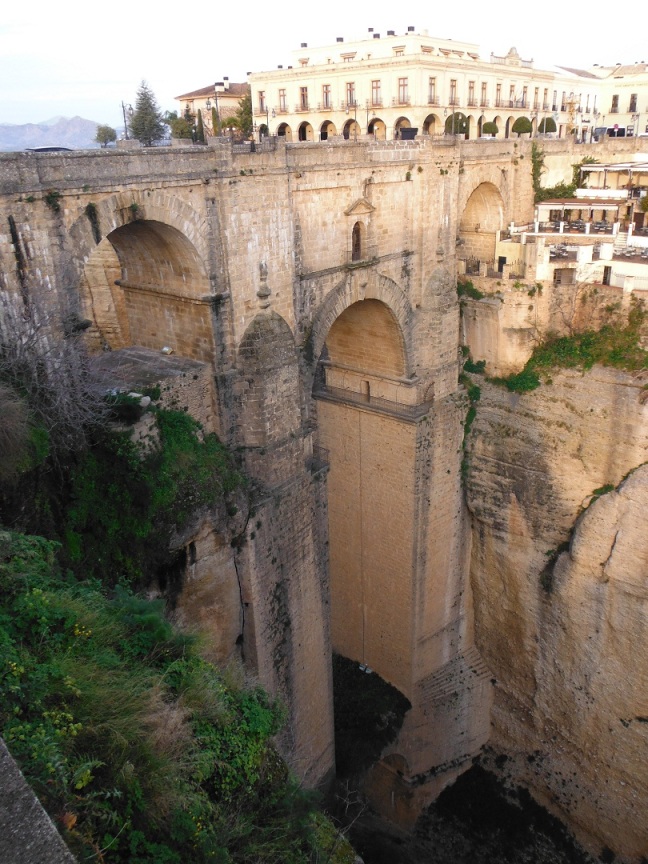
From El Chorro we climbed out of the gorge and over a few passes on our way to Sevilla. We called in to Ronda, balanced on the edge of a deep gorge, to admire the ridiculously impressive bridge and get my brakes fixed – the hills had taken their toll on the poor things.

DSCF0623
Ronda’s impressive Puente Nuevo
DSCF0640
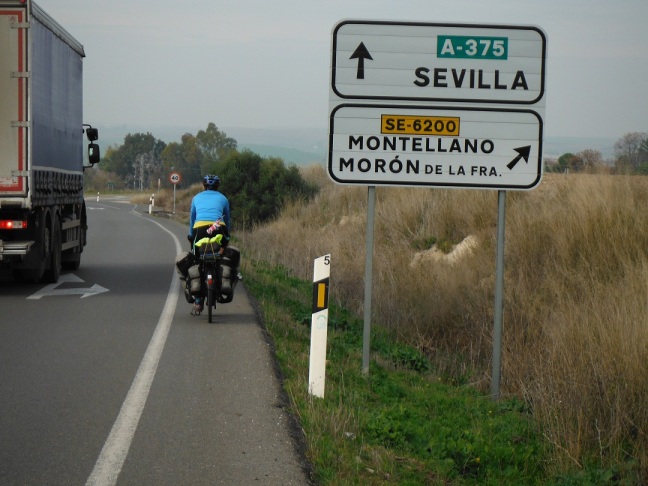
Sad that going to Sevilla meant that we would not be going to Moron…

Sevilla is another Andalucian gem, and for the first time in a while we arrived at our destination with a few hours of daylight left to explore. Fancy buildings lined the wide streets, as well as many bars claiming to serve ‘world famous’ churros – strips of fried dough served with hot chocolate to dip them in. Of course we sampled this excellent cycling fuel. Strangely there was also a Christmas market – very odd (and unsurprisingly deserted) at the end of January.

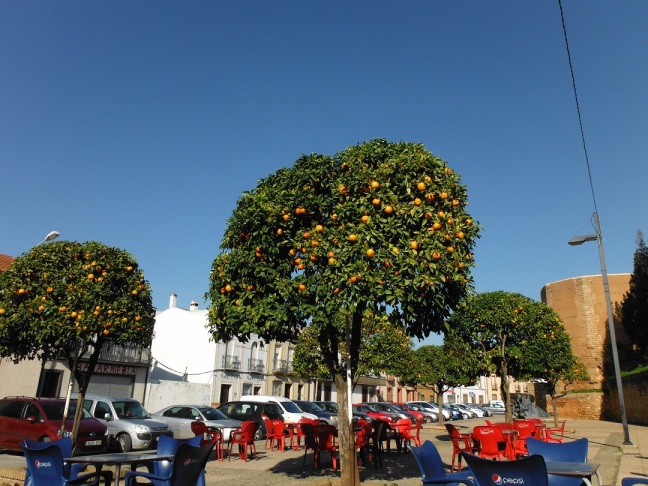
Towards the Portuguese border the landscape became flatter and filled almost entirely with olive or orange tree plantations. Our last night in Spain was spent sleeping on the floor of an aircraft hangar where we were invited to help ourselves to oranges from the trees. Our host for the evening told us that the cost of having the oranges picked is higher than they can fetch, which explained why we had cycled past so many overflowing orange trees with their fruits covering the floor and being left to rot. Thinking about vitamin c deficiency in kids in developing countries, this waste made us sad.

DSCF0735
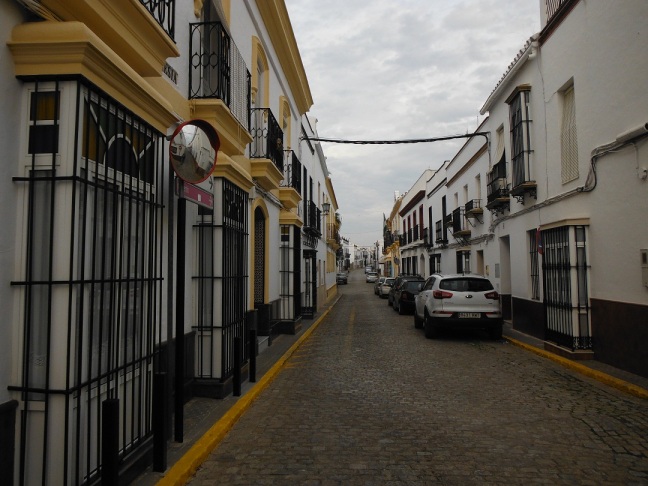
Typical small Andalucian towns

DSCF0645

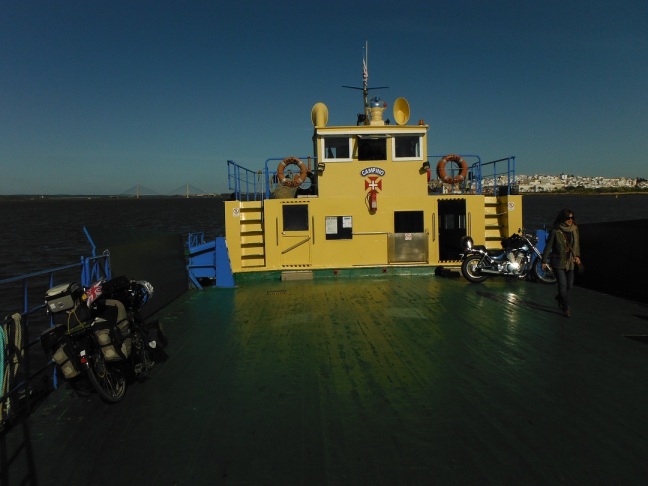
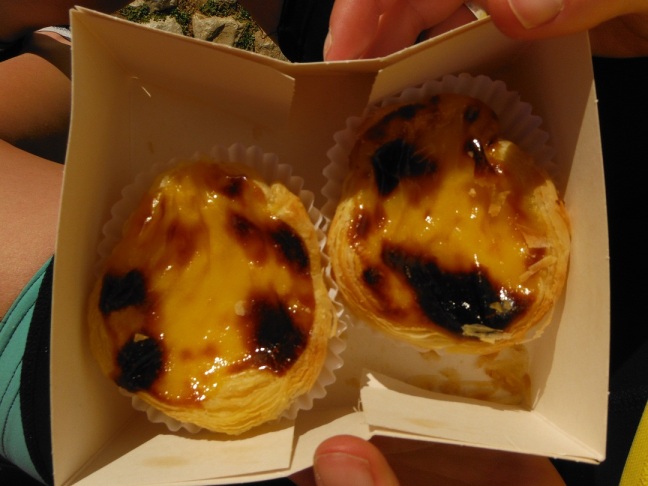
Crossing into Portugal by the coast requires a short boat ride across the river Guadiana that forms the border. The first Portuguese resort of Villa Real felt different to Spain – the buildings were more jumbled after the uniform white-washed Spanish towns of Andalucia, and it was the first time in a while we had seen more holidaymakers than locals. Unfortunately as soon as we left town another main difference between Portugal and Spain became clear – Portuguese drivers are terrible, and the cycling experience is made worse by poor quality narrow roads. The only thing we could possibly do was search out the nearest bakery for a pastel de nata, a Portuguese custard tart, essential cycling fuel. After half an hour on the N125, the most direct way to Lagos at the Eastern end of the Algarve, we put our survival over speed and simplicity and tried to pick our way through small roads closer to the sea. There is, in theory, a bike route stretching the whole length of the Algarve coast but after trying to follow this became frustrating we turned inland and didn’t join the coast road again until we were close to Lagos. Being inland meant that we didn’t have the opportunity to call in to beaches or resorts and the route was hillier but the roads were small, quiet and scenic. After a day and a half in Portugal we reached Lagos, excited about spending a few days in a tourist resort where we the high number of ex-pats meant that we could understand what was going on around us!

DSCF0763
Sailing to country number 15
DSCF0772
The first of what was to be many pastel de nata snack stops…

Thanks for this stretch to Maria and Zigor in Granada, Raul in Alcaucin, Moses in Utrera, Amelia in the aircraft hangar, Steve and Karen of http://www.my-bicycling-adventure.com and of course Jim and Tricia for allowing us to have a relaxing Algarve holiday.

Getting ready for a rest…


Nothing to see here. Just a sunday bike ride.

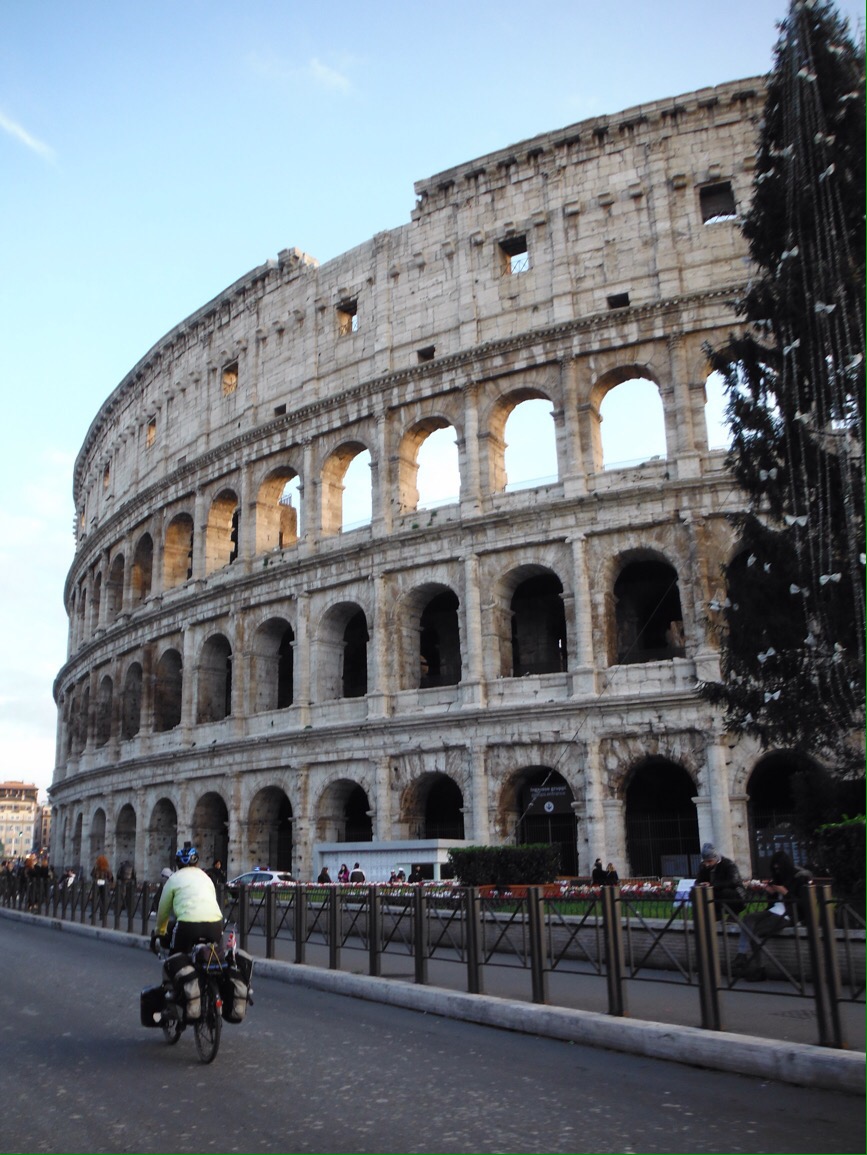
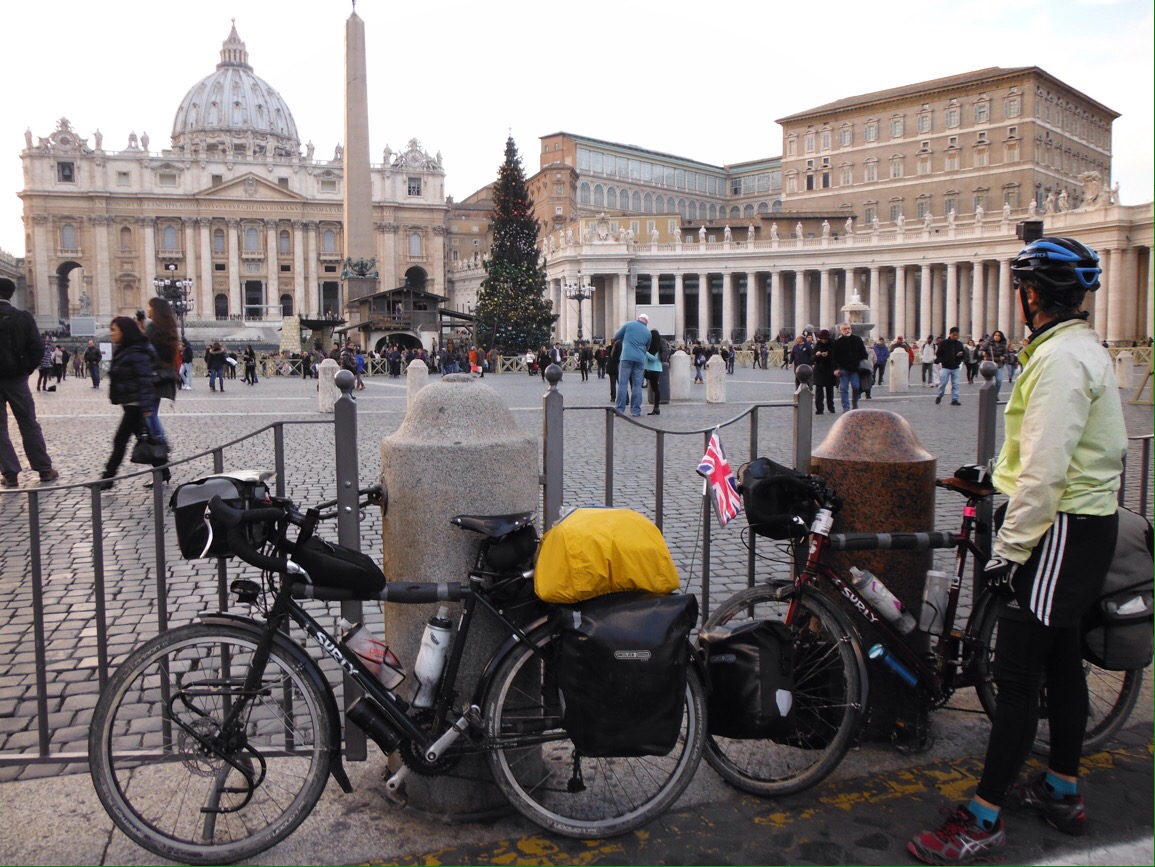
To make sure we arrived at our Christmas work-stay fresh, energetic and ready for labour we smashed out a few sightseeing days in Rome, exhausting ourselves walking for miles looking at awesome fancy old stuff. There is so much to see in Rome and I would highly recommend it for a city break, though probably don’t arrive by bike, there was a few crazy big roads until we could get on the Tiber route. If you do arrive by bike, make it a Sunday, as then you can ride right past the forum and up to the Colosseum traffic-free, except for pedestrians. Two of my favourite things were 2000 year old dice in the colosseum, just the same as modern ones, and a 2000 year old door that still opened and closed with fully functional lock and key in the Forum. The Romans were chuffing smart. There were loads of churches, artworks, ruins, musters of starlings and great Christmas lights. Total winner.

Life size nativity and rainbow baubles at St Peter’s

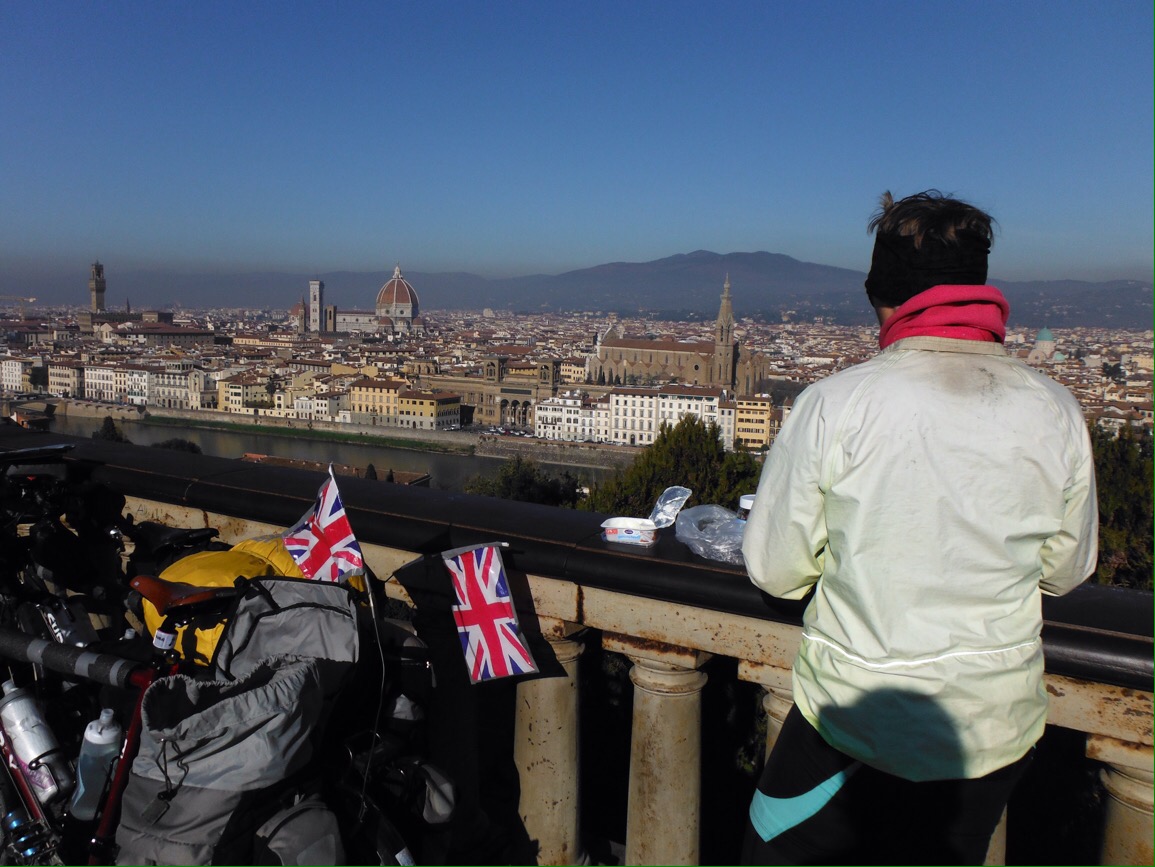
We had to cheat and get the train to Florence to be on time for our Christmas break, gaining an afternoon and evening to walk even further around the sights of Florence. This was aided by the best sandwich I have ever eaten. A few weeks later someone from Florence asked me what I liked about the city. They seemed slightly offended by my focusOn the sandwich. They really shouldn’t have been. Go try for yourself. Confident that it was a short ride out of Florence to our Tuscan Christmas residence we rode up an extra hill to Michaelangelo’s tomb and a great view of the city. It proved to be a good warm-up, the 35km ride was absolutely brutal, lots of very steep climbs and not so many twisty descents.


‘I think i can see the sandwich place from here’

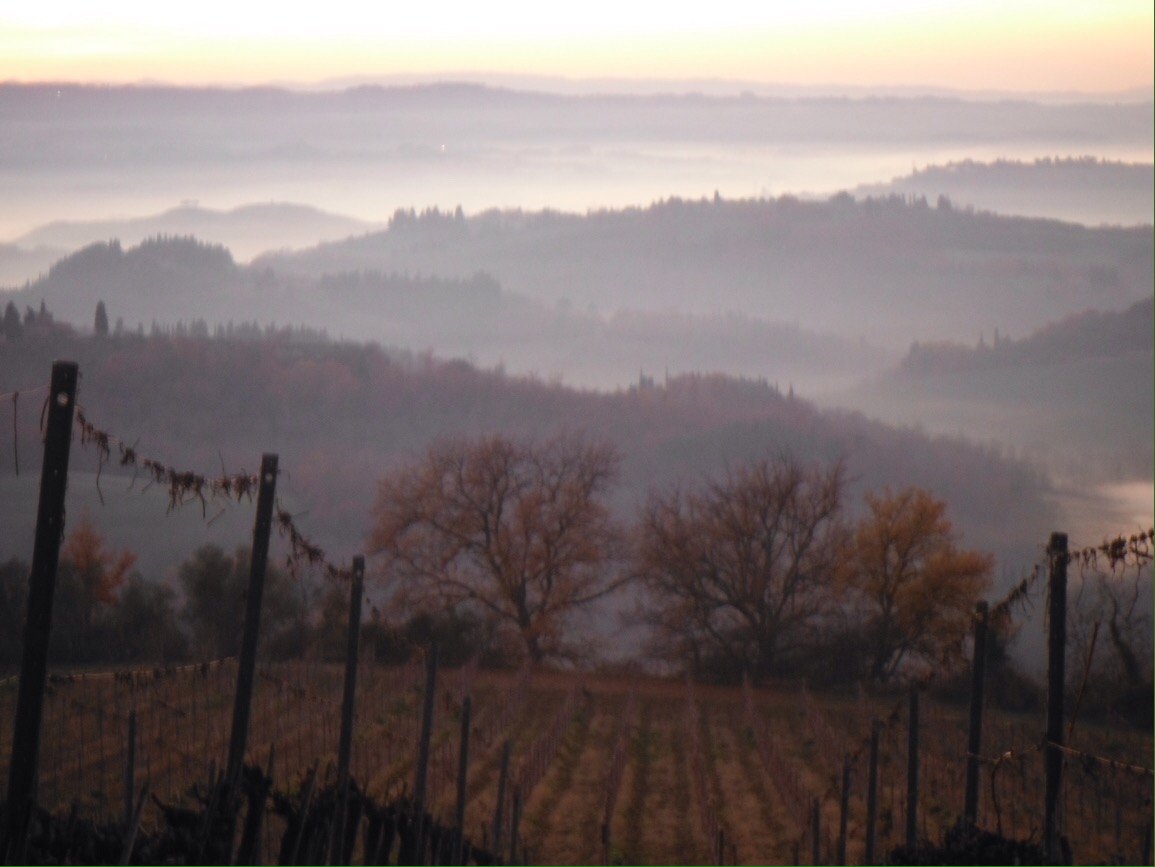
We arrived at a hill top outside the village just as the sun was setting, and Tuscany did a great job of looking exactly like Tuscany should. Soft light, layers of steep hills, farms dotted around. It seemed our decision was a good one.


Tuscany: Does exactly what it says on the tin.

The family were lovely and we learned lots quickly about donkeys, dog treats, olive oils and (most importantly) food. This is no light matter.

“I do not trust an English woman to cook pasta. I will teach you once, and maybe once you will get it wrong. This is ok. A second time wrong, this is not ok”.

Ditto polenta.
As we were in charge of things for a week alone, we spent a lot of time with this motley crew…

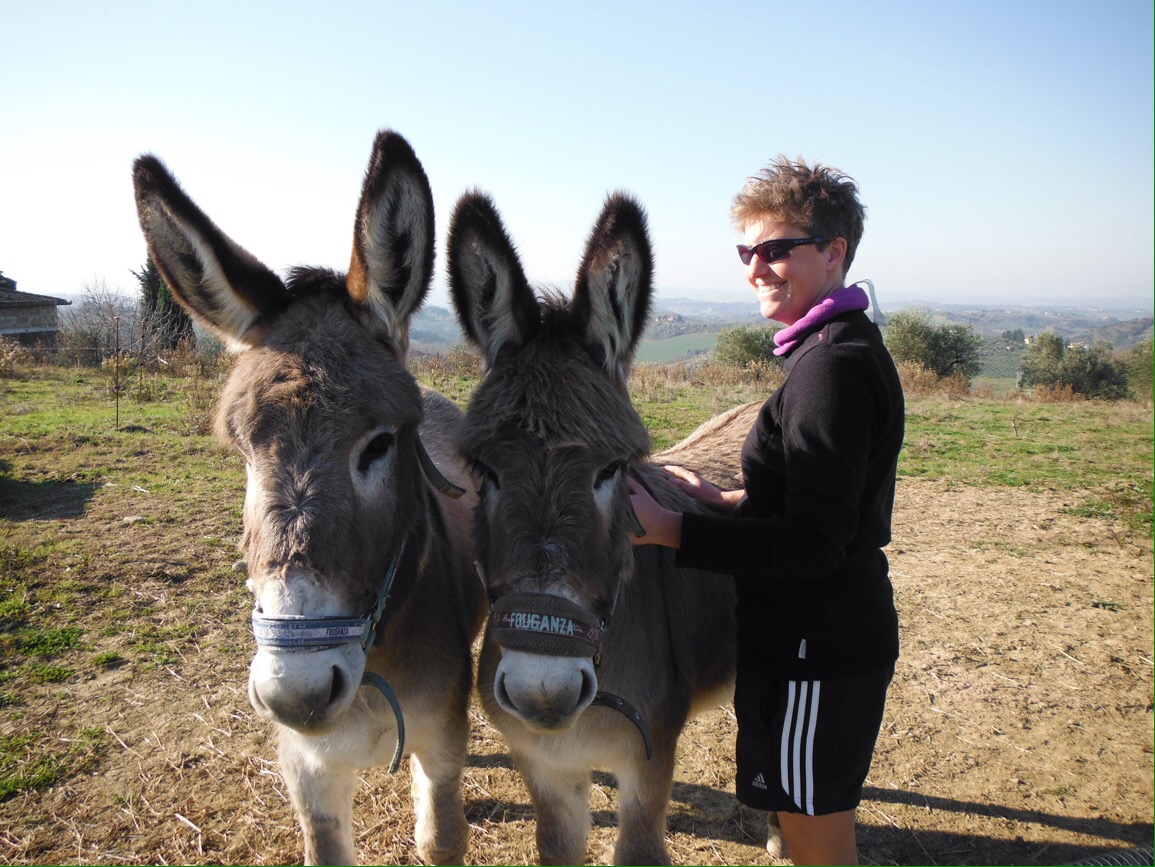
The Donkeys

Judy (middle)

Likes: big fringes, apple pieces, suddenly diving into vines when walking

Sofia (left)

Likes: being pretty, a controlled hairstyle


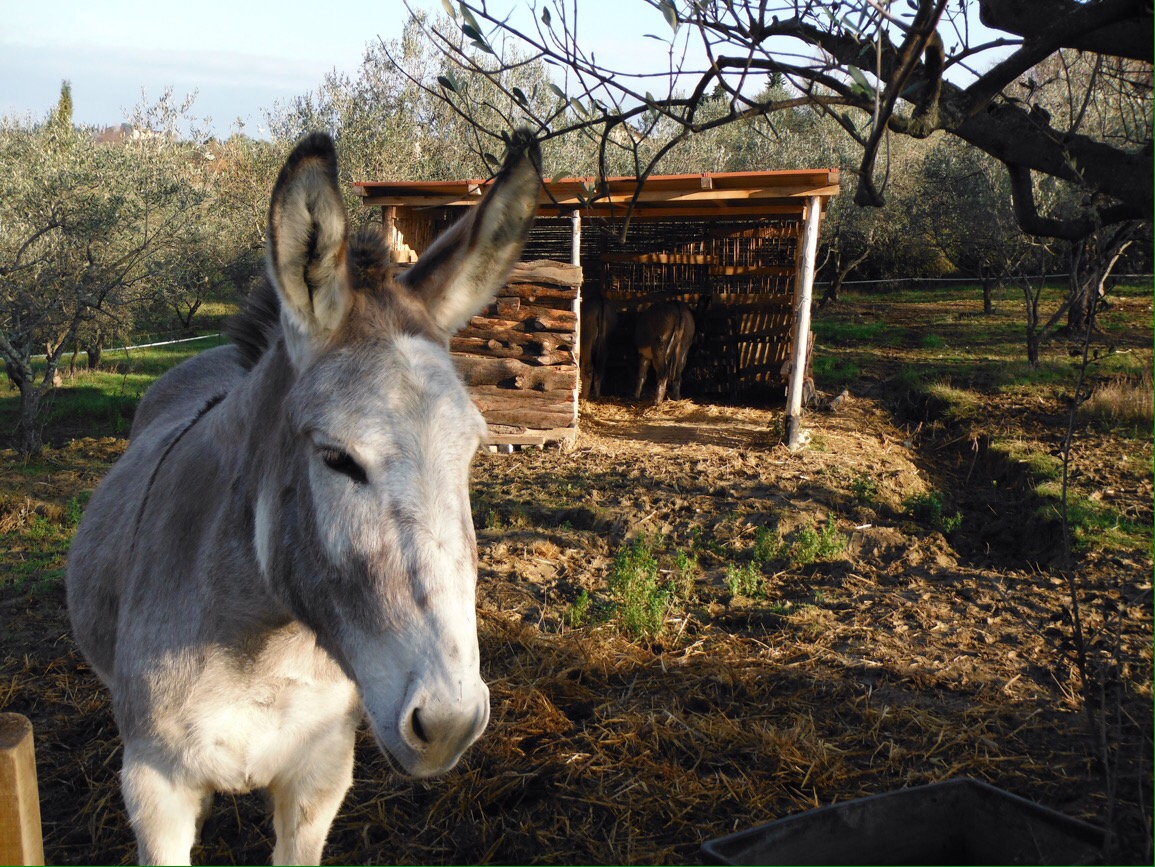
Not sure what the donkey on the right is called.


Guarina

Likes: trying to get out, stealing food, being noisy.


Guarina checking out the exit routes


The Cats

Luna

Likes: Antagonising Vesper, tagging along with dog walks, cuddles with Jo, thieving the dog food. (Caught out one day by loud crunching).

Dislikes: the pink labelled cat food tin, the nativity scene, the hiding of the dog food bag.


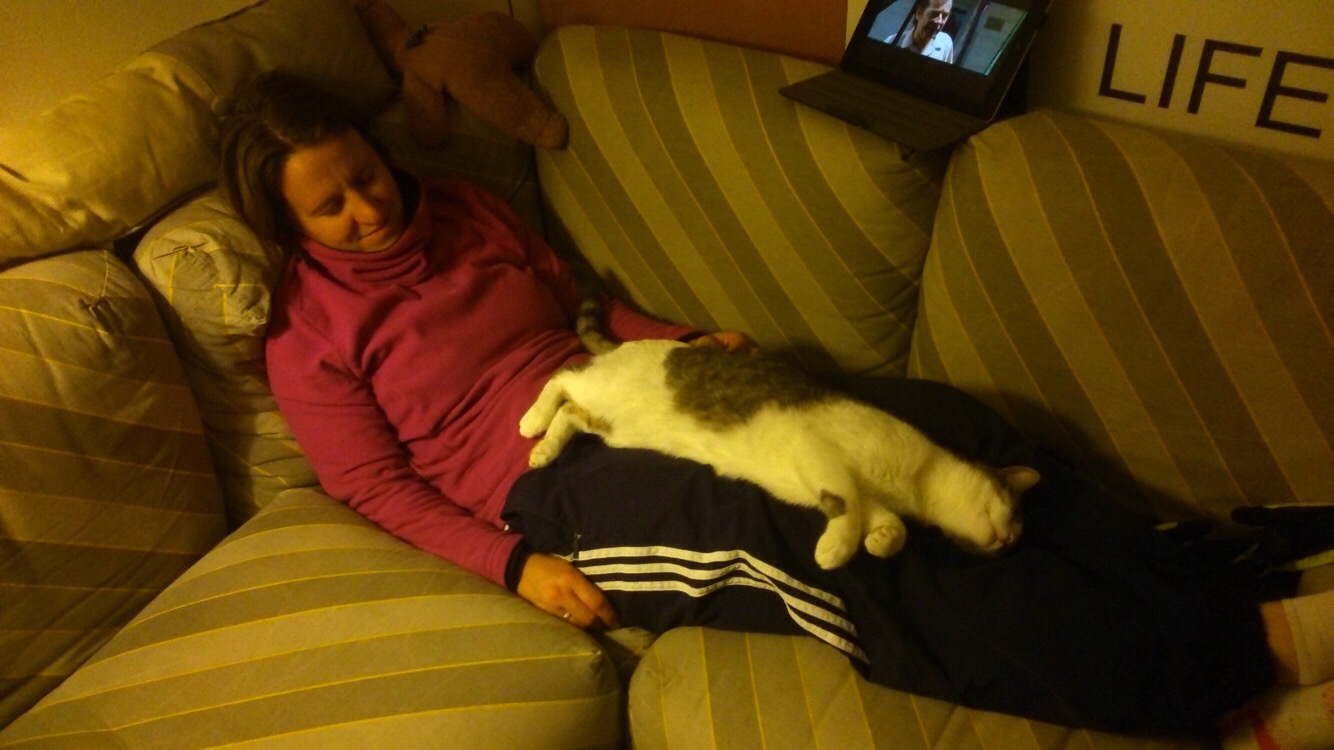
Nap buddies

Vesper

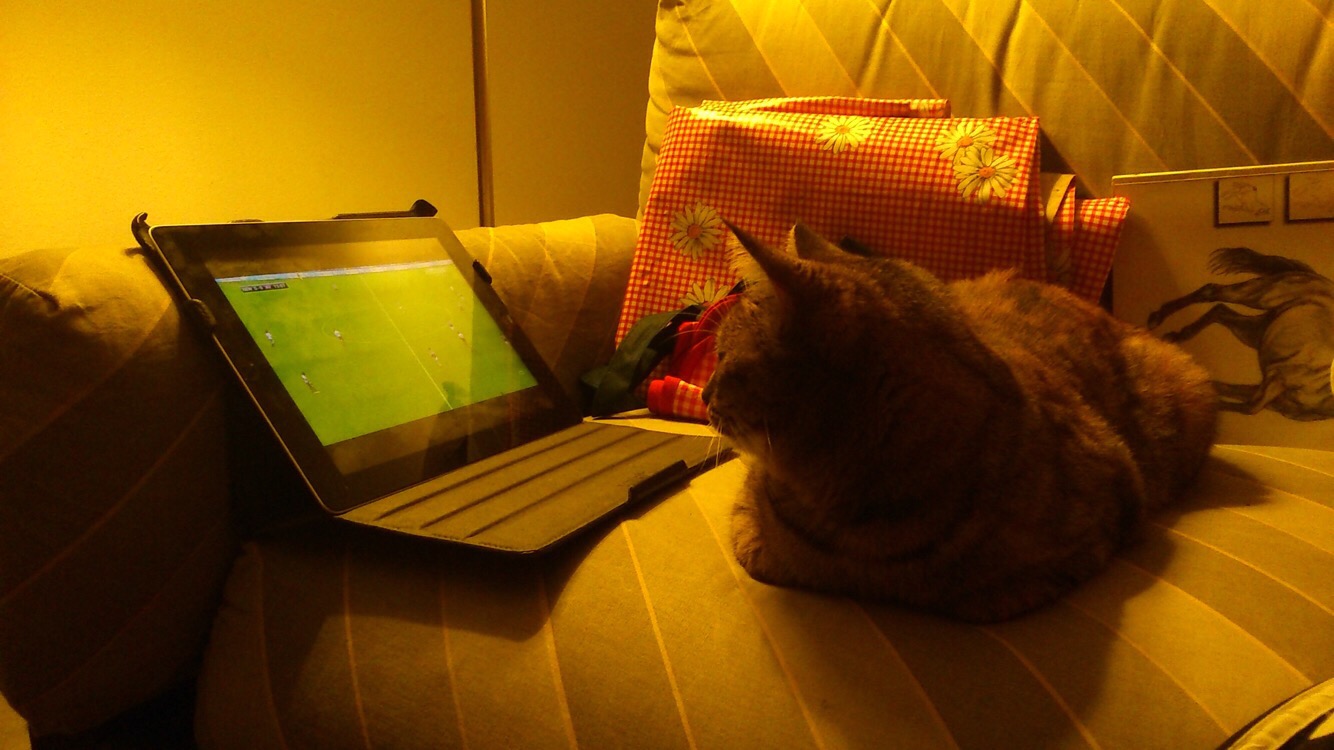
Likes: James Bond, pretending Luna starts the crazy chases, cuddles with debs, sitting on the dining chairs right before dinner, the English Premier League.

Dislikes: Moving too much, the pink labelled tin, being tipped off the dining chairs so people can sit in them.


Come on the foxes


The Dogs

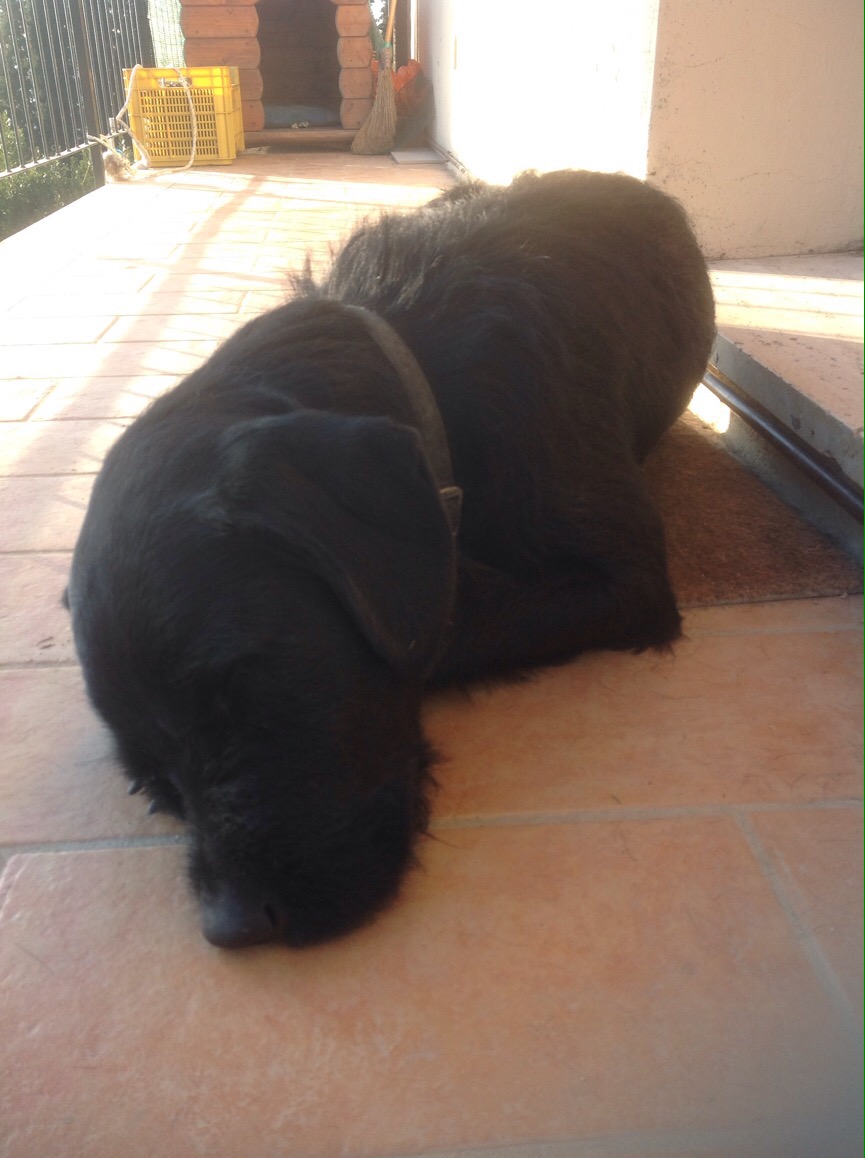
Phoenix

Likes: Collecting sticks, food, playing with sticks, doing her own thing, walking slowly, going in the truck, teasing Oliver with sticks.

Dislikes: Responding to commands in any language, walking quickly, walking far, being on a diet.


Phoenix probably going the wrong way


Oliver

Likes: Being super cute and friendly, long walks, escaping, cuddles, sticks.

Dislikes: Walking at Phoenix speed, smelling nice, the donkeys, the barking dog at Lucardo.


Such a cutie but so much trouble…

There are more Oliver stories for another time. The countryside was lovely and we ate lots of awesome food in between feeding the animals and walking the dogs. When the family returned there was more food (including a jabugo ham from Spain) and time for cycling – to San Gimignano and other pretty towns. We also enjoyed the village new year party.
Thanks to everyone in Tuscany who made our Christmas break fab, especially those at Fattoria Barberinuzzo.

Blown away by Montenegro

It’s a strange thing in Europe that even though the countries are relatively small, and share lengthy borders with others that have similar geography and history, in many you can see differences as soon as you cross a border. Sadly some of these were not so much fun for the cyclist as we entered Montenegro – narrower road, bumpy surface, too fast/too close traffic. Some of the roads looked to be under construction, but I’m not sure what stage of road building is deep sand and stones. On the plus side people started smiling and waving at us again. Which was lovely, until it became apparent that all Montenegrins are the owners of crazy dogs that chase cyclists. Stop waving and control your hound!   
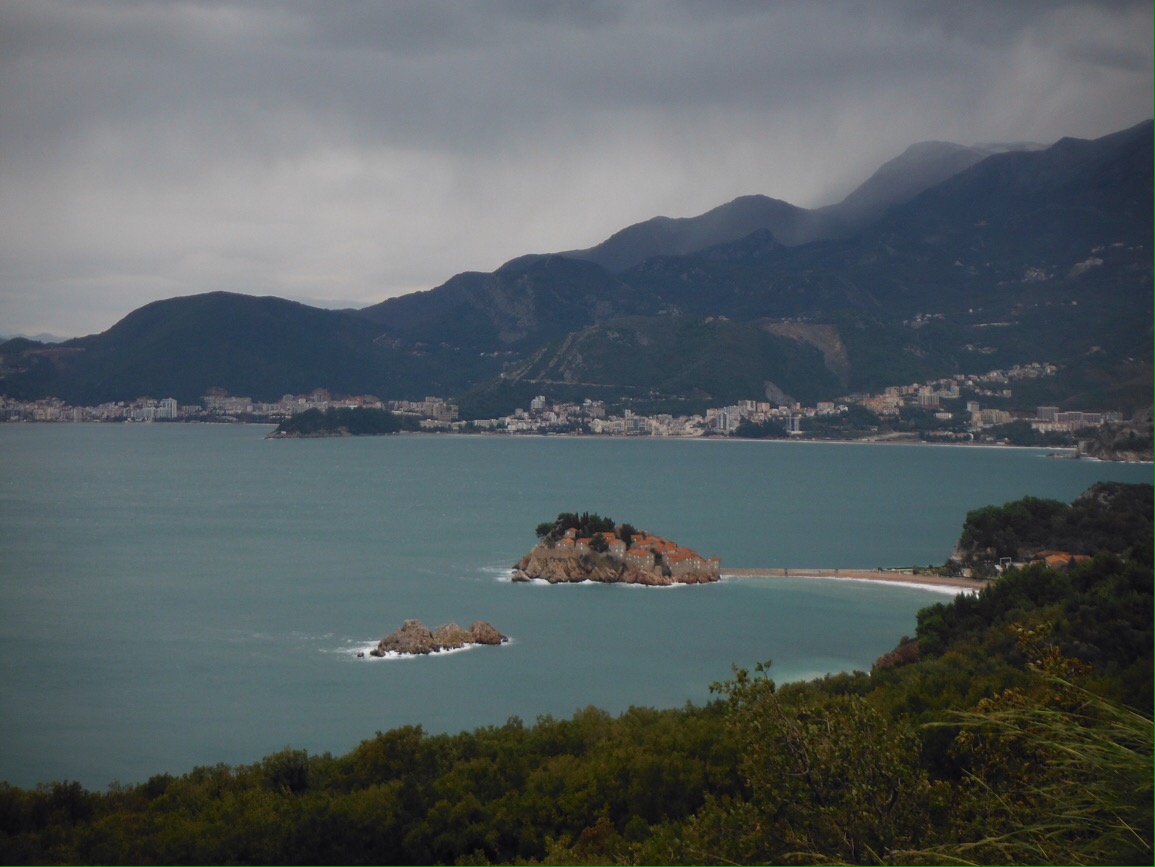
Outside of the towns, the roads were quieter and the scenery around Kotor Bay and between Budva and Bar was stunning. The latter section would have been even more enjoyable without the torrential rain and a hurricane. Ok, maybe it wasn’t a hurricane, but Jo did get blown off her bike and we had to pedal really hard to achieve speeds of 5mph going downhill. Somehow I have missed out that at 9am in Kotor we had a (second) breakfast of pizza and some sort of meat burek from a very busy bakery. It was amazing, and Kotor’s stray dog population also thought so. They patiently followed us around the town, but sadly even for friendly dogs cyclists do not share food. In another food adventure, when we got to Bar we went into a bar to dry out a bit and warm up with a hot drink. There was a small hurdle in that even in our best Serbo-Croat attempts they could not offer a hot drink that wasn’t espresso or cappuccino. Tea was not understood at all and hot chocolate met with a puzzled look. Coffee for Jo, the coffee hater, with a lot of milk and five sugars. She didn’t like it.


A rainy rest day indoors in Bar helped us dry out and we enjoyed making a Friends inspired Shepherd’s Pie, not quite to the same recipe, playing board games and styling a butternut squash into a minion pumpkin.
Sunday is the best day for cycling wherever you are, and Albania was waiting for us. The first snow of the year had fallen on the highest mountains, making the scenery even better. The sun shone as we rode through small hamlets and a kind Montenegrin man who saw us picknicking near his house brought over some mandarins from his garden. There was a big queue at the border but a handy small lane for pedestrians and push bikes so we didn’t have to breathe traffic fumes for long. Jo accidentally went into a secure area looking for a toilet while we were waiting for our Albanian stamps. Handily none of the people with guns saw. The sun was also shining in Albania and for the first time in ages we saw other people cycling between the villages. People waved just as much as Montenegro and the crazy drivers we had been warned about must have been having a Sunday off as everyone passed us carefully in their black Mercedes. The only hazards were people walking their cows and groups (flocks, ganders?) of geese crossing the road. Surely this could not be the country of so many warnings? ‘Don’t go to Albania, the people are bad/traffic is crazy/roads are terrible/you will be eaten by dogs.’ Not so far…

It does rain in Croatia then (long post alert…)


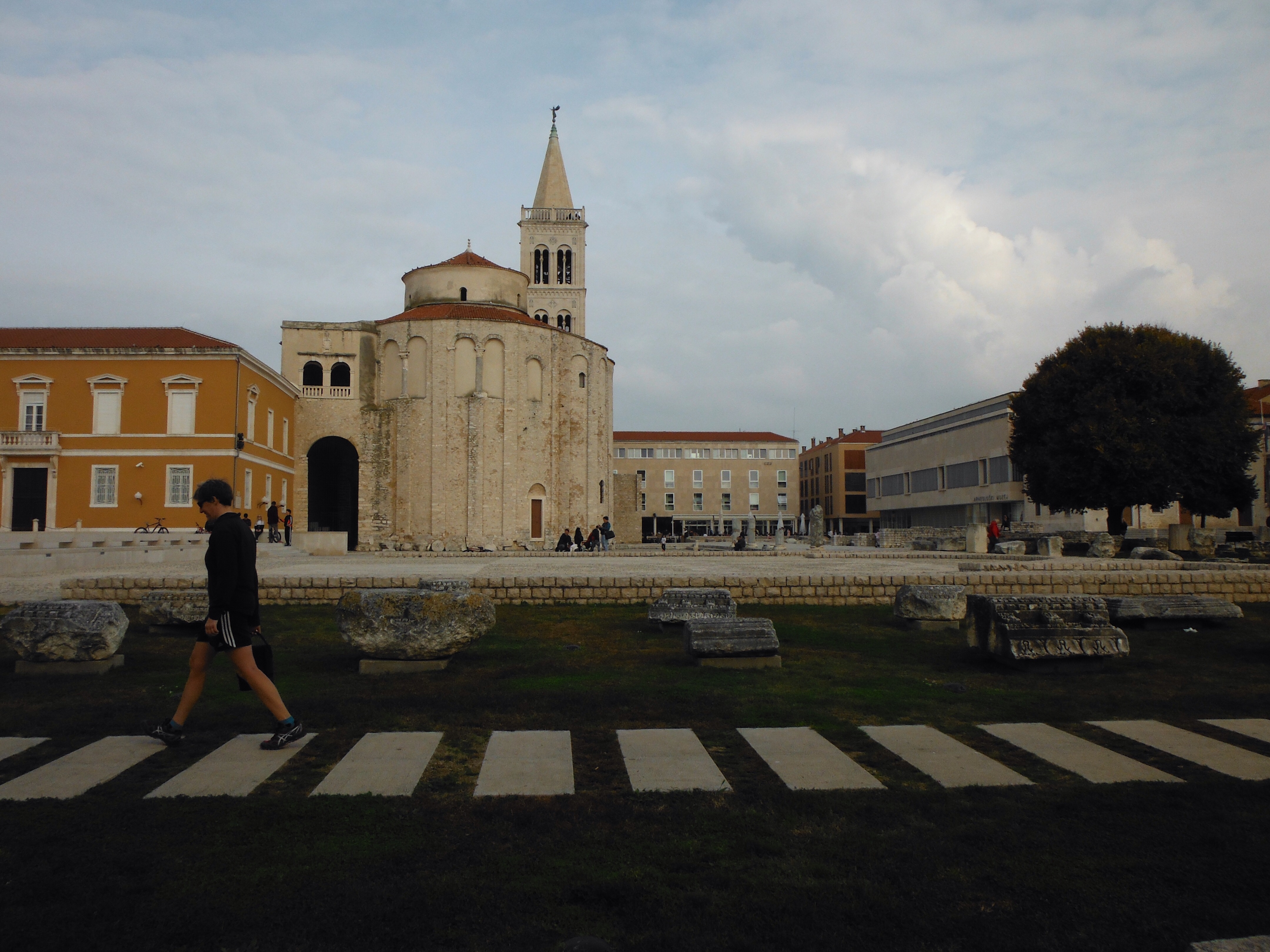
Prancing around Zadar’s nicely displayed ruins

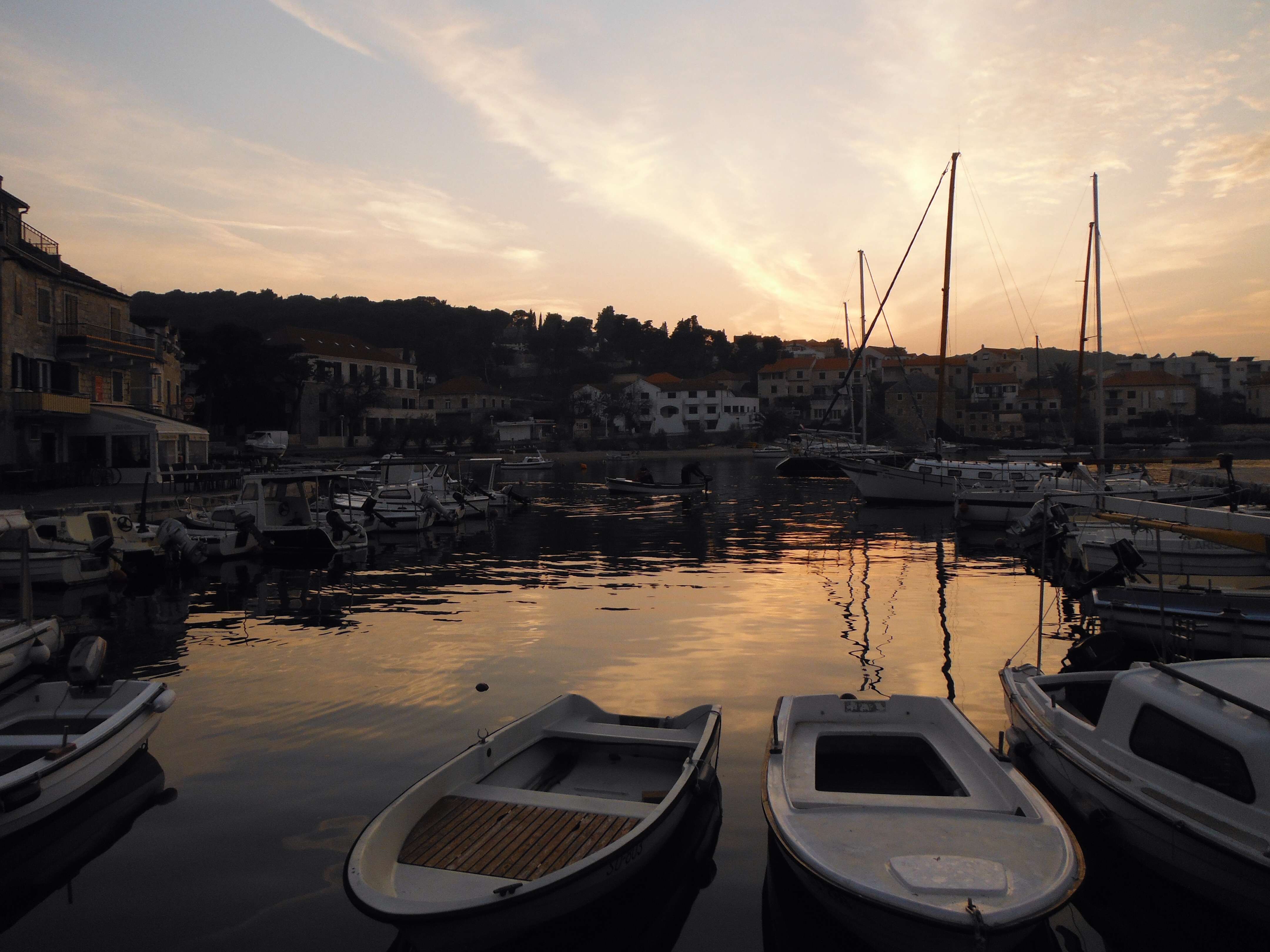
Zadar is famous for it’s sea organ, a stepped area on the sea with a mass of pipes underneath that make sea noises as the waves splash the stone steps. It really is a bizarre experience, and when the ferry goes past it makes more of a deafening boom than soothing sea tones. I went to see it whilst Debs experienced Croatian public healthcare. After reading an entire novel it was established that yes she would need to come back tomorrow to see an eye doctor. On the way home we spotted a cinema and having learned that films are shown in English, went back for a later viewing of Spectre. The second hospital visit was much faster than the first so we enjoyed an afternoon off in Zadar (I couldn’t keep the sea organ experience to myself). The town also has a number of Roman ruins, though interestingly they have not been left where they found but dug up and arranged in neat patterns in the centre square. It was pretty cool to be able to wander around chunks of old stuff and go up the bell tower to view it all from above. Peace was shattered temporarily with the Saturday ritual of Croatian Wedding Drivers coming in and out of the city, reminding us what day it was at least.


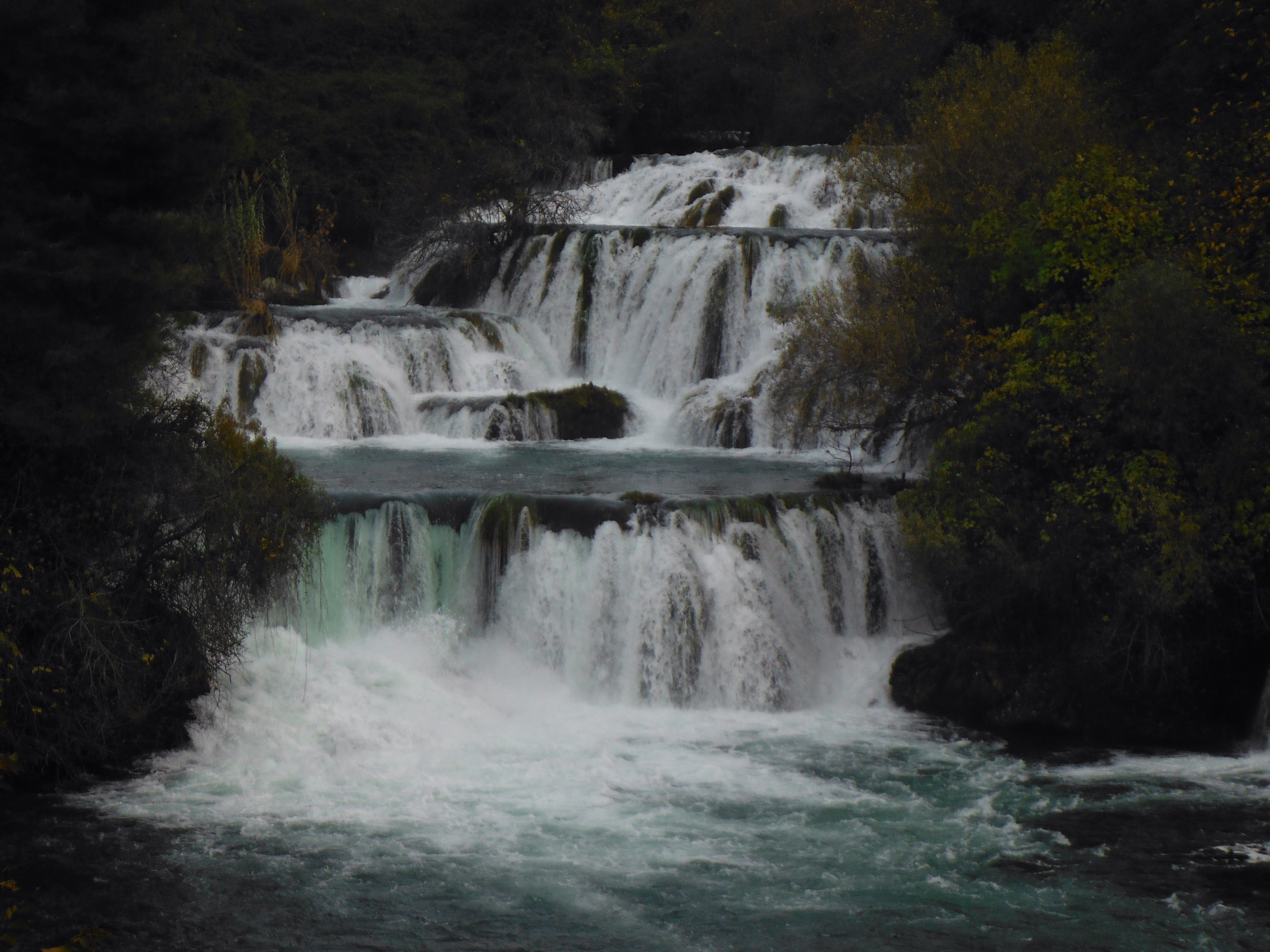
Krka National Park

From Zadar it was a 100km ride down the coast to Krka National Park, our substitute for not being able to detour inland over a huge mountain range to go to Plitvice Lakes, the most famous Croatian park. It’s hard to compromise sometimes, but you can’t possibly see everything in a country when travelling by bike – Krka has some very impressive waterfalls itself, we arrived at the park less than an hour before it closed and the falls were at the bottom of a long, hairpin descent. The ranger seemed to think it wouldn’t be a problem for us to ride down and back up again in time – he has clearly never ridden a loaded bike uphill. We zoomed down there in 5 mins, had a walk around the falls and then it took half an hour to get back up sweating like crazy, arriving back at the gate a respectable 25 mins after the park closed. So as usual we had a race against the daylight, which as usual we lost.


Losing the race against the sun

Next up was Split, Croatia’s second largest city that we were only visiting to catch a boat to our next island. On the way we called at Solin, the impressive ruins of a Roman town located next to a busy dual carriageway and industrial area of Split. Peaceful. We got in free for being cool bike travellers (maybe) and were then swamped by a group of school kids practicing their English. ‘My name is … ‘ is about as far as they have got with English but they knew how to repeat it again and again. At least they recognised the Union Jack – most kids seem to think we are American. C’mon kids, it’s a very different flag! Split itself challenged for the ugliest city award as we rode through miles and miles of busy, grubby suburbs – luckily it improved dramatically on reaching the historical area where the Diocletian Palace covers most of the centre, with lots of small cobbled streets which is probably fun if you are not pushing/riding a loaded bike. The next island on our agenda was Brac, producer of white stone used in many buildings including the White House itself. It’s one of the lesser visited islands but was probably our favourite – small towns that were not particularly touristy therefore still had life in them out of season, quiet roads that either hugged the coastline or took us up mountains for amazing views and very empty and peaceful in the middle.

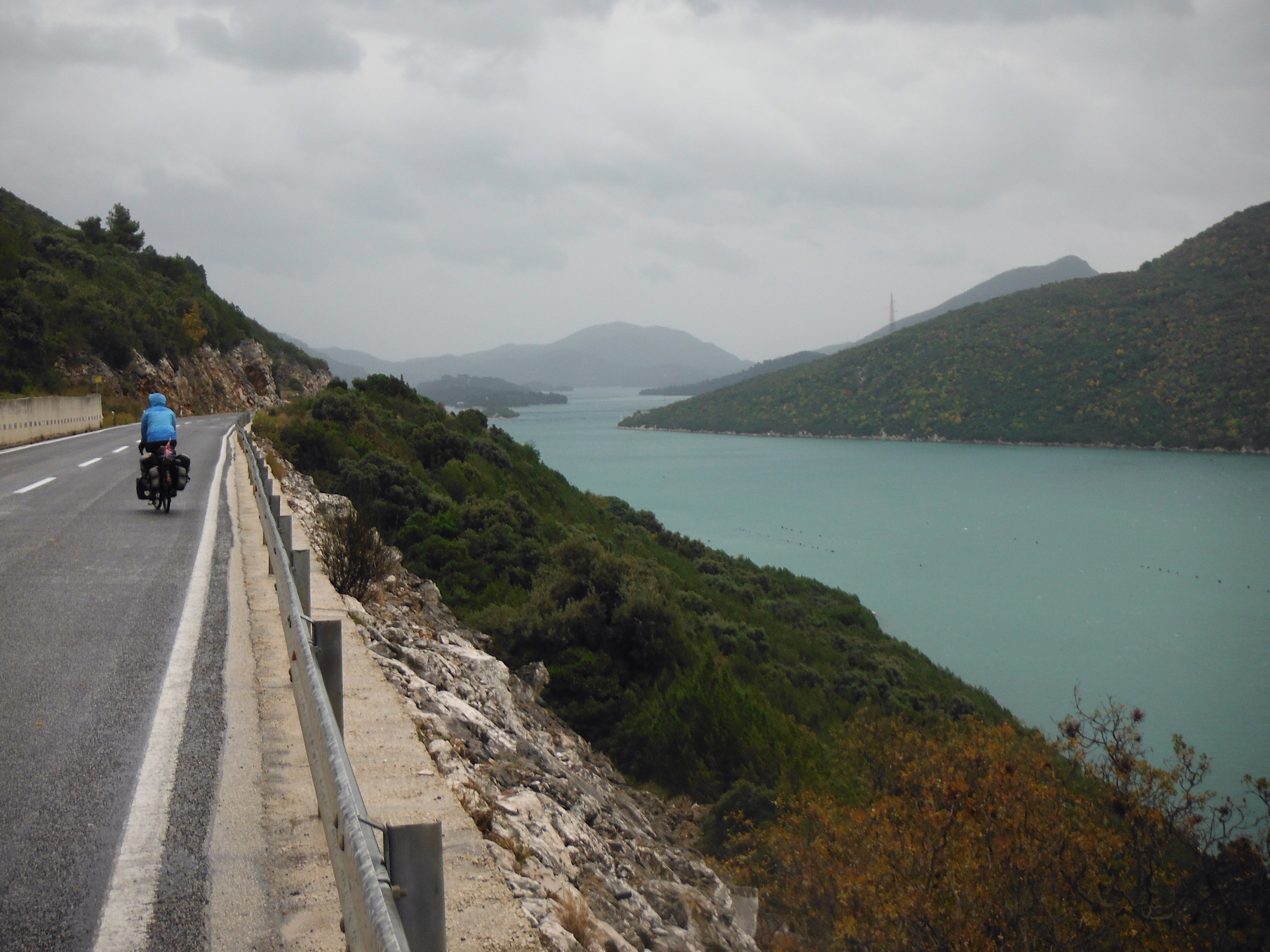
 Back on the mainland, we were excited about getting to Dubrovnik – one of the few places we had in mind to definitely visit. Although there were several more ‘must-see’ islands on the way, as the forecast was for cloud and rain for a few days these were regrettably bypassed in favour of a city with more potential for rainy day activities. Next time, Korcula, Hvar and Mljet. It would also be the fist time we spent more than two nights in the same place in 8 weeks – much needed by this point. The ride into Dubrovnik was the most spectacular section of the coast road, unfortunately it hammered it down for most of the day. So instead of coastal scenery being the highlight, that day will be remembered for the 10km section of Bosnia (country #11) that the coast road goes through. But not for scenery, people or culture (though I’m sure these are all great when it isn’t chucking it down), but for food. Not wanting to pass through a new country without stopping, and starving and wanting a note for our map wall we took out the equivalent of about £7 from an ATM and went straight to a roadside bakery where £3.50 bought us a pile of pastries. We had become fond of the burek since discovering it in Croatia – a long thin pastry filled with either cheese or meat and rolled up – and the Bosnian one was our best yet. So we sheltered from the rain by a posh hotel where Japanese tourists ran into from their coach (not quite sure how they sold them ‘lunch in Bosnia’ as a highlight of the day, and in the rain it did not look it’s finest) and stuffed ourselves. Most cyclists on this route will ride in and out of Bosnia in about half an hour, we took almost two, most of which was spent eating. What’s not to like?


The ride to Dubrovnik and start of the rain

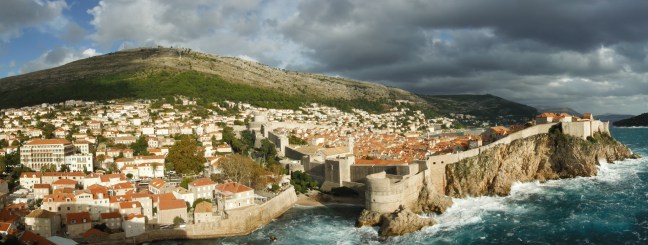
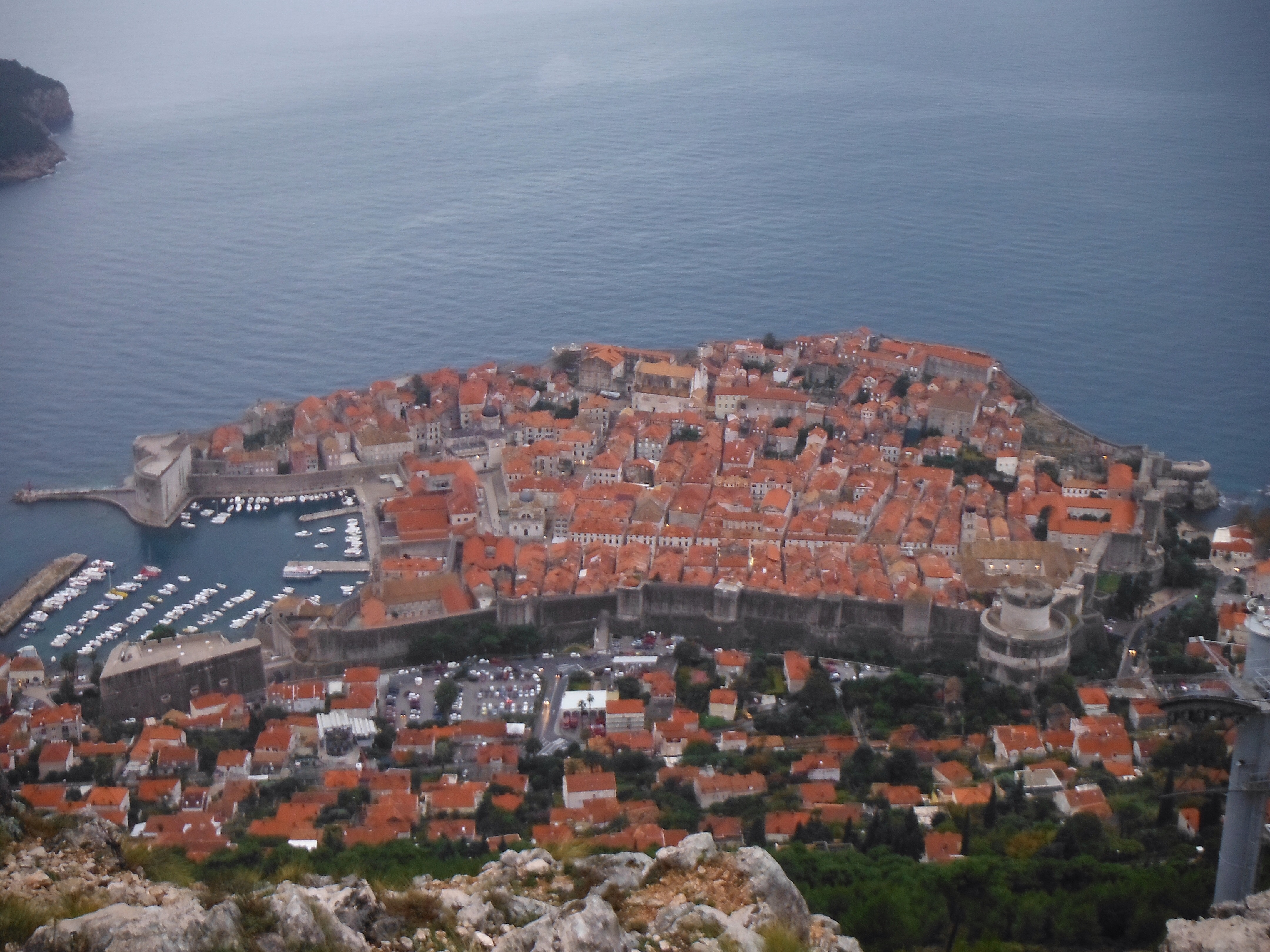
Finally we reached Dubrovnik, drenched and cold for the first time in weeks. The rain was like rivers on the road and threatened to wash us away at times. But the next morning we woke to sunshine so headed straight to the city walls. I love a good walled city and this is one of the finest out there as every corner of the wall offers an amazing panoramic view of the city and the sea. Being out of season tourists came in our favour as we practically had the walls to ourselves, after seeing pictures of how crowded they get in the summer this was very much appreciated. Although strangely one guy managed to get in all the photos Debs took for one five minute period – I had to commend him for such an achievement given the lack of people around. We ended up staying in Dubrovnik for 4 days, 3 of which it rained, and 2 of which we did very little (the only thing we scheduled for the last day was ‘take advantage of coffee and pancakes offer between 12-8pm’, suggesting to us that it was time to leave….) It’s a very ‘pleasing to the eye’ city, not wanting to be overrun by tourism none of the shops are allowed signs so they have the shop names inscribed on lanterns and on tabards which sets it apart from the rest of the country where you can’t move for adverts obscuring every view. It’s also amazing how the city has recovered from the heavy bombing it received during the Yugoslav war, it was quite sobering to visit some of the museums and learn more about a war that killed so many people yet was so recent I was in secondary school at the time. We sat and watched some BBC news footage from the time, captivated by images of buildings we had just walked around being shelled as well as the soothing tones of an English accent and full sentences we could understand.


Dubrovnik from above

We had high expectations of Croatia, and the scenery didn’t disappoint. Being there out of season was a little frustrating at times but also worked to our advantage with quiet beaches and cheap hotels (we didn’t sleep in the tent once, it just wasn’t worth the effort). The driving was a bit crazy and being on the phone whilst driving seems to be standard practice – we saw drivers watching videos on their phone. The people were perhaps the least friendly of all the countries we had been through (and have since) – not that they were unfriendly but there was not the warm welcome that we have experienced elsewhere. Interacting with people is difficult with the language barrier but usually we have some semblance of a conversation with local people several times a day, or at least a smile and a wave – in Croatia we were invisible. Probably so many people pass through on bikes in the summer that it is not of interest, and in the winter they just want their towns back for some peace and quiet before the season starts again. Understandable I guess!

Thanks to Frane #1 in Kastel Lucic and Frane #2 (and his family) in Pucisca for their hospitality, and the friendly guys at Extreme bike shop in Split for sorting us out with some essentials.