Blog

An Extreme 24 Hours in New Zealand

Extreme is probably a good word to describe New Zealand. It’s well known for its extreme tourist activities. There are innumerable opportunities to jump off something high tied to a thin piece of elastic. Swing bridges are not just for walking across but for zip wiring over, preferably face first. I’ve never seen so many adverts for sky diving, rafting, etc. We managed to resist the temptation to bungee – cycling exposed us to all kinds of extreme without swapping a huge pile of dollars for a few seconds free fall and a t shirt.

The wind is crazy strong – it can smash you in the face to the point you have to get off and walk, get behind you and blow you uphill, or hit you from the side in gusts that push you off the road. Hills are so steep that your legs are at the burning limit after 100m going up hill and down isn’t much better as it’s easy to go out of control fast. People are either really friendly or incredibly rude (the latter are usually found behind the wheel of a large vehicle, or occasionally working in customer service). It’s either been amazing or awful. There’ll be a full catch up on our time here soon, but for now, here’s an amazing/awful 24-hour period last week.

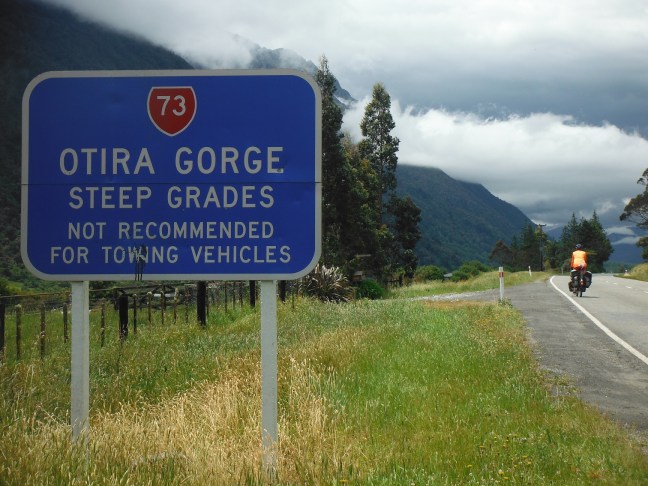
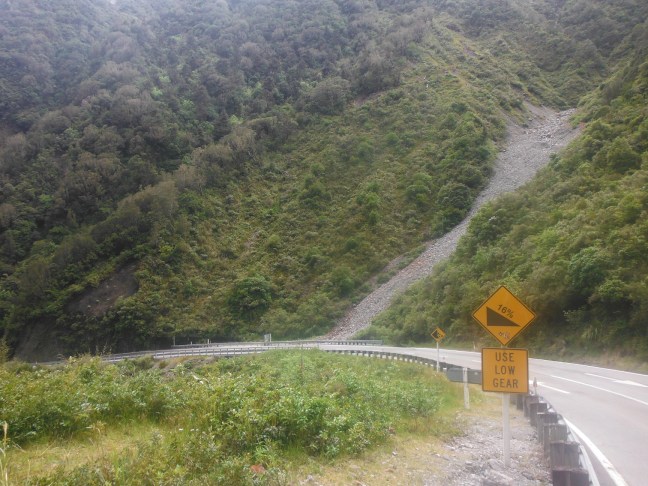
5.00pm. After riding uphill all day, the highway turns into something that seems too steep to be an actual road. Three leg-burning lengthy 16% grade sections are separated by mere 5-6% grades that feel flat in comparison. We have to stop every 100m or so as the legs just won’t go any longer at a time. It’s cold but my t-shirt is drenched in sweat. Chocolate supplies are running low.
dscf9816

dscf9825
It doesn’t even look that steep. It nearly broke us.

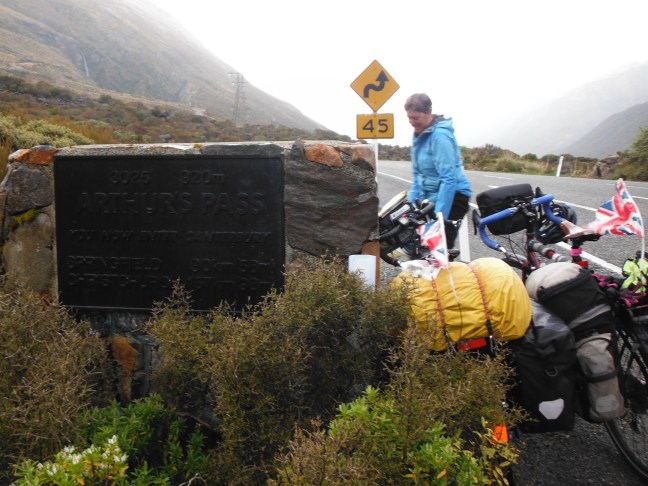
6.00pm. We make it to the top of Arthur’s Pass (920m). Plans to eat our remaining chocolate in celebration are shelved as it’s freezing cold, the rain has picked up and the wind is blowing it into our faces. We quickly each put on two jackets, waterproof trousers, buffs and extra gloves for the steep descent into the village.
dscf9831
There’s not even a decent sign at the top as a reward. Re-layering for the rainy ride down. Pretty awful all round.

6.05pm. I haven’t put my sunglasses on (it’s dull) and the rain feels so sharp in my eyes I have to part close them. Not a wise idea when riding down a steep hill in cloud.

6.10pm. 4 steep kilometres later we make it to the village. The shop is closed. A bar is open so I go in to get water. It’s so warm inside I don’t want to leave. We swing by the youth hostel ‘just to see’… and it’s full. Time for another 8km downhill to a free campground.

6.30pm. It’s still raining when we get to the campground so we ride straight into the picnic shelter to dry off. Three Aussie girls are eating their dinner. The first thing they say is “do you want some pasta? We can’t finish it…” If you ever see a cold cycle tourist, this is probably the best thing you can say. You could always follow it up with “I’ve also got this huge cake going spare, and a flask of tea, oh and I’ll be making bacon sandwiches in the morning….” (we actually dream of these conversations happening.)

7.30pm. Our pasta starter is followed by a huge pasta main. Appetites are not affected by eating an extra meal. It is still raining.

8.30pm. It’s time, we have to go and put up the tent. It is still raining. We consider putting it up in the picnic shelter but it doesn’t fit properly and we decide it can’t possibly keep raining all night. We choose a nice grassy patch behind a tree to give some wind protection.

9.30pm. The tent is up. We are warm and content. It is still raining, but we have faith in our tent.

2.06am. After about four hours sleep the wind and heavy rain outside wakes us up. It is so loud we have to shout to have a conversation. Debs decides to go to the toilet.

2.07am. Debs steps out of the tent straight into water deeper than her shoe. Turns out one end of our tent is in deep water. It is still raining.

2.30am. After a full assessment of the new swimming pool in the tent porch we decide to pack up and get under the shelter whilst our sleeping stuff is still dry. I’ve never heard of anyone drowning in a tent but you don’t want to be the first. Debs is bitten on the chin by a sandfly whilst packing up and swears a lot. It is still raining.

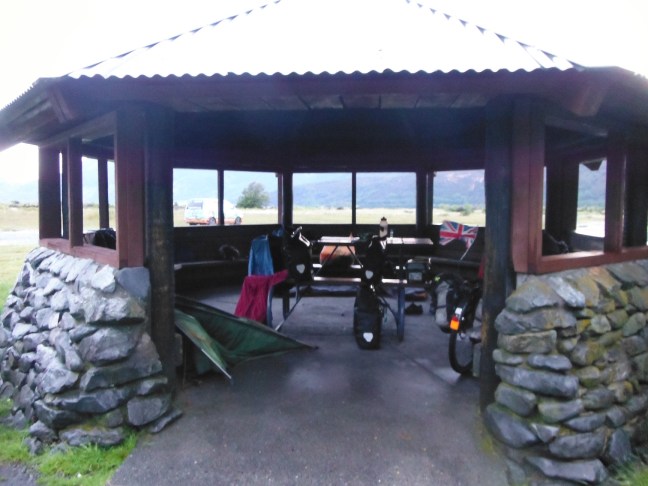
3.48am. It’s been a slow and wet process but us and all of our possessions are now under shelter. We get the stove out and make porridge and hot chocolate. We are wearing most of our dry clothes, including long johns, puffa jackets, woolly hats, gloves, and all available dry socks. Our trainers are soaking so we are rocking the socks and sandals combo. We are still cold. This is pretty awful.
dscf9836
Our night shelter

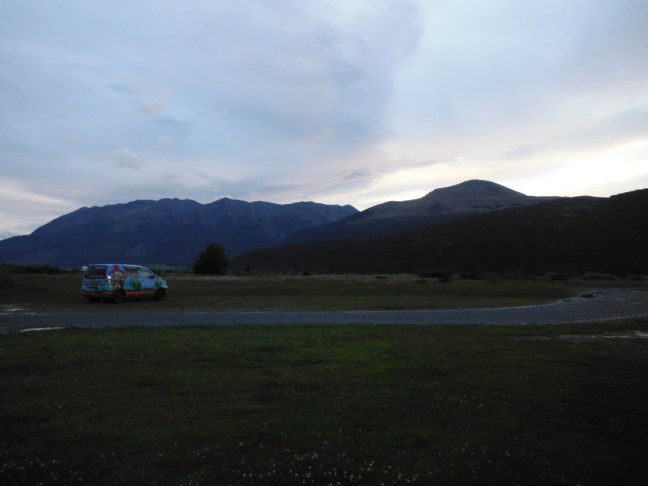
5.00am. It starts getting light, and finally stops raining. We have read two Agatha Christie short stories, and finished our chocolate supplies.
dscf9837
The calm after the storm

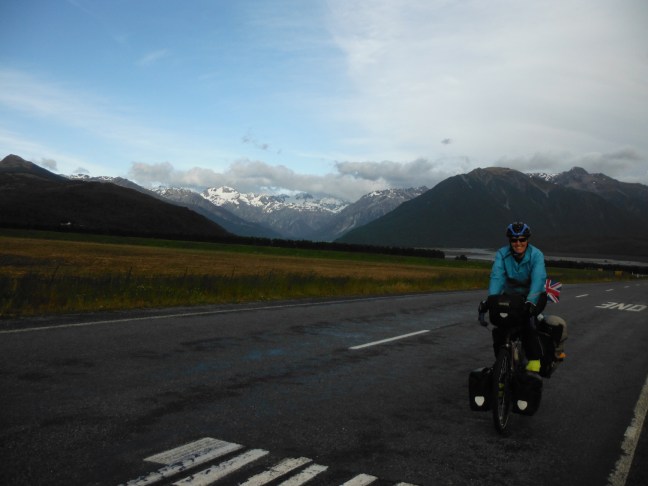
6.00am. The sky is clear, the sun is just up and it’s light enough to ride so we set off, our earliest start since we were trying to avoid the Wyoming wind. There’s not much traffic and it’s nice riding. We can even see the snowy mountains behind us.
dscf9849
The mountains that were hidden behind thick cloud the day before

8.00am. It feels like it should be lunchtime so we eat breakfast number 2, lemon curd sandwiches. They are awesome.

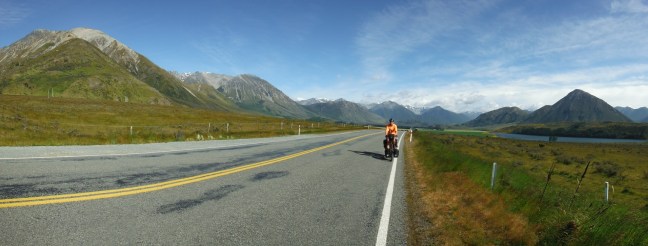
9.00am. The sun is super strong and it’s time for the second application of factor 50.  The morning layers are off and we are down to shorts and t-shirts. Maybe all the rain was a bad dream. Our wet feet and the number of clothing items drying on the back of the bikes says otherwise.
dscf9874

9:25am. We stop and eat the last of our biscuits. These were supposed to last all day.

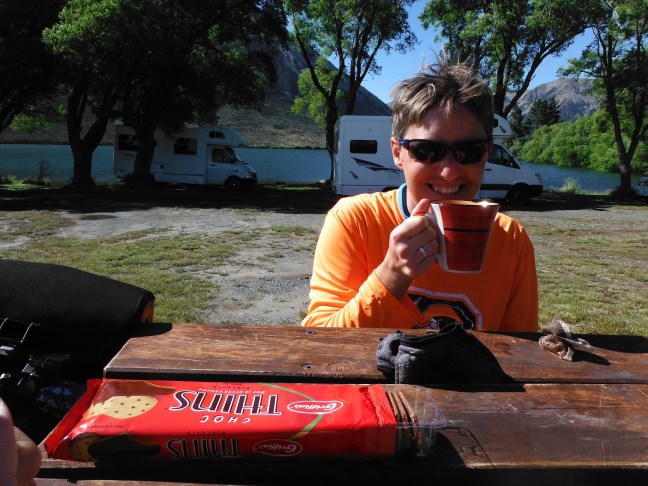
9:45am. There’s nowhere to stop for drinking water on this road, so we pull in to a camping area with a few campervans who can usually spare some. The first van we knock on has two French girls and their families. They fill our bottles, then say the second best thing you could ever ask a cycle tourist (ok, maybe only a British one): “would you like a cup of tea?” Five minutes later we are drinking tea from real mugs with handles (why does this taste so much better than from a flask?) and eating more biscuits. After an awful night, we are having an awesome morning.
dscf9879

10:30am. It’s time to say goodbye to our new friends and get riding. The scenery is spectacular.

11:20am. The road gets super steep – this isn’t the pass, it’s too soon, so why is it so hard? It’s so hot we are dripping with sweat but still have rain-damp trainers.

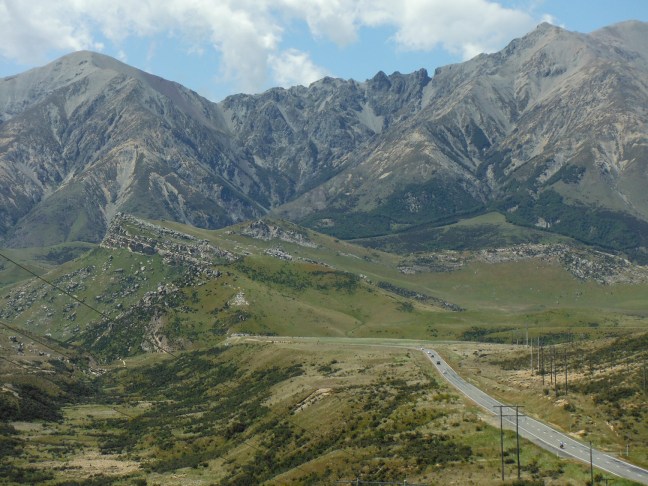
12.00pm. We are over the pointless hill and the scenery is amazing. It’s rocky, pointy, and there are strange boulders everywhere. This is awesome.
dscf9895
Spot tiny Debs. Awesome, awesome and more awesome

12.30pm. It’s definitely lunchtime now. As we ate our sandwiches for breakfast #2 we need to get the stove out and crack open our emergency instant noodles. We spot a perfect picnic area with 360 degree views, hardly any people and a bench. A DoC (Dept of Conservation) lady comes over and tells us she is about to mow the grass so it will be a bit noisy, and enthusiastically suggests another similar place a few kms down the road with big boulders. We heed her warning and ride on.

dscf9906
Tiny Debs again

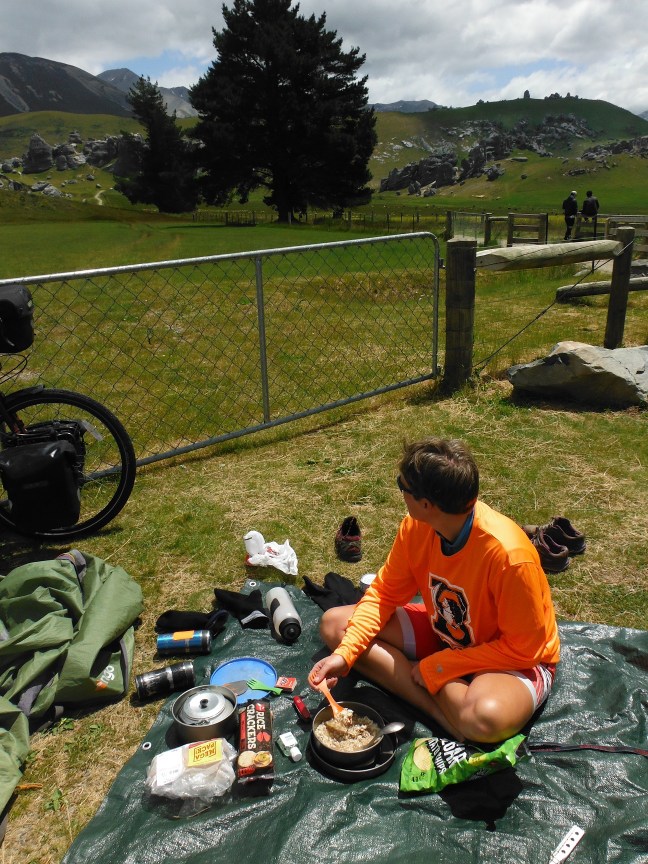
12.45pm. Arriving at the suggested spot we have been seriously misled. It is a busy car park with no picnic tables, a naff view and hardly any grass. This is disappointing, so we sit on the grass and cook noodles. Five minutes later the same DoC lady drives in with her mower and starts mowing around us. In true British politeness we smile and move out of her way whilst quietly grumbling to each other. The sun is out and it’s baking hot. Our trainers dry.
dscf9909
Disappointing lunch spot

1.10pm. The sun goes behind a cloud and it’s cold.

1.11pm. The sun is out and it’s baking hot.

1.12pm. The sun goes behind a cloud and it’s cold. We decide to ride on to warm up.

1.30pm. It starts raining. It’s freezing cold all of a sudden. The road gets steep. The wind is trying to blow us over. The horizontal rain stings our cheeks. It has become hail.This is not fun any more.

2.00pm. We are getting closer to the top of today’s pass, and it’s all downhill after that. The road gets steeper. A car beeps and pulls over. It’s Greg, who we first met on the road in California and who is now cycling/driving around NZ. As we hardly ever see people we know, this is awesome. He gives us some bananas and we chat for a while, trying desperately hard to stay standing up in the wind.

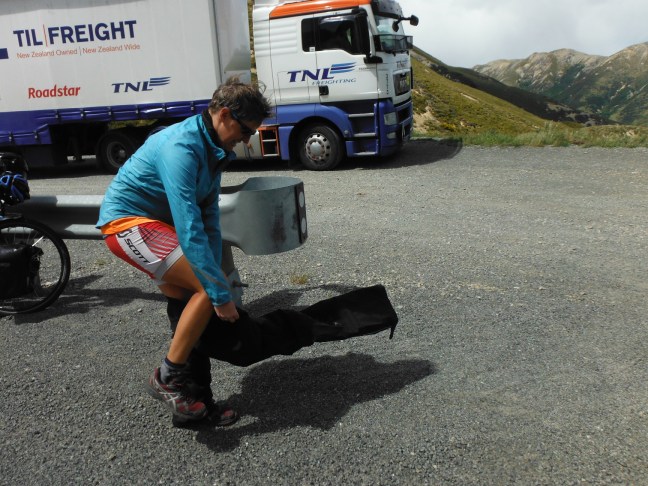
2.30pm. We get to the top of the pass. It’s so windy my gloves blow away (Debs heroically chases them and stops them just before the edge) and putting arms in sleeves of jackets is a more difficult task than it ever should be for adults. We put all of our layers back on (eventually).
dscf9911
The difficulties of getting dressed in high winds

2.35pm. A scary five minutes riding steeply down hill in the wind. The road then turns into a gradual descent and we hardly have to turn the pedals for the next couple of hours as the wind is pushing us along nicely. We are back down to shorts and t-shirts. The scenery has opened out and we have mountains in one direction and the Canterbury Plains in the other. It is beautiful and we can just sit back and enjoy. This is cycling at its best.

dscf9913
The descent. Awesome/

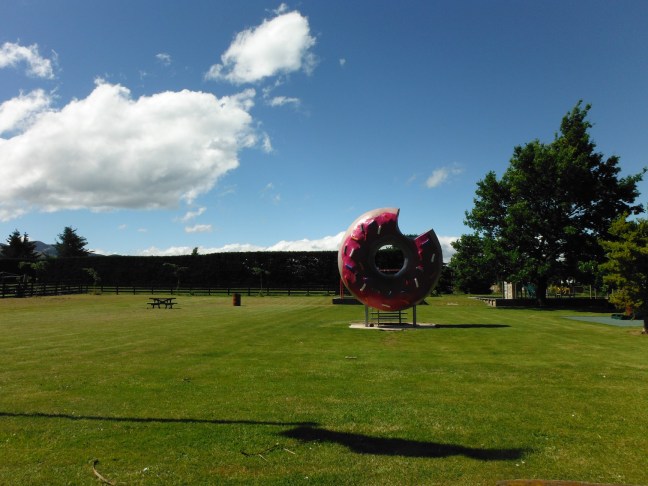
4.00pm. We arrive in a town and are confused momentarily by a huge plastic pink donut in the middle of the park until we remember we are in Springfield. We go against Simpsons tradition and buy a couple of pies. The factor 50 is back out.  Our eyes want to close. Were we really wearing all of our clothes and eating porridge to warm up in the middle of a rainstorm 12 hours ago?
dscf9914
Welcome to Springfield

The 4 rivers cycle route in Korea (we only saw 2…)

As with Japan, we never planned to go to Korea. Until we read that there is an amazing network of mostly off-road, paved cycle routes that cross costs and one of these runs almost the length of the country from Busan in the south, where the ferry from Japan arrives, and Seoul in the north, from where we could fly to New Zealand. Sold. We were going to Korea. The morning we left Japan our AirBnB host had some words of advice. As with most conversations we had in Japan, he talked into his phone in Japanese and showed us the English translation. “Don’t cross the border by mistake”. We laughed. He laughed too. Then he repeated it. Even without his advice, we were pretty sure we’d be staying firmly in South Korea. As soon as we got on the ferry we realised how quiet Japan had been. The ferry, full of Koreans, was loud, and people were shouting and bustling about in a way that was not very Japanese. We found our cabin, which contained 12 cubby holes with futons and a blanket. Half of our roomies were asleep already. We realised Koreans were using plug adaptors for their phones. Hmm so we would have to buy adaptors before we could charge anything in Korea. We realised we didn’t really know much about the country we were about to arrive in. A quick google had search told us that Koreans drive on the right (Japan is left). Good to know.


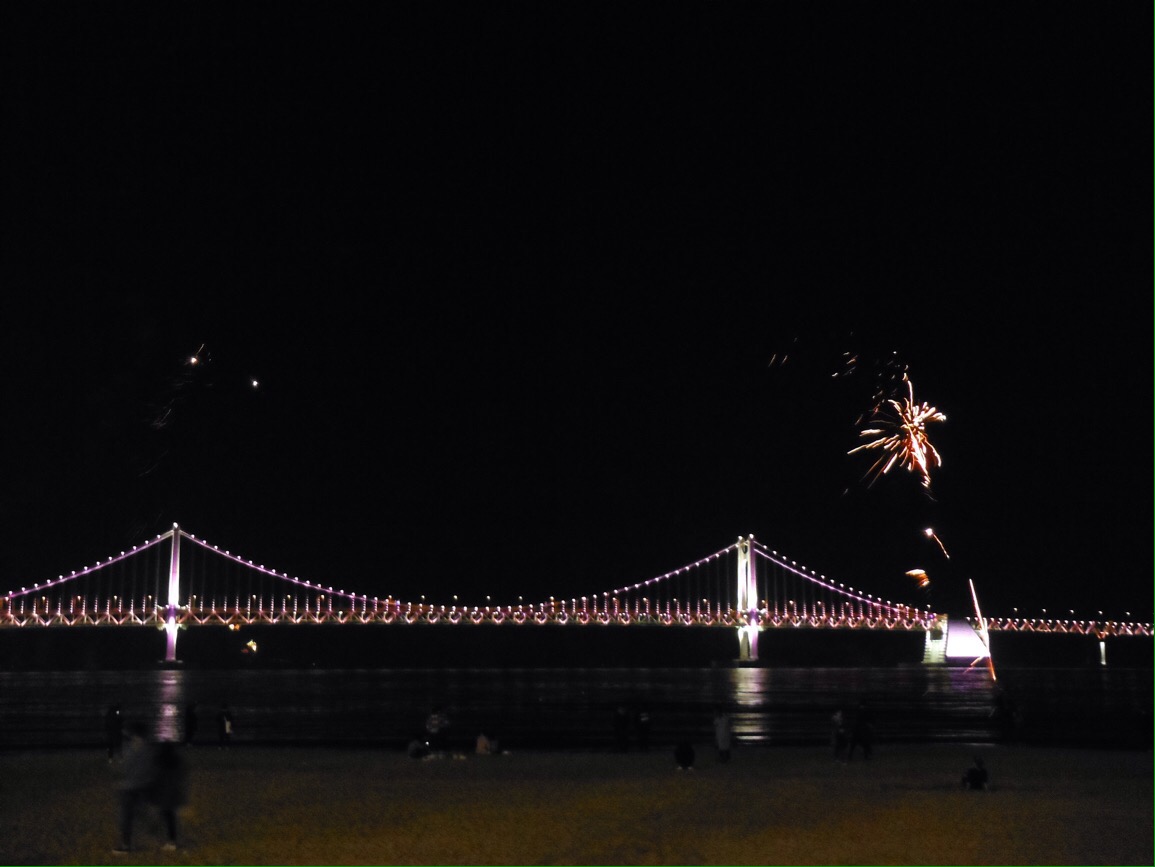
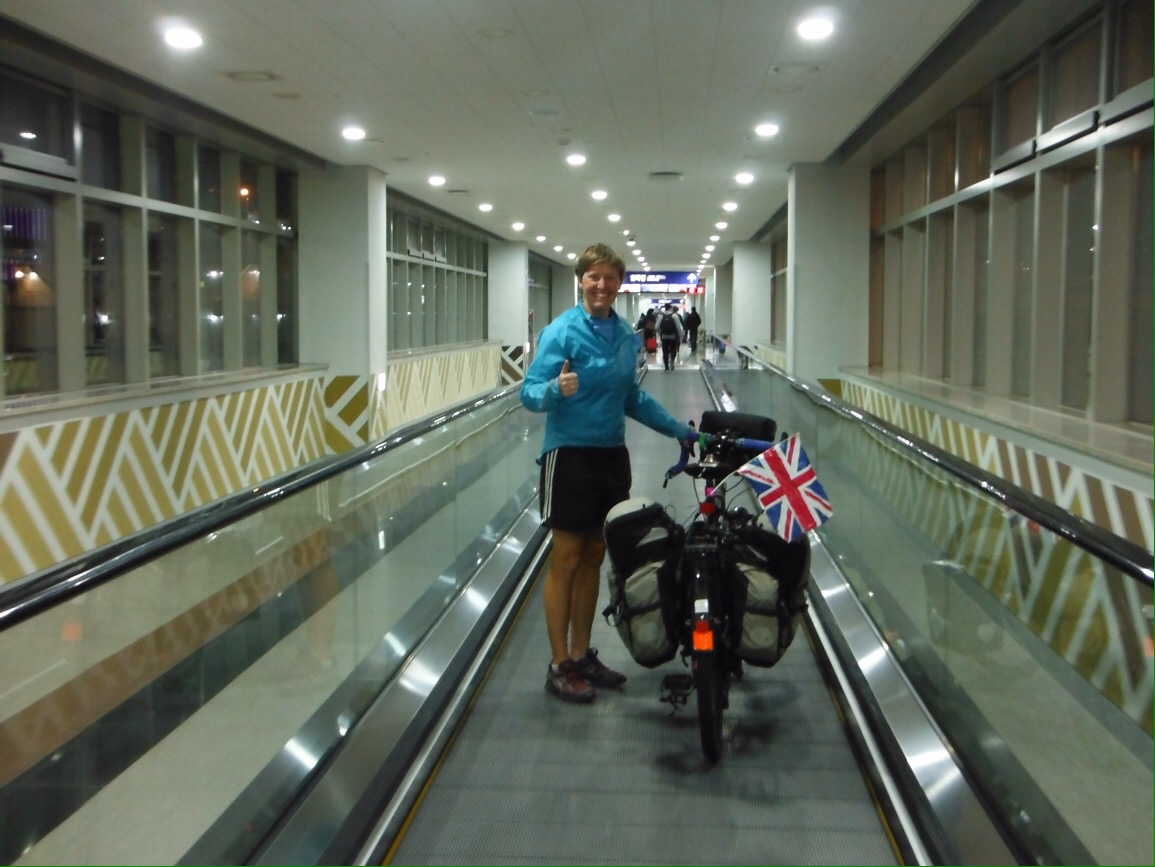
It was dark when we arrived in Busan. The port area was impressive, and the ferry terminal itself very like Japan, right down to the fancy toilets and the 7/11. As we were foot passengers we had to walk the loaded bikes a long way, and for the first and maybe last time, took them on a moving sidewalk. Stepping outside however was quite the culture shock. We had a 15km ride to our warm showers host, and this was not fun. No bike lanes but only big, fast roads. We stuck to the pavement but it was slow going around all the pedestrians and people selling fruit off the floor. There was a lot of litter and a grubby feel to the city. Korea was different. Our route took us alongside a beach – one thing Busan is famous for is nice beaches – and the waterfront area was full of people having a Saturday evening stroll. It was the 5th November and there were fireworks. We never worked out if this was in honour of Mr Fawkes or just another Saturday night in Busan.


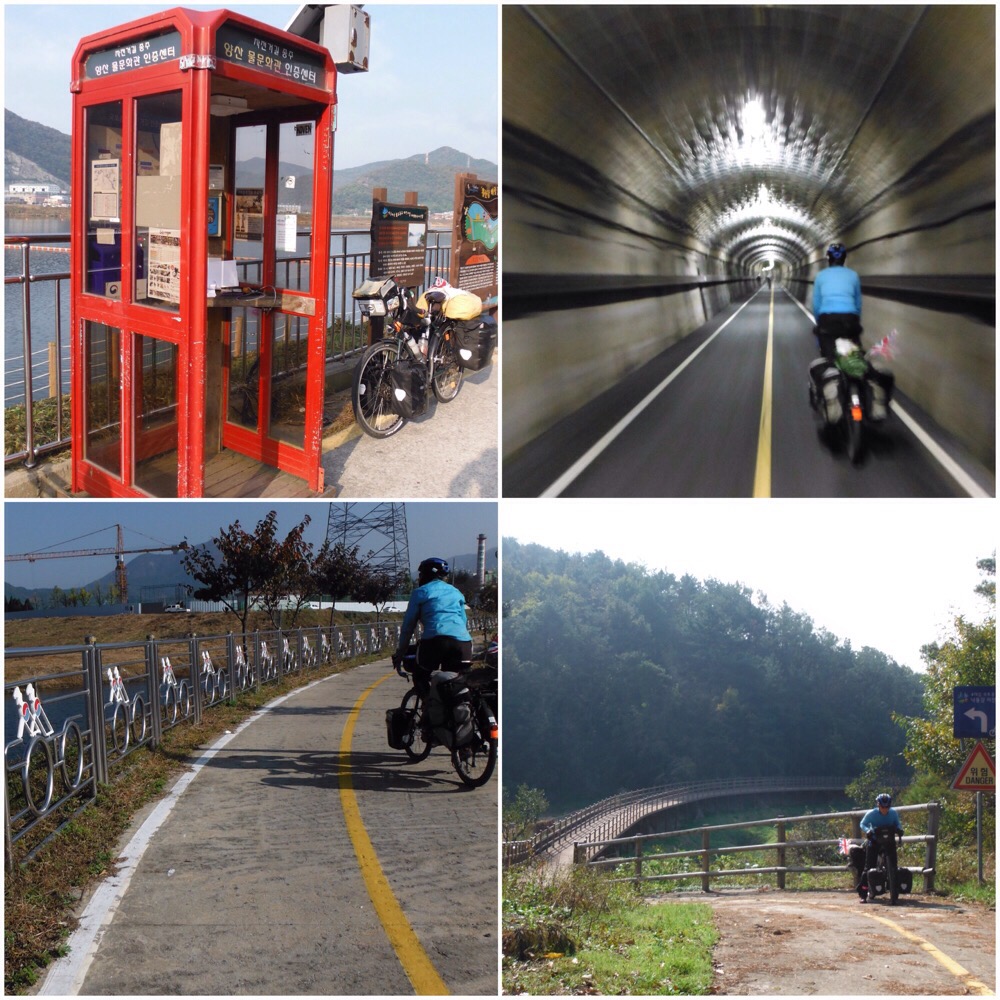
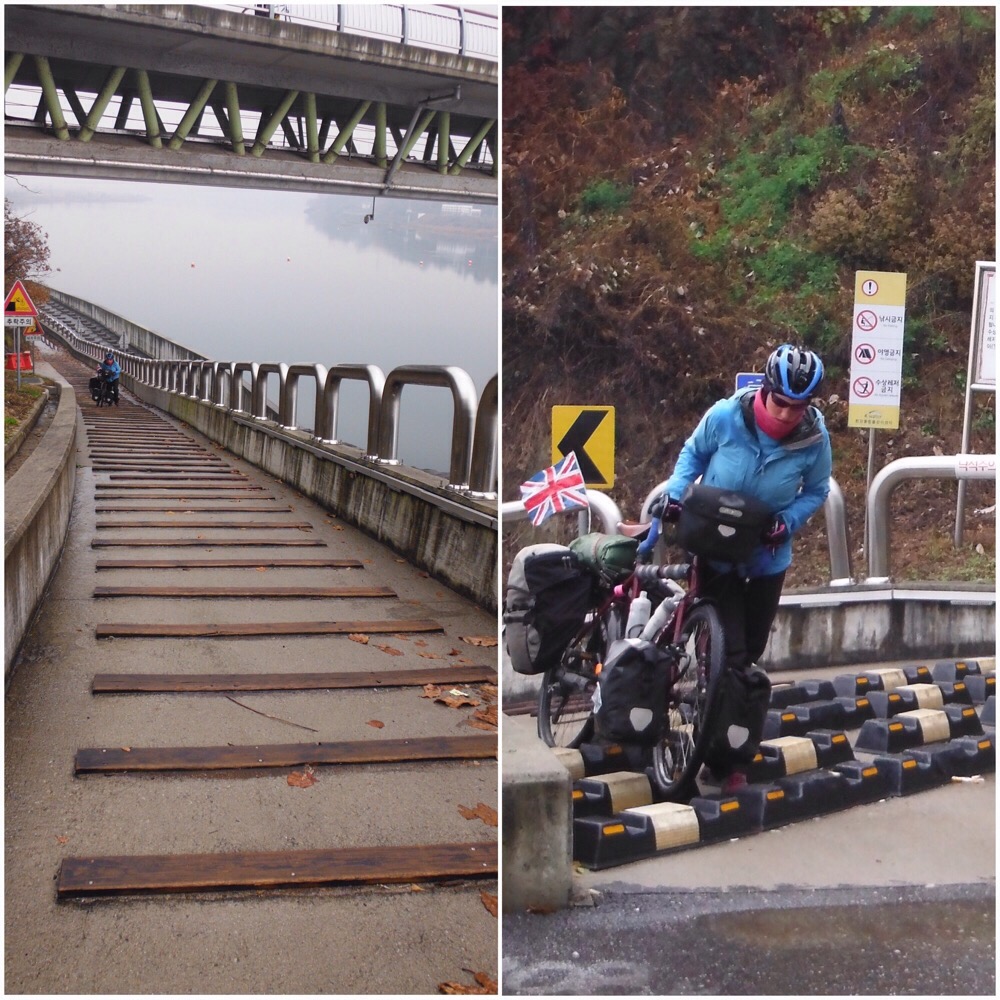
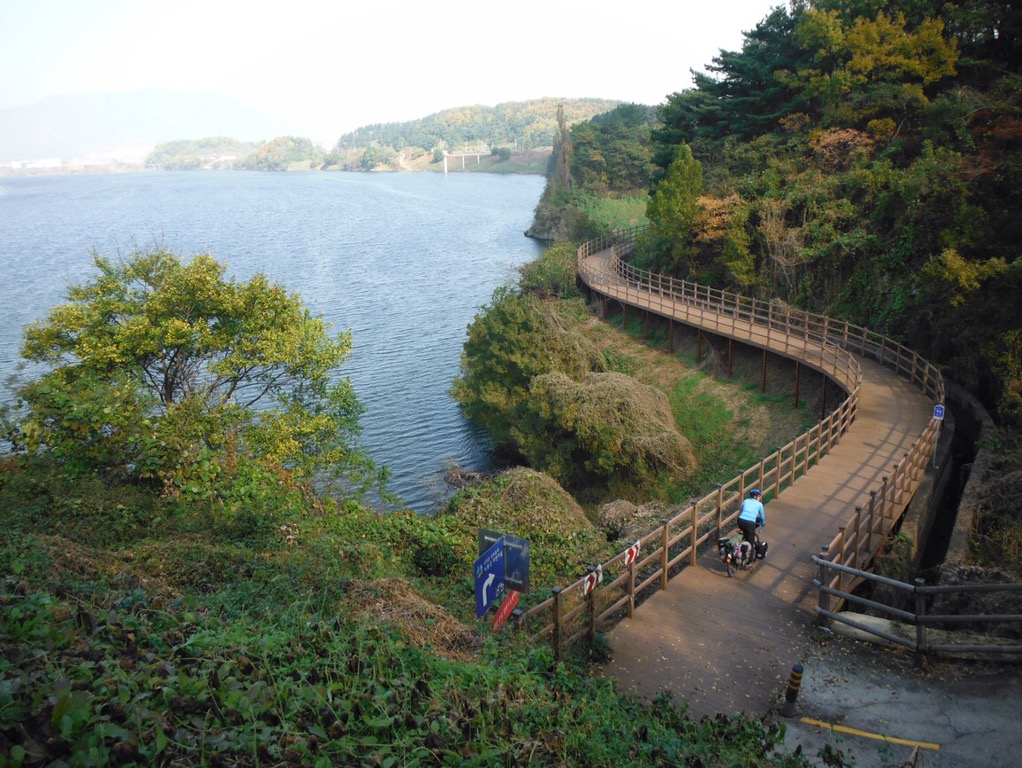
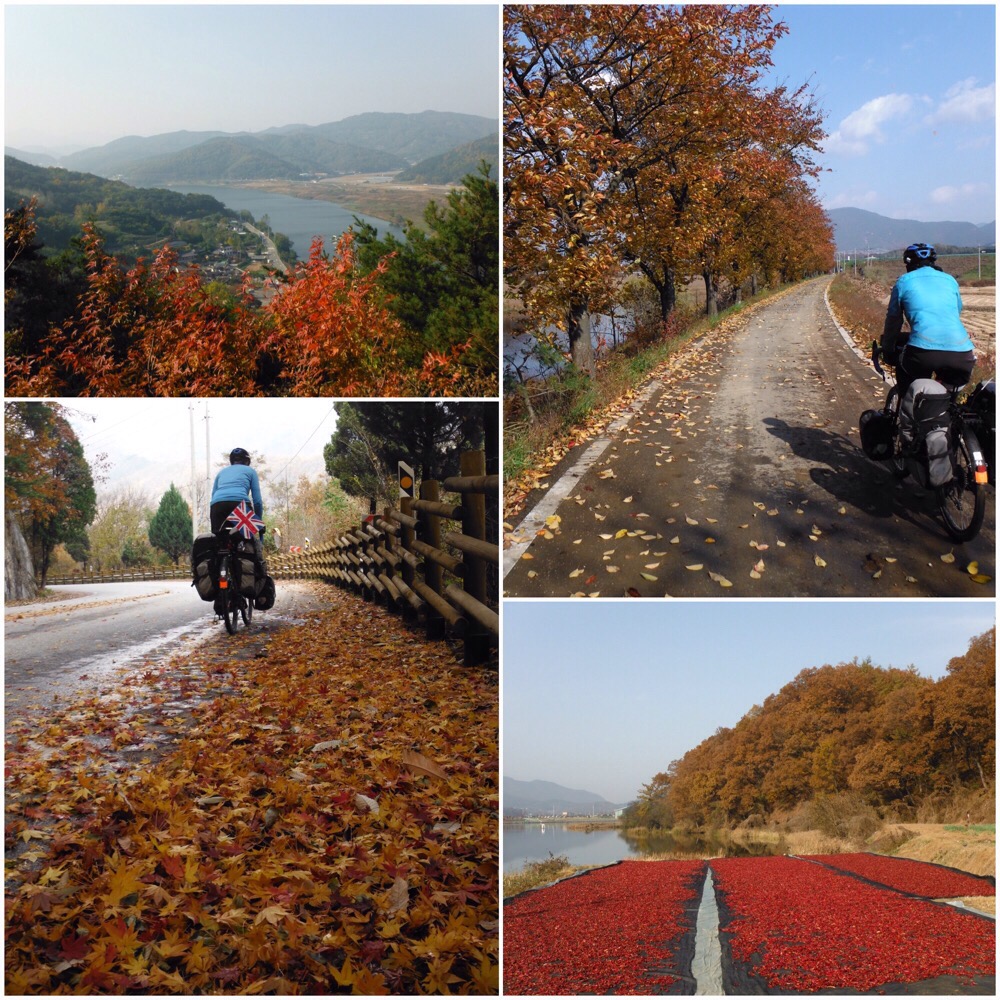
The next nine days were spent cycling the 650 kilometres between Busan and Seoul on the 4 rivers cycle route. It is quite an amazing piece of cycling infrastructure – paved, mostly off-road, mostly well-maintained, loads of facilities on the route (toilets, tool stations, shelters etc). And, as you would imagine when following rivers, mostly flat. Until it isn’t, and then it’s crazy steep. Every now and then the flat path moves away from the river, takes you up a short steep hill (usually 12-20% grade), and then you plummet back down the other side back to the river. There’s a 100km stretch in the middle when you leave one river and climb over a pass to get to the next river but that was nowhere near as strenuous as the short sharp bits.

Mostly great cycling infrastructure….

There are bike bridges, bike tunnels, and even on the road, separate bike lanes. And there are regular ‘certification stations’ in old phone boxes where you can stamp each location on your cycling passport (or if like me you didn’t get a cycling passport, a piece of paper). So all you need to do to get from one end of the country to the other by bike is follow the arrows.

….but not always.

We did wonder if this would get a bit boring, and to be honest the first couple of days were a bit drab – Busan was ugly and went on for ages, and even beyond the city, it was all quite built up. As with Japan, Korea doesn’t seem to do visually appealing cities. So the view was often ugly grey high rise towers and industrial buildings. But this petered out eventually and after those first couple of days the scenery picked up, the sun came out, and life was all good. Riding on a bike route for all that time didn’t lose its novelty at all. Being away from the traffic was great. And autumn was in full swing, so the colours were spectacular.


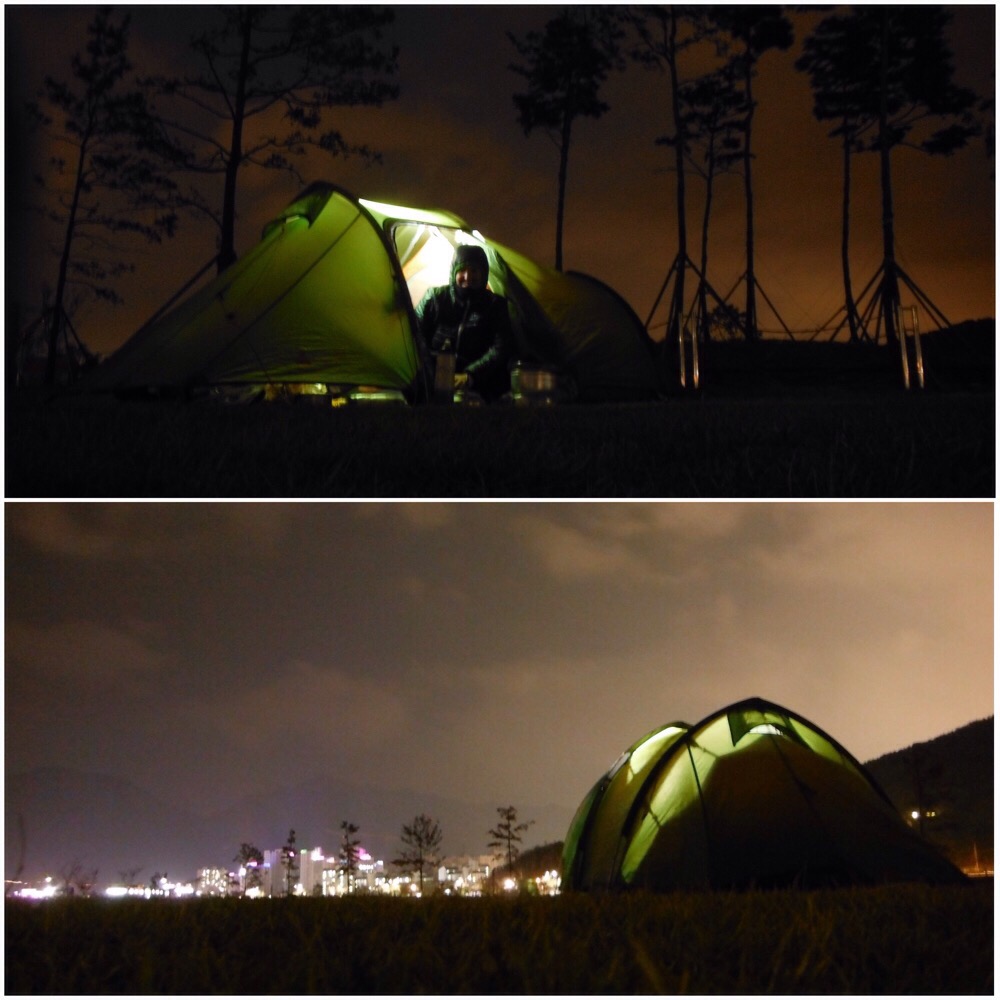
Autumn also brought us a return to cold camping, last year at this time we were having some chilly nights in the tent in Europe, and Korea beat that. Our third night was the coldest, as we woke up to find everything covered with a thick layer of frost, including the bike computers. After de-icing it we could read that it said -6 (Celsius). Brrr. A great excuse to eat chocolate in your sleeping bag though.


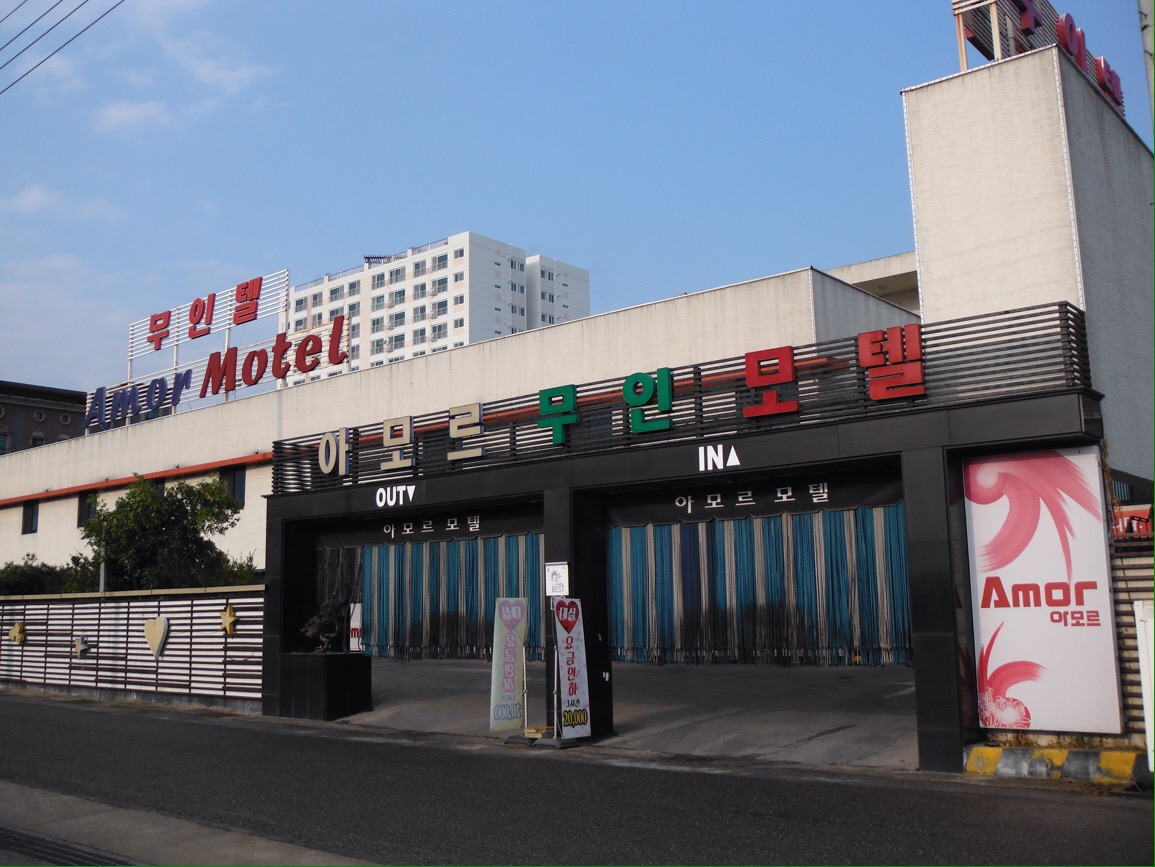
The next couple of nights we escaped into motels. This included a motel with bike lockers on the ground floor, and our first love motel experience. After hearing about these ‘by the hour’ motels in Japan we were expecting seedy and run down, but this was modern, clean and excellent for the cyclist. Loads of space, a big bed, nicely decorated, a desktop computer, a huge bath, free toiletries, a personal garage to store the bikes…. (which was also useful for cooking dinner on the trangia). Everything is a bit secretive in that it is designed for you to drive in, park in a garage, take a private entrance to a room, check in automatically and pay by credit card without being seen by another human being. For us it was a perfect and fairly cheap way to get a good warm sleep.


Camping was easy as there are lots of parks and shelters just off the bike path and nobody seems to care about foreigners just pitching up anywhere. So after two nights of motel luxury we returned to the tent, and a couple of nights later realised that we were not that crazy camping in the cold after all. It was a Saturday night and we came across a camping area on an island in the middle of the river. It was packed. There must have been at least 80 other tents – families, young couples, groups – in November. In Europe you would struggle to find an open campsite, never mind anyone brave enough to camp. There were a few gas heaters visible, but as it was a walk-in campground, not many luxuries. Other than an ability to camp in all weathers, the other thing we learnt about Korean campers was their ability to maximise a weekend away camping. On our first night we pitched our tent at 4pm on a Sunday afternoon at a fairly full campground just outside Busan. An hour later we were cooking dinner and realised a few people were packing up, including our neighbours who were in the middle of a full on BBQ when we arrived. By 6pm it was dark, and more people were packing up. We woke up the next morning to two other tents left. If you go camping for the weekend with some Koreans, don’t expect to be home until late on Sunday night. And take an extra jumper.


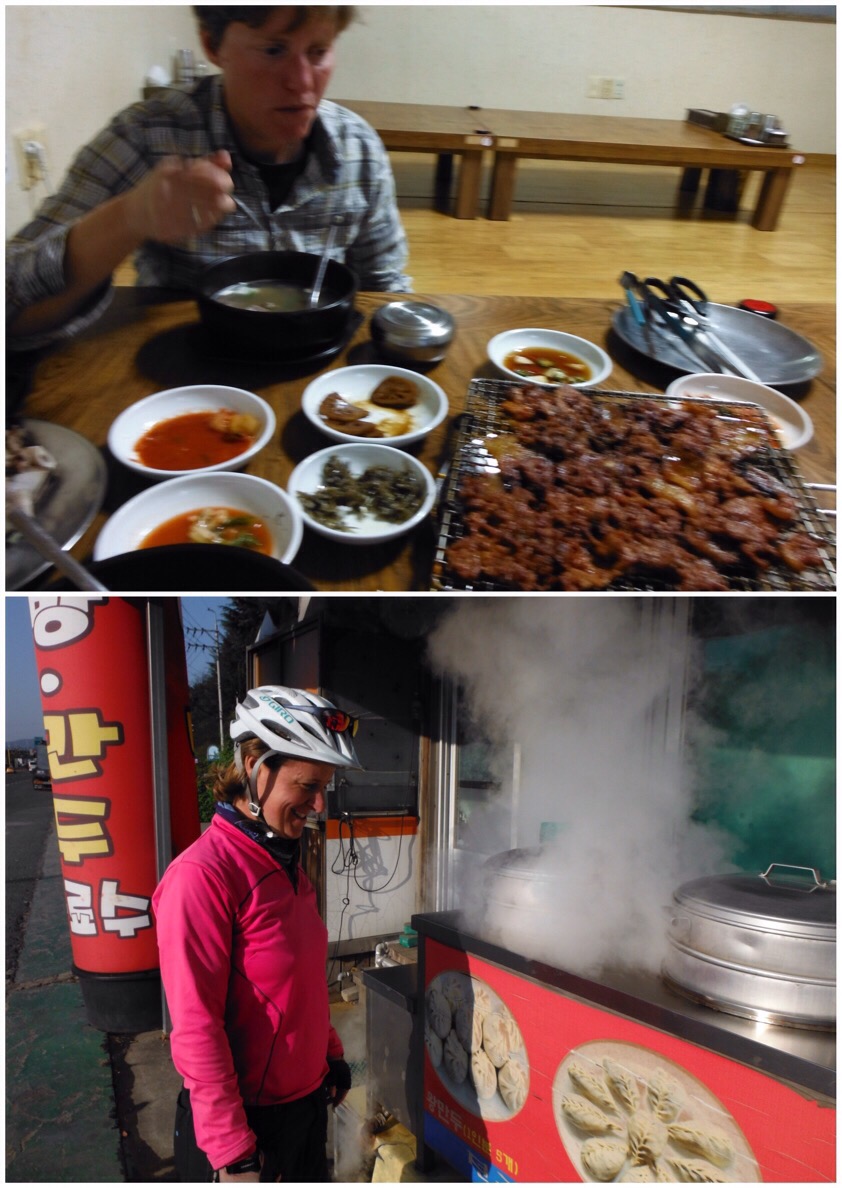
We only really left the bike route to find food. This in itself was quite an experience. Somehow we only managed to end up in places where there were no pictures on the menu, just Korean. The first time we managed to order the only thing we knew how to say, bibimbap (fried rice and veg), with success. At the next place, when we were asked what we wanted to order we just shrugged our shoulders and smiled. This didn’t result in an order being taken, so I mimed that I’d like to look in the kitchen, after being shown a couple of huge pots of broth and meat I picked one and pointed at some rice too. We were a bit concerned when the first thing that arrived was a plate with tongs and a pair of scissors on it but luckily this was shortly followed by a bowl of seolleongtang (oxbone soup) and a demonstration of cutting the meat off the bone with the scissors provided. And many other small bowls of food including the tiniest fish I have ever seen and the usual kimchi (fermented cabbage in a spicy sauce). As we were finishing off the soup we were brought a tray of spicy meat. It seemed that the only foreigners in town should also try bulgogi (grilled marinated meat), with more demonstrations of how to eat it (take a lettuce leaf, put in a bit of meat, some sauce and a bit of rice, in the middle, wrap it up and shove it in your mouth). It was a bit spicy for me so I put a bit of extra rice in and was promptly told off with a good strong strike to the arm. It was lots of fun.


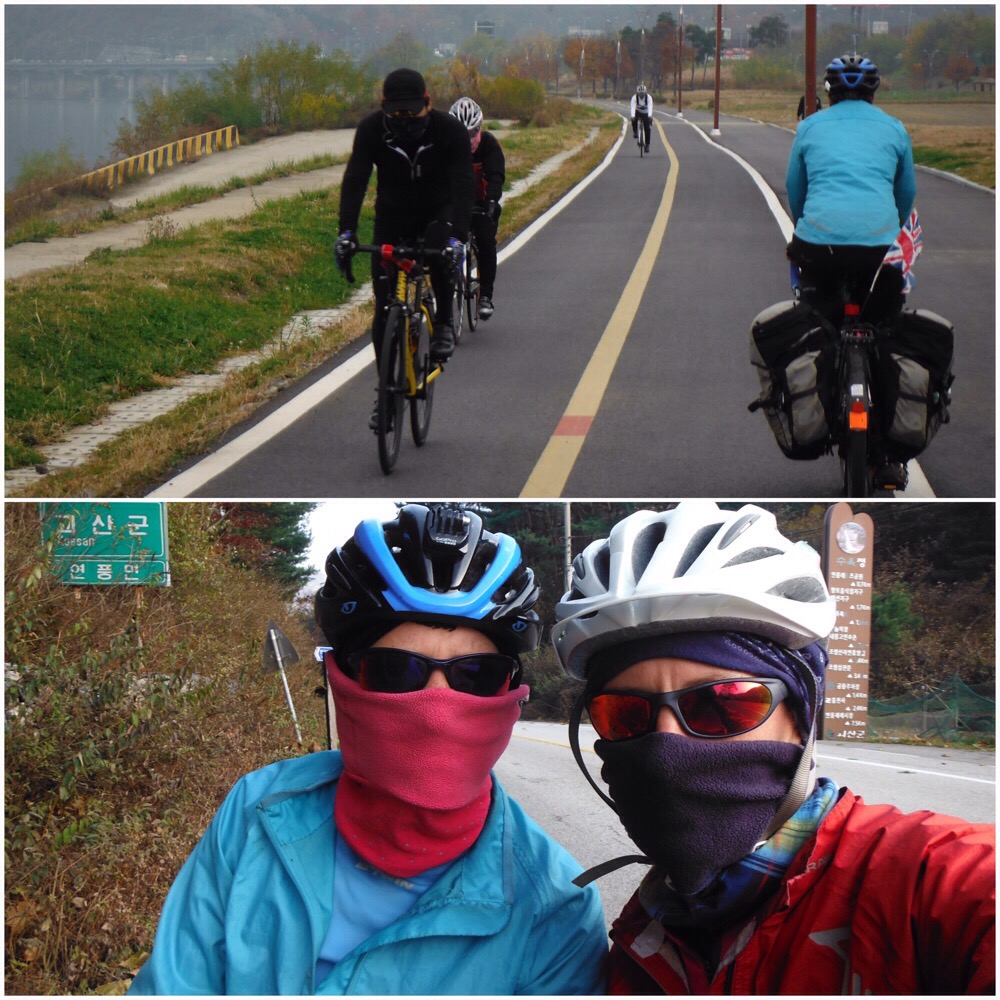
Continuing some themes from Japan, we saw more model people and bad English translations. In contrast to Japan, the vast majority of other cyclists we saw were recreational, usually on flashy road or mountain bikes. People didn’t seem to ride functionally (at least not in November, maybe they are all busy camping). We enjoyed that the bike path cycling outfit consists of covering as much skin as possible. As it got colder we realised the sense in this, and adjusted our clothing accordingly.

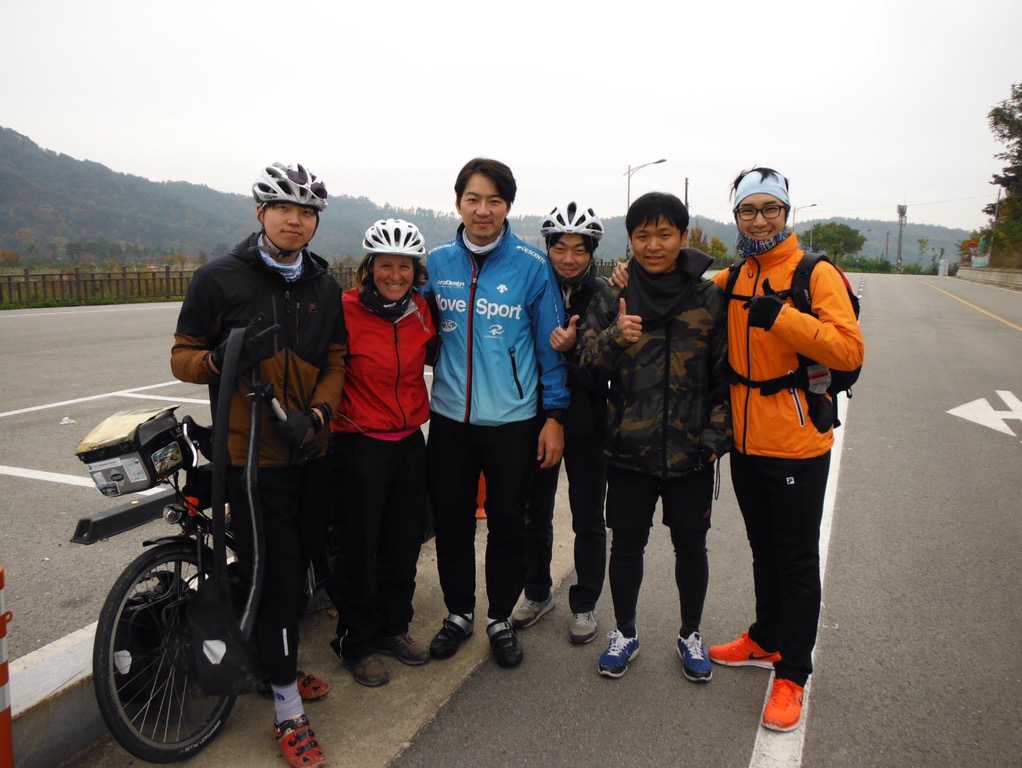
Cycle trail buddies. The tall guy in the middle is a famous Korean actor. He has 1.8 million instagram followers, so he must be famous.


The bike path was fairly well used, particularly considering the temperatures, and as we approached Seoul on a Sunday afternoon we were weaving in and out of families, racers, and tourists taking selfies or falling off. Before we knew it we were in Seoul. It looked to be a cool city to explore but as we spent our whole day there hunting for bike boxes ready to pack the bikes for the flight, we only explored the bike shop scene. And became well versed in the subway system. This usually simple task was actually very difficult in Seoul as shops have limited space so don’t keep empty boxes longer than a few minutes. We must have visited 20 bike shops, split up at one point to cover different parts of the city, and ended up with 5 boxes, only one of which was full size. Our last night in Korea was spent eating a huge meal at the market for the equivalent of £2.50 and then dismantling our bikes in the narrow hostel corridor. Cycle touring isn’t all glamour.

Korea was fun. Being off the road was great, and the scenery on the whole was pretty nice (if not wow). Ten days was maybe long enough for us on the bike route, but there are attractions you could divert to if you wanted to spend longer in the country. Sticking to a cycle path gave us a certain perspective of Korea – spend more time in towns and cities and I’m sure it would be different. We highly recommend the 4 rivers cycle route, certainly if done in conjunction with a trip to Japan. Though we are not sure where the other two rivers went as we definitely only cycled along two.


Next stop New Zealand!

Thanks to Chris in Busan; and Jess and Tim for the (fake) chocolate digestives.

Cycling Shikoku saved us from scurvy

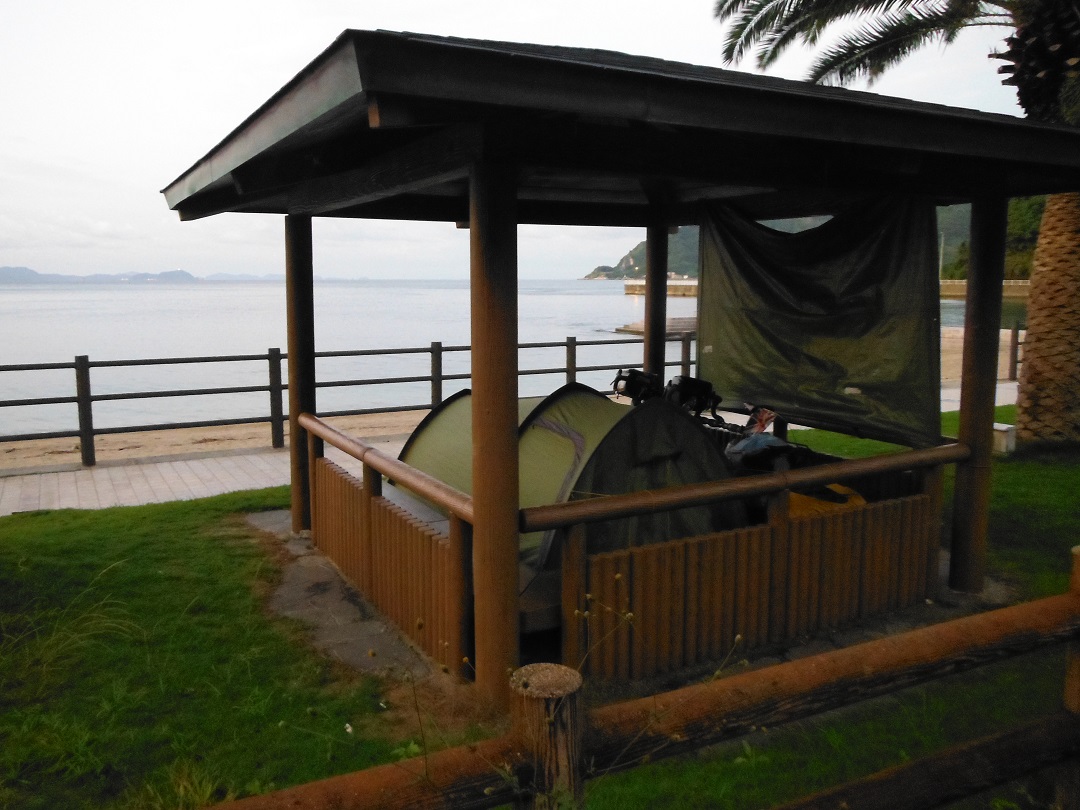
It was dark by the time the ferry docked at Takamatsu. We had identified a sports centre campground about 10K out of town, so after a supermarket sushi stop we rode south and uphill towards it. Arriving at the sports complex was just that. There were lots of little roads, unhelpful staircases and we couldn’t see the symbols for camping anywhere. Jo went into a building that looked a bit like a conference centre to ask. Weirdly, she could get into the building but not out. I had to get the automatic doors to open from outside. With directions from the staff, we found the camping area – closed due to wild boars. Lots of warning signs. Hmmm. As it was now 9pm we didn’t fancy riding much further, so went back to the facility to ask for more help. Turns out it was an old people’s home. Jo got stuck inside again, this time with no helpful information. We found a bit of grass next to an astroturf pitch and hoped the wild boar didn’t fancy a midnight kick about. This started a Shikoku trend of campsites that were either brilliant or bizarre. Top ones included a beach side spot under a handy shelter, and on the scenic Shimanto riverside. The real low was on some deeply furrowed ground at the side of a forestry building in a small village. Very bumpy.

Route 32. Flat-ish for a while

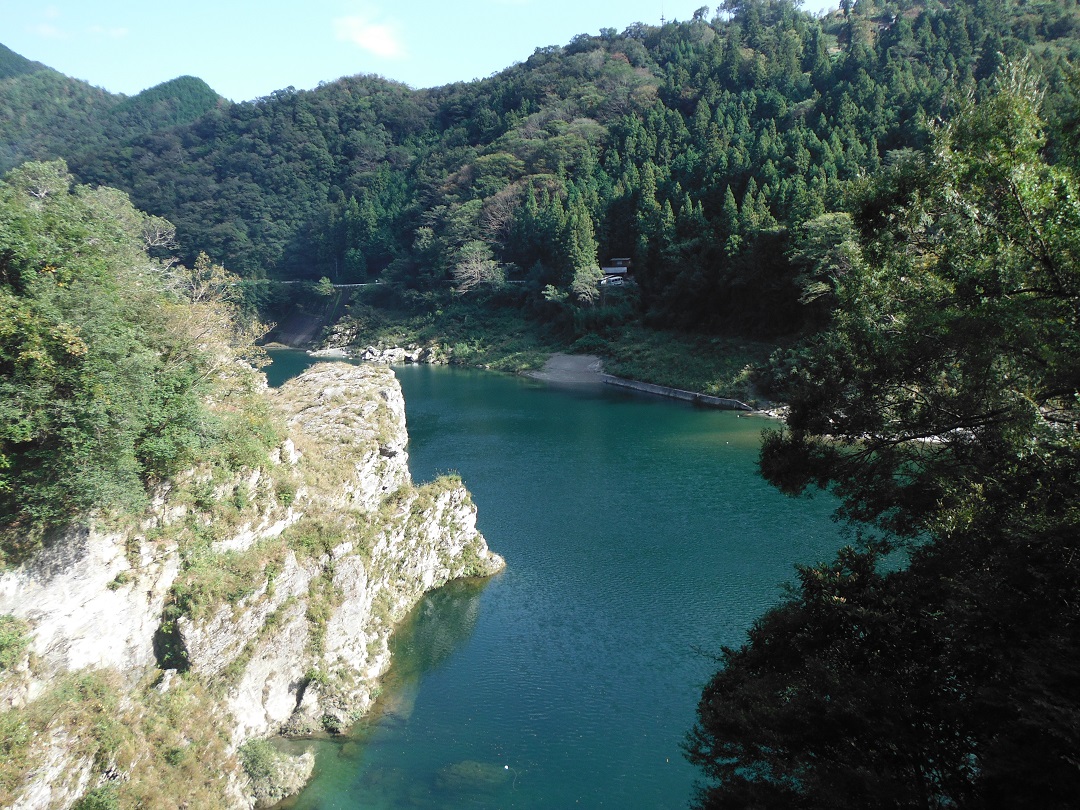
It was great cycling south along route 32, finally we had found a road that was flat-ish and not super busy. It was along a scenic river gorge, had some fun tunnels and some great fake construction men. We also had our second Japanese Police encounter. A kind man stopped, showed us his badge, gave us a whopping bag of mandarins, told us to call the police if we had any problems (possibly, it was in Japanese but I got the numbers) and drove off. We had just bought a bag of mandarins so the food pannier became a little unwieldy. They had just come into season and had become Japan’s only affordable produce item. There are some seriously pricey nashi pears around should you be considering a fruit based investment any time soon. Even better, next time you are mentally planning what to do with your lottery winnings, buy an orchard in Japan.

Well-looked after fruit in Japan comes with a hefty price tag

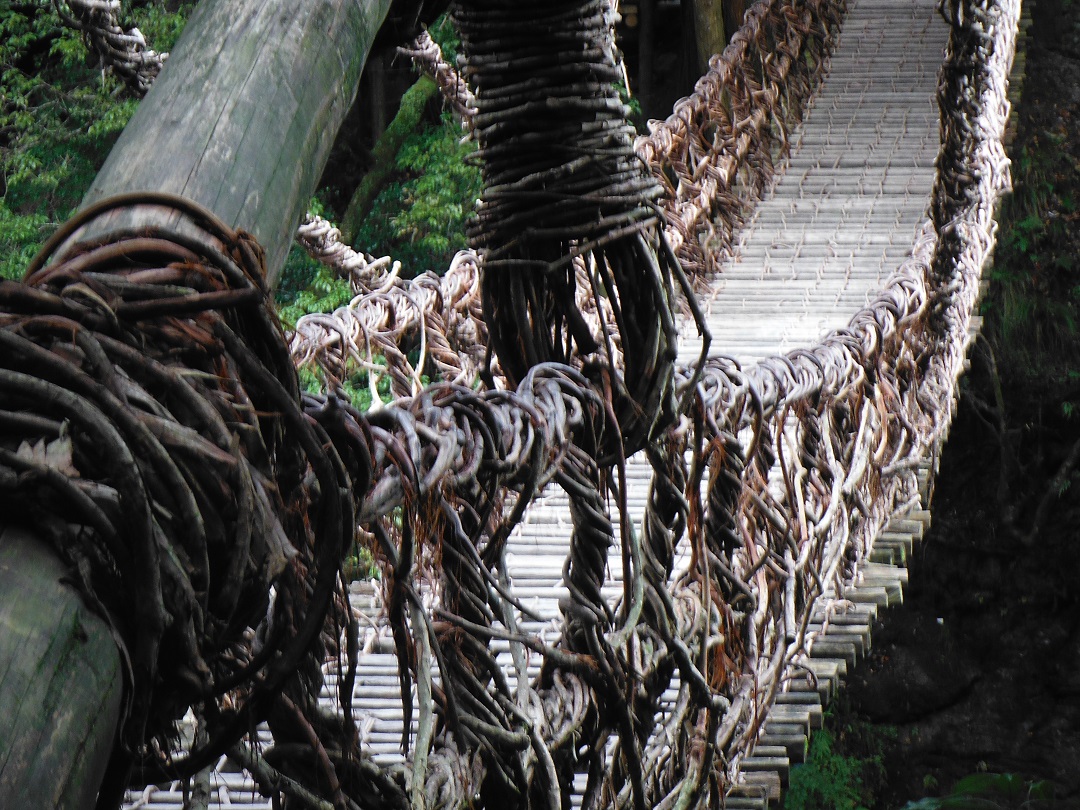
The cycling went figuratively downhill but actually uphill when we turned off to visit a bridge made from vines in a neighbouring valley. We saw a little road barrier up above us, virtually in cloud, and thought, ‘wow, you couldn’t get up there in 6km, that can’t be our road.’ Apparently you could, and it was. We cursed our choice, especially knowing that we would have to do the climb in reverse the next day. Even better, the next day it rained like the sky was falling in. Luckily the vine bridge was very cool indeed.

Amazing vine bridge.

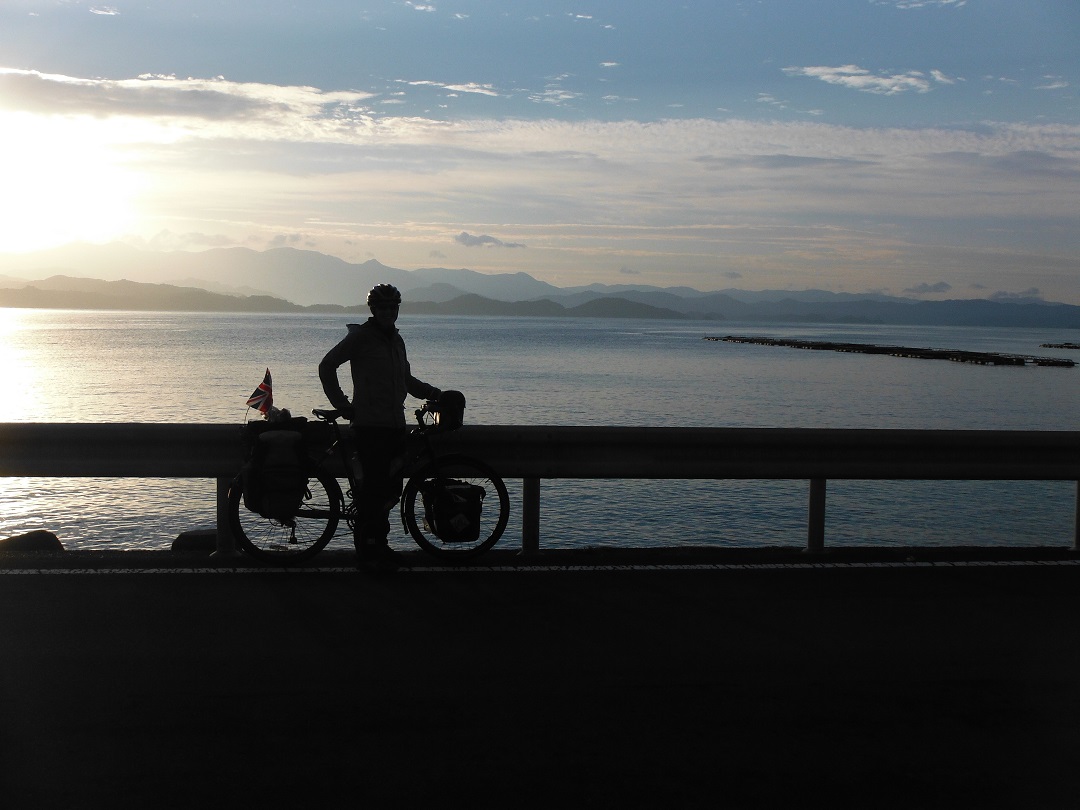
It was great to see the sea and the sunshine after we left Kochi on the Saturday morning. The road followed the south coast for a good stretch and we passed lots of pilgrims in hats and white shirts walking the 88 temples route. We turned further inland on route 81, followed the Shimanto river and supplemented our mandarin intake with local kaki. Shikoku was definitely the best cycling of our time in Japan, even before we found out about hat cakes. The road along the west coast was right along the sea, great views, occasional beaches and even more mandarins and kakis. This time free from some kind ladies in a bakery that filled our water bottles too. We also had another fun ‘onsen before bed’ camping night. Though I think some of the onsen-induced relaxation may have been lost as we had to put up the tent in rain and high winds in the dark after our soothing soak. Jo was particularly proud of her tarp-windbreak construction.

The 88 temple trail is a popular long distance hiking route
Great breakfast spot after an uncomfortable sleep on bumps.
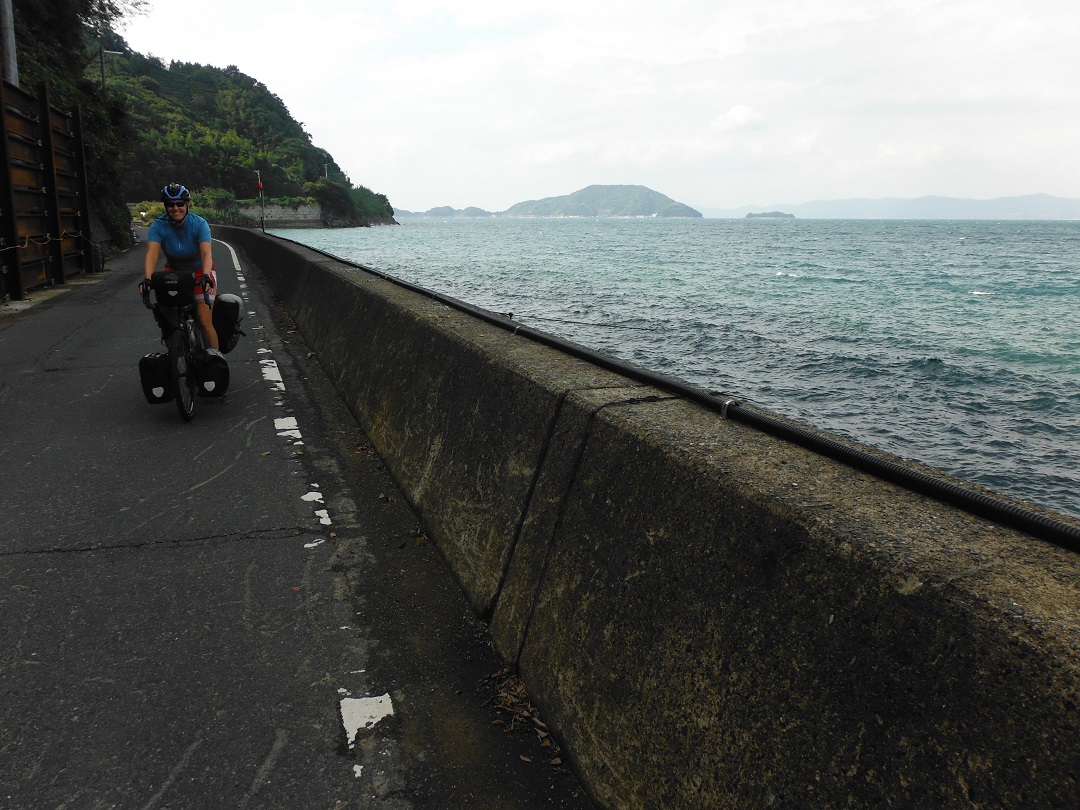
Lots of little harbours and fishing villages.
Jo's excellent engineering
Jo’s excellent engineering

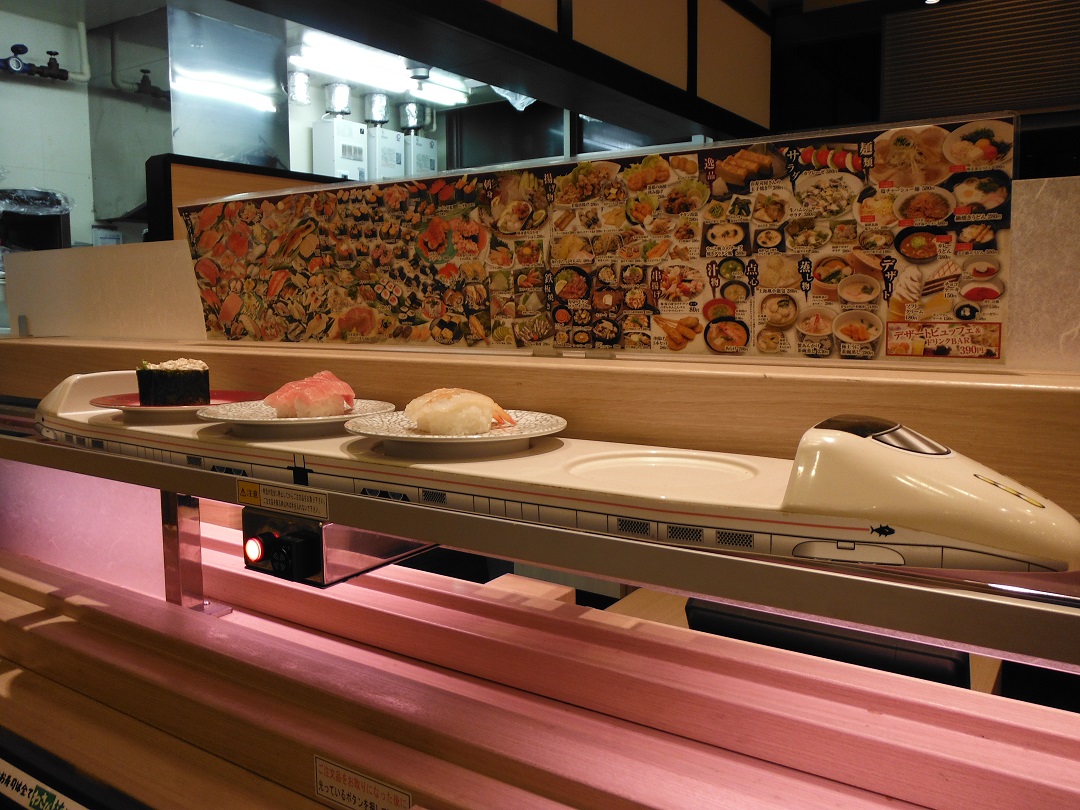
Arriving by ferry to Kyushu, we decided to have a rest afternoon and more onsen time in Beppu. It’s possible we didn’t see it’s best areas, as Beppu appeared to be a bit like a Japanese Skegness with more sleaze and hot springs, and less stag dos and candyfloss. It was the ugliest town we had seen (there had been a few unpretty ones) and the only town we visited in Japan where it seemed like there might be somewhere you shouldn’t walk at night. The old onsen building made up for it – a historic wooden and stone building with very hot baths for one US dollar. Brilliant. Beppu really made itself unforgettable when our sushi arrived on a mini bullet train later that evening. I cannot imagine why this travel experience is not listed in any information I have read about Japan.

Loved it.
Loved it.

Running out of time, we took the most direct route to Fukuoka and it wasn’t super fun. If you find yourself cycling in Kyushu, leave more time and go a different way to us. The highlight of the trip was finding egg and rice vending machines with a pleasant rest area at the roadside. As I’ve since learned there’s an egg vending machine in Sileby, Leicestershire, probably go for the mini-train Sushi when you are planning your own trip. When we spoke to locals in the Tokyo and Fuji area at the start of our Japan cycle, their reaction to us cycling to Fukuoka was usually ‘This is not possible,’ accompanied by headshakes, crazy foreigner expressions etc. They were nearly proved right, when on the last day we saw some mile markers counting down to something. It turned out they were counting down to the point the road became a motorway and bikes were not allowed. Cue steep and long detour on much smaller road. As I said, go a different way to us.

Japan is a fantastic country to visit. Cycling on Honshu and along our Kyushu route is not for the faint hearted as the more built up areas can be very busy. Having said that, car drivers were almost always patient and considerate when passing us. Shikoku was by far the most enjoyable cycling of our trip.

Fab cycling on Shikoku
Riding right along the sea

Navigating Japan wasn’t too tricky – we didn’t buy the maps that most cycling websites recommend and just used our offline map to find ourselves in cities sometimes. There were times when we had to look for the Kanji for a town name as English wasn’t on the signs, this was more tricky. The only symbols I would be confident to recognise only a few weeks later are the five that make up ‘campground’ and the one for ‘western’ toilet (as opposed to squat). I wish we had learned more Japanese to speak to people though we always managed to achieve what we needed with some prepared phrases, gesturing etc. People were friendly and kind, even when they clearly thought we were deranged for cycling so far with loads of stuff. Just like people we have met in Italy, Croatia, USA and everywhere else.

Japan wasn’t part of the original trip plan, but I’m really pleased we took the opportunity to visit this truly unique place. Great scenery, awesome food, and a good sprinkling of crazy stuff.

A fair sprinkling of crazy stuff. More than one gas station had their own T Rex.

Ten things that made us smile in Japan

We arrived in Japan not knowing what to expect, other than that it would be very different from cycling across the USA. It ended up being a country that entertained us in many ways. Japan is a great place to cycle tour for a number of reasons – good food and water is everywhere, camping is easy and hot springs (onsens) are a great way to end a day’s cycling. But one of the best things is that so many small, quirky things made us smile over and over again. Here is just a selection!

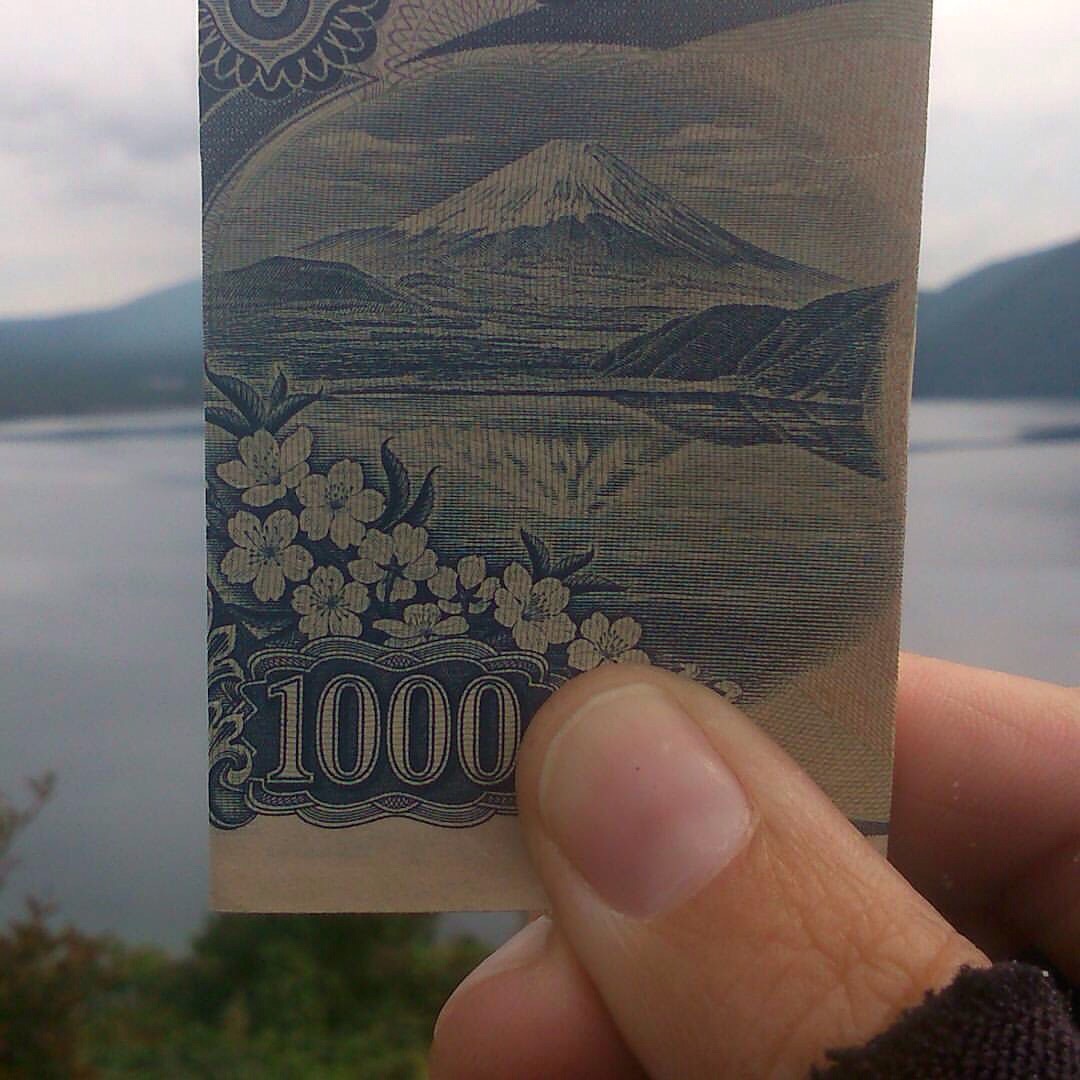
The cloud blocking the view of Mt Fuji didn’t make us smile, but it’s ok because lots of other things did…

Food surprises

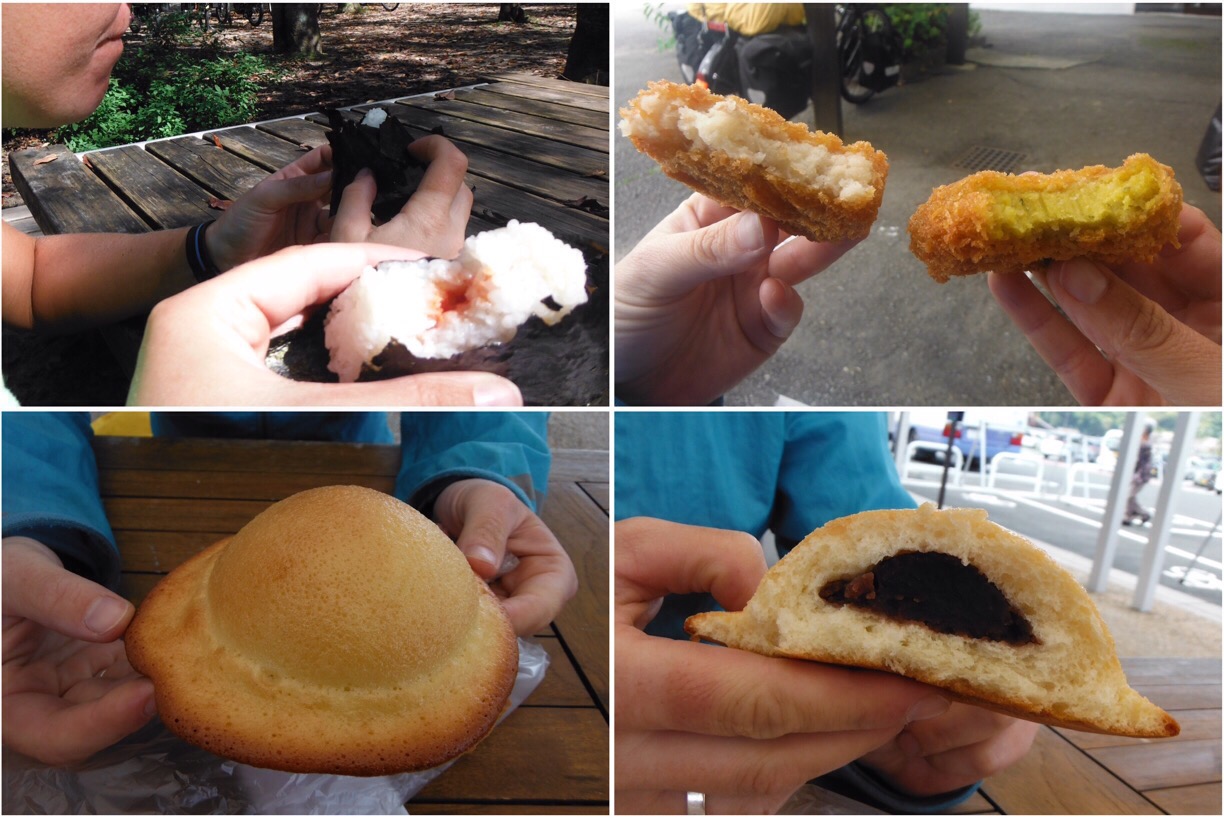
We mentioned banana surprises earlier, but this was not the only food surprise. A lot of food was a surprise for us as we had no idea what we were buying a lot of the time, but particular foods even when you thought you knew them could still surprise you. Take the humble hat cake. (No? It’s a Kochi speciality. A cake shaped like a hat). The first one we tried was plain. It was great. Then we bit into our next one to find a sweet bean paste filling. Surprise! Another one of our favourite snacks was a fried potato fritter type thing that had different flavoured fillings. But they all looked the same on the outside so we never knew what our filling might be. Meat, vegetables, curry… surprise! The perfect cyclist snack, onigiri (a rice triangle wrapped in seaweed), has flavoured fillings according to the colour of the label. But we never seemed to get the same one twice. It was always a surprise.

Onigiri surprise; friend potato surprise; and hat cake surprise.

(Note: not all surprises were good. Debs was not impressed to bite into things that appeared to be chocolate only to find nuts. Though in those situations I got two to eat, so it’s not all bad.)

Construction workers

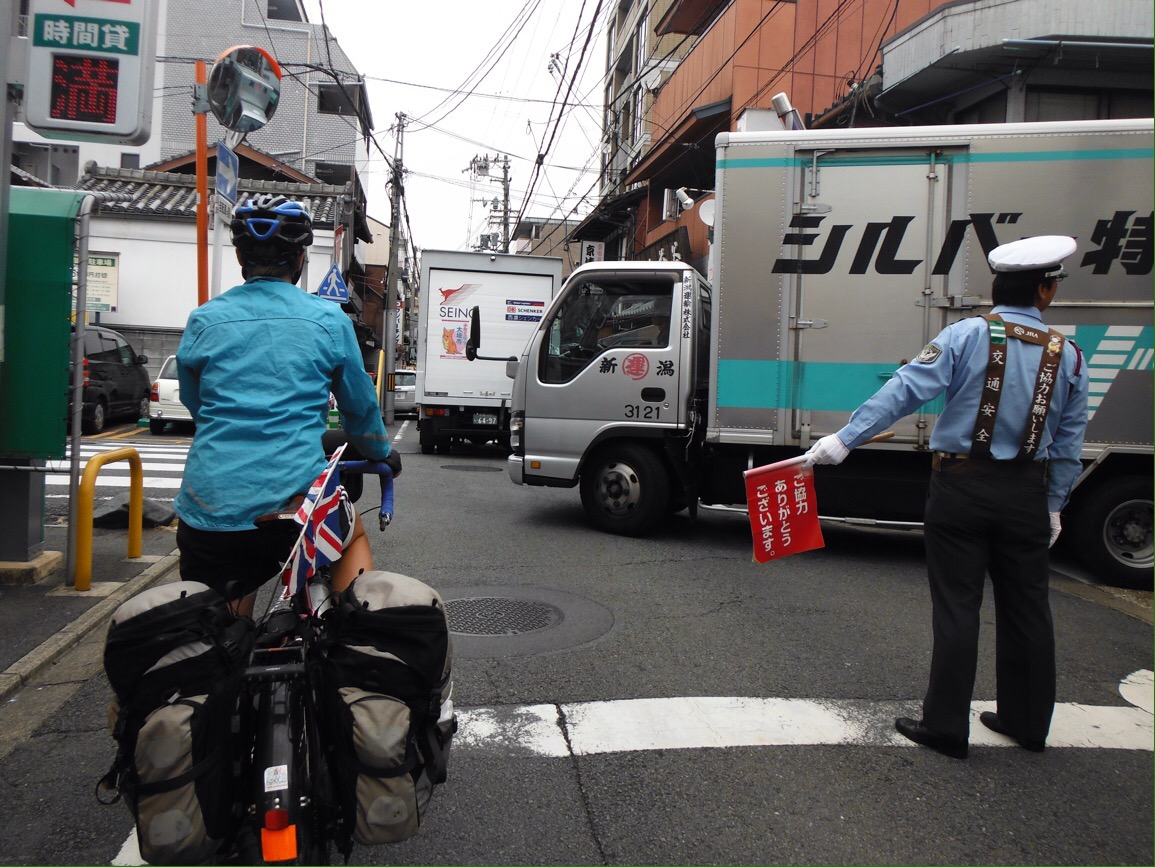
It seemed to us that the vast majority of Japanese men nearing retirement are employed in the construction industry. Mostly in the important task of supervision. Every construction site, however big or small, would have a team of construction supervisors at the entrance making sure there was no confusion over who had right of way and directing traffic and pedestrians with large glow sticks/lights sabres or flags. This role was taken seriously. And for cyclists it is amazing – as soon as they see you coming, you see the oversized glow stick wave and the traffic is held up until you are safely through. Awesome.

Not yet moved up the ladder to get a glow stick, the humble flag waverer keeps traffic moving.

Model people

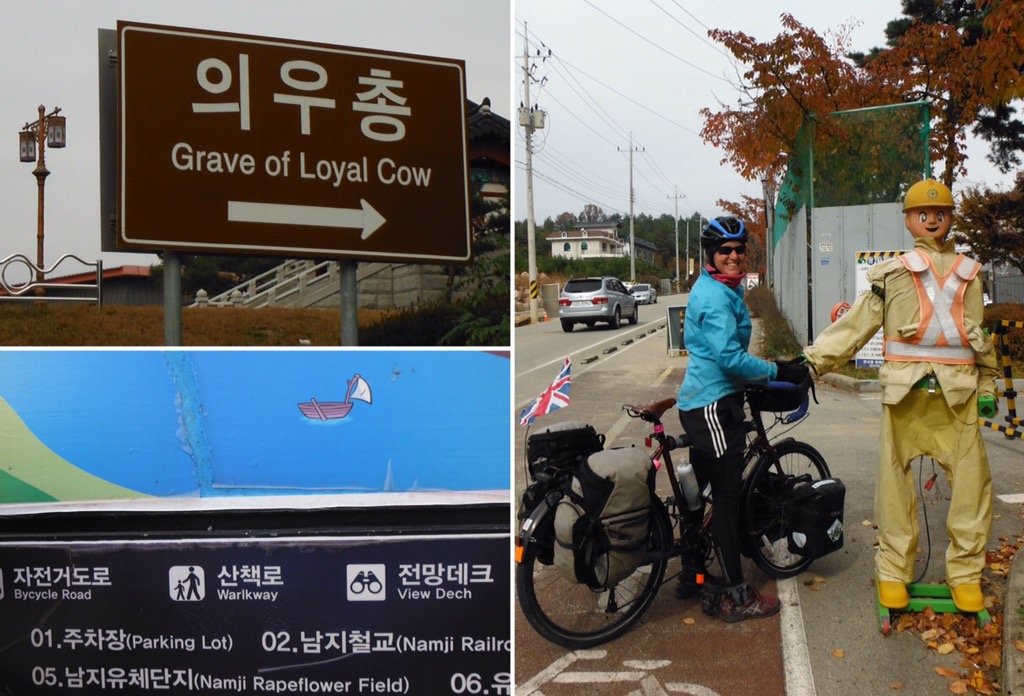
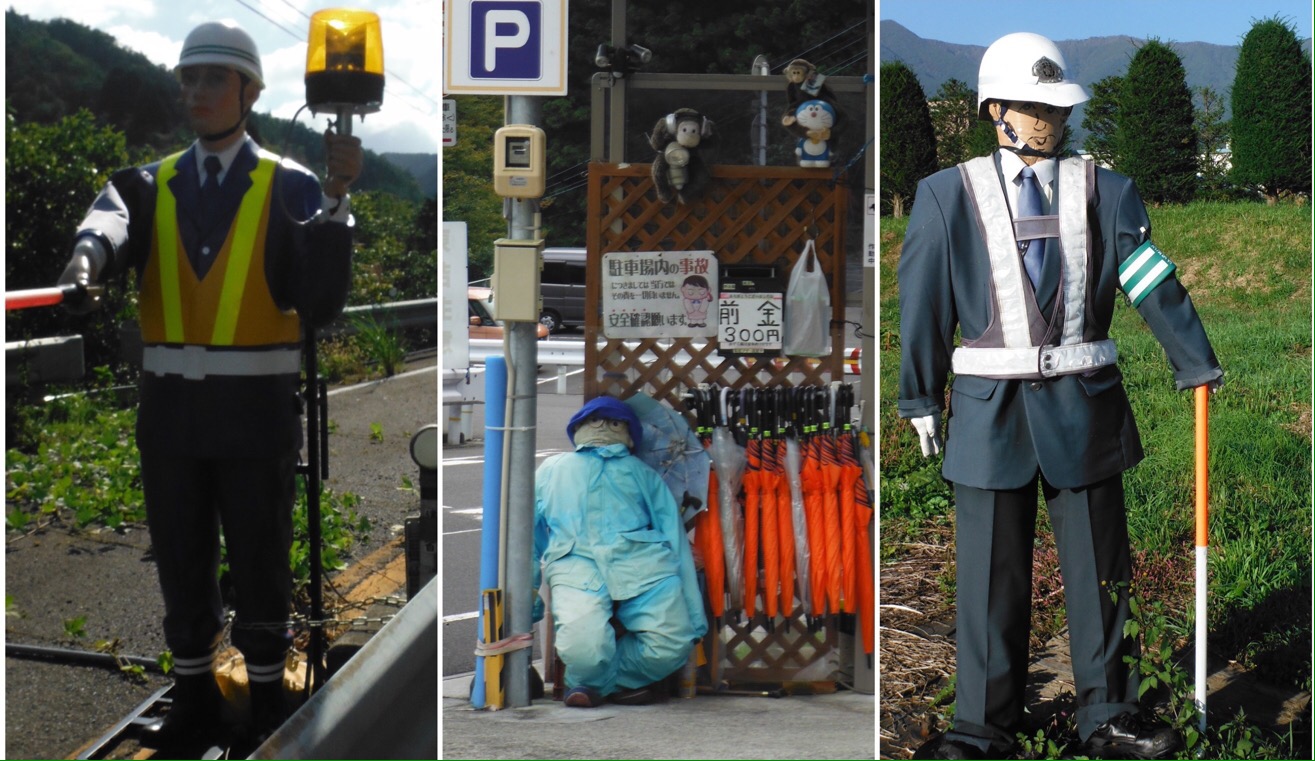
We found some instances where there must somehow be a shortage of men nearing retirement so a model construction worker had to be used instead. The level of attention to detail was impressive. We also found model policemen, a model car park attendant and many very realistic scarecrows.

Construction worker; parking attendant; policeman. Some more life-like than others. I still wasn’t sure whether the dude on the left was real or fake until I got within a few meters.

Vending machines

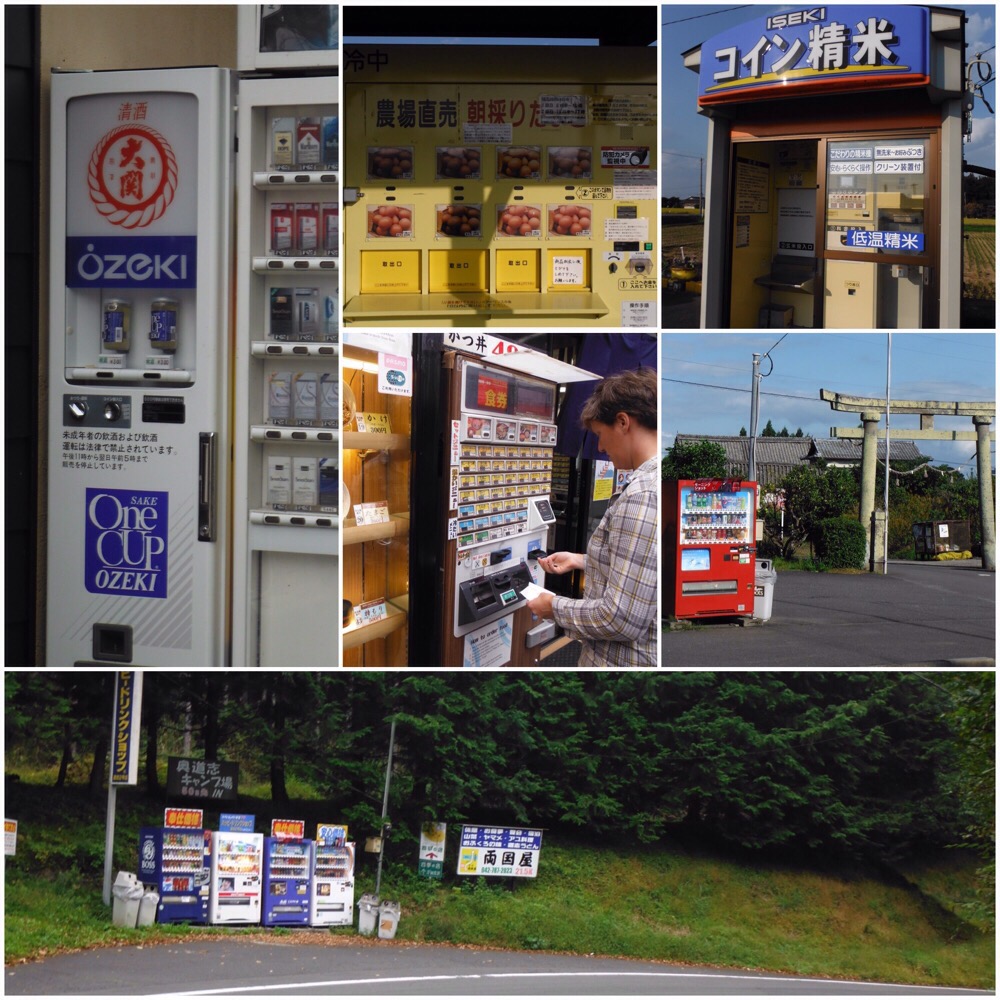
Probably the thing you see most often in Japan, more than convenience stores and shrine gates, is a vending machine. They are everywhere. If you were in a car you would never have to drive for more than five minutes without seeing one, which means on a bike they are pretty regular too. More impressive than their contents were how they were installed, run and refilled in some of the most out of the way places, like the edge of a field. Mostly they have cold drinks, but if you are lucky there will be not one vending machine but a row, with different delights in each. We saw beer, cigarettes, sake (wine), ice cream, noodles. But we were expecting more diversity, and on our penultimate day in Japan vending machines got a whole load more interesting when we saw a lay-by with an egg vending machine and a rice one.

The thing you see the most of in Japan. A vending machine (or 4) on every corner.

Tannoy systems

There you are, riding along a quiet road, and from nowhere a tannoy system fires up and starts playing random music. This was nice. Less nice was when riding past crop fields and some kind of animal noise starts playing, presumably to scare away birds (and cyclists). Most entertaining was probably when we were in our tent almost asleep and Auld Lang Syne started playing over the campsite tannoy, and was repeated lullaby-style for fifteen minutes to demonstrate that fun time was over. I’m actually not sure this made us smile at the time, but the extensive tannoy system is a funny part of life in Japan.

Pointless jobs

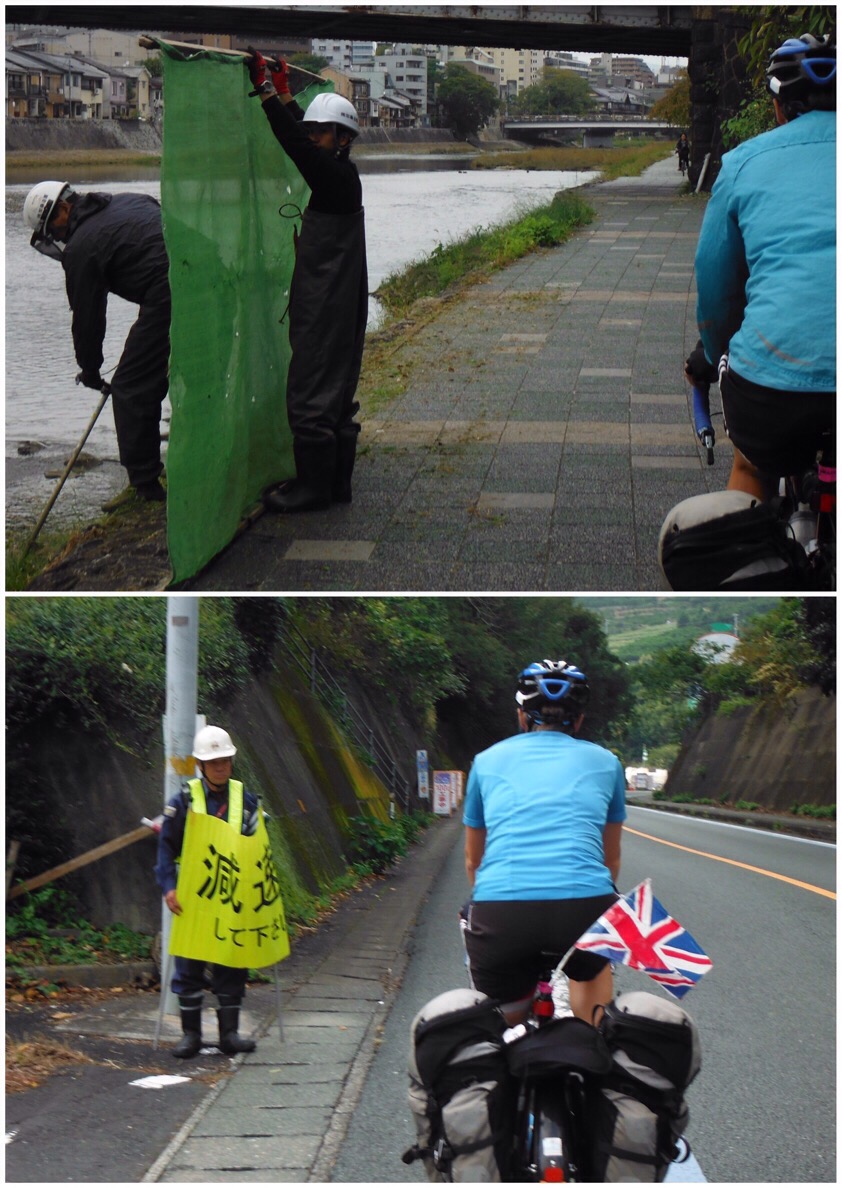
As well as the hundreds of jobs available in construction for those skilled with a giant glow stick, there are many other jobs that some people (us) might consider a little pointless. There is obviously leaf-blowing, the most pointless job ever that can be seen across the world, but we had some Japan-specific favourites: someone holding a sign warning that construction is ahead (just put a sign up?); steam cleaning the white line on the side of the road (its Japan, it’s not that dirty anyway); and a strimmer’s mate, someone holding a screen next to a verge strimmer to stop the grass spreading on the pavement (resoundingly unsuccessfully).

We felt sorry for the guys holding up signs warning of roadworks ahead. He didn’t even get a flag, never mind a glowstick. A sign on it’s own would probably do the same job.

Signs

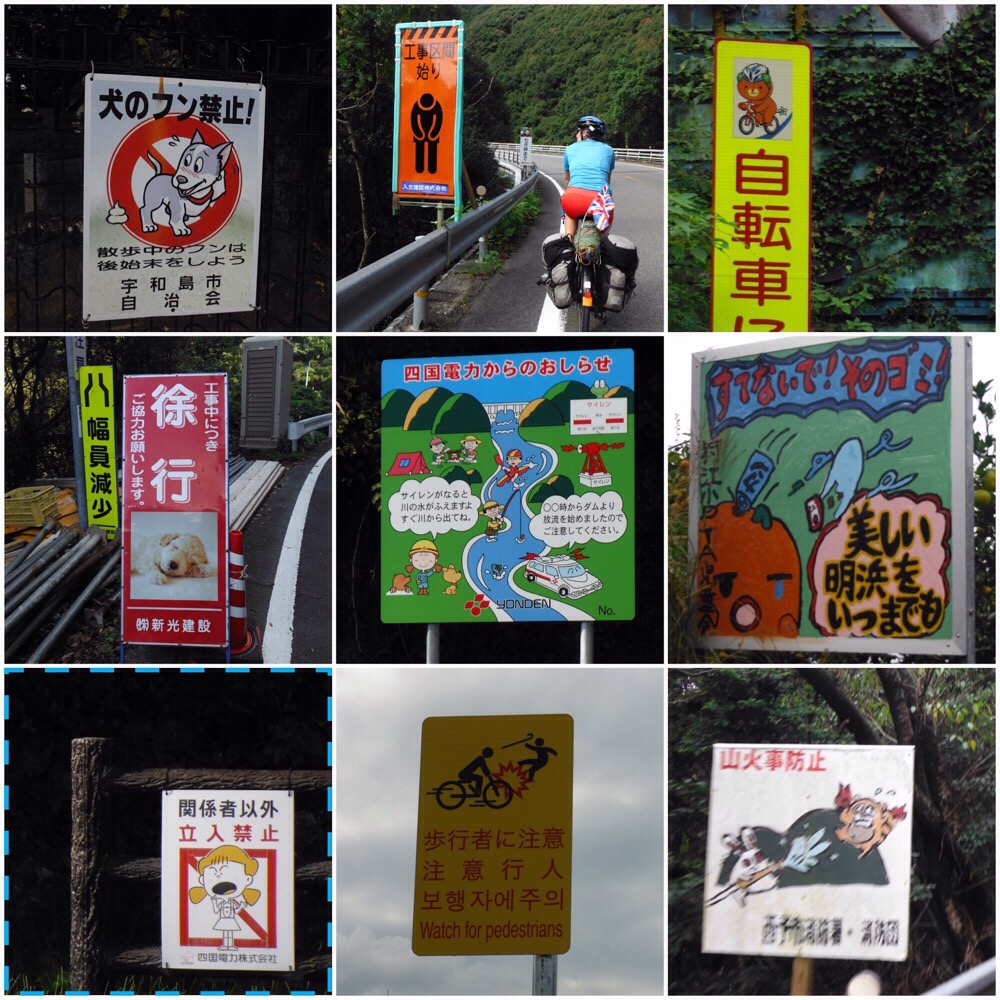
Like the loser I am, I find signs in different countries fascinating. It shows how there are innumerable ways of conveying the same type of instructions/warnings. In Japan it is mostly kid cartoon style, even sometimes kids drawings. We wondered if towns had competitions in primary schools to design some signs, particularly those telling you not to drop litter. Quite serious warnings (e.g. be careful not to die from this or that) were portrayed with cartoon animals. Others just made us laugh.

Beware of cartoon dog poo; sad workmen; bears on bikes; sleeping dogs; and many other road hazards.

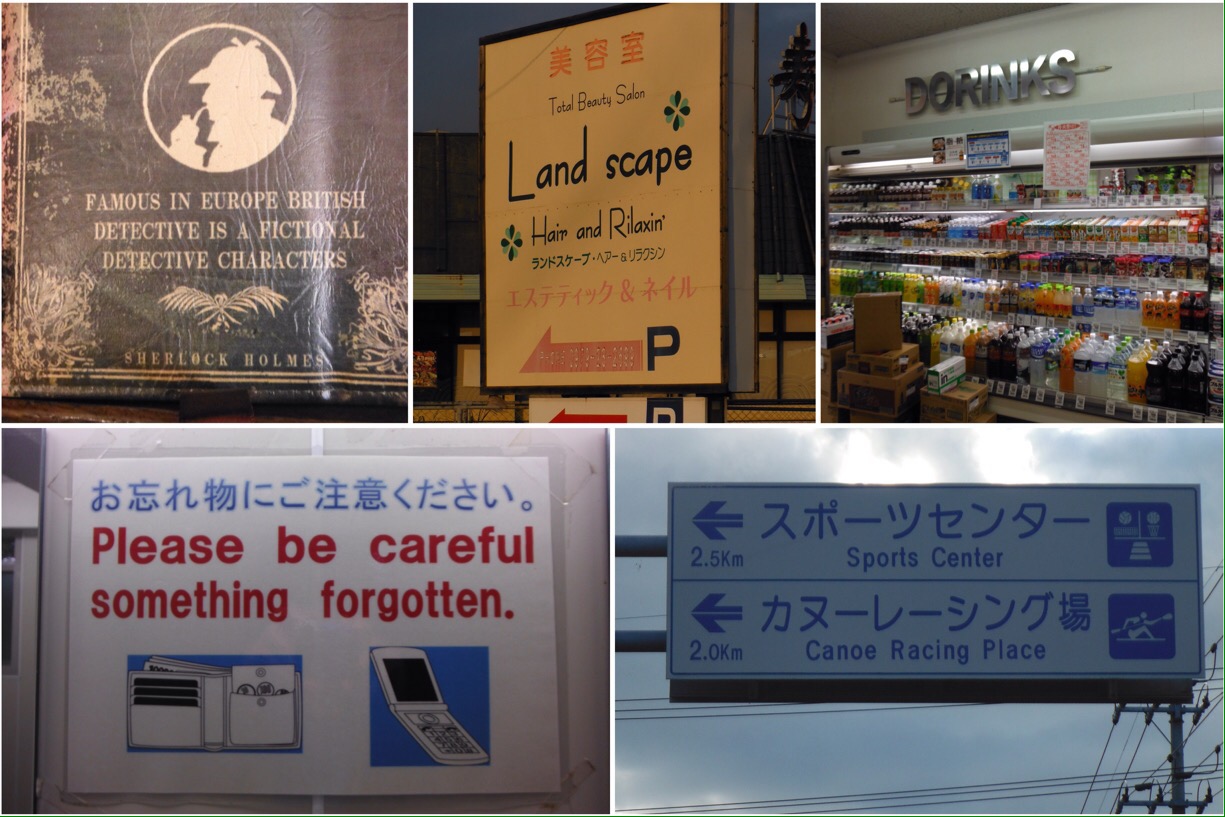
English translations

I don’t think we’ve cycled in a country where less English was spoken, so it was strange to see English translations in many places (particularly supermarket departments). But there’s a bit of work to be done on the quality of the English.

Going to the toilet

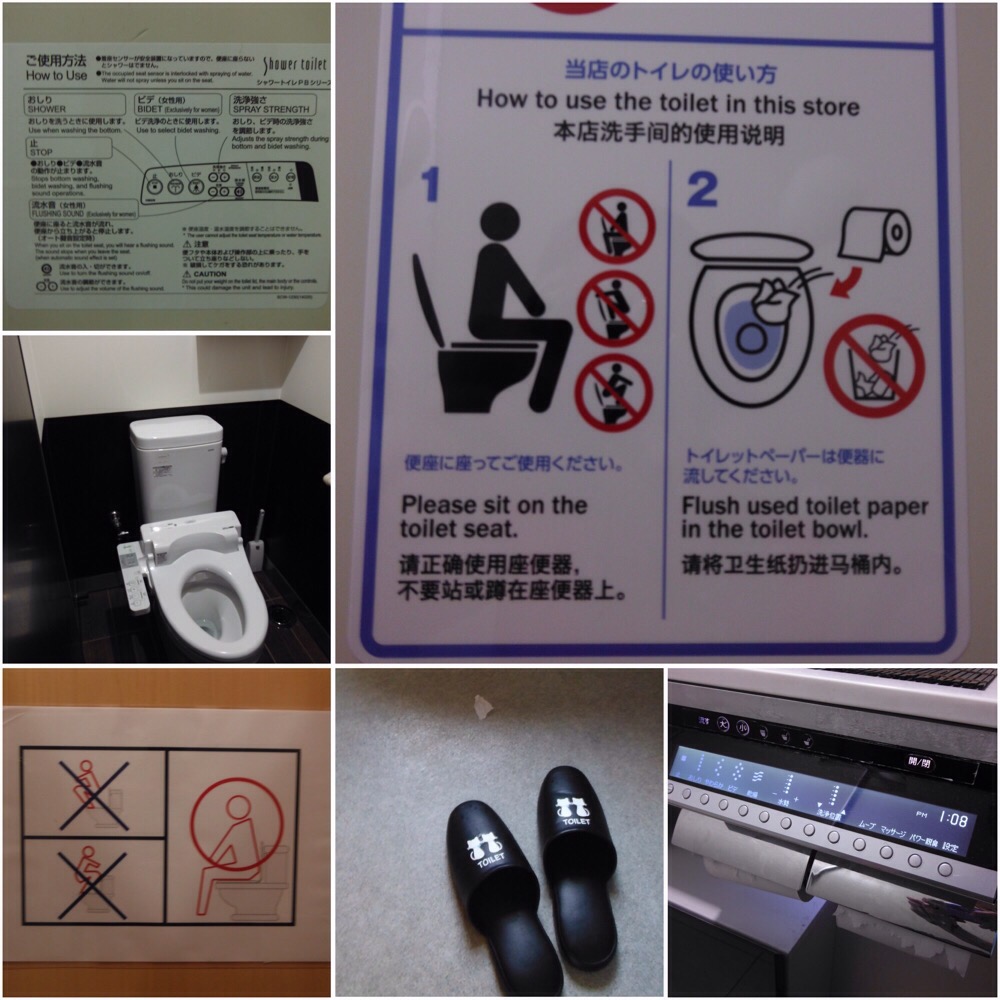
Another great feature of Japan for cyclists is that there are public toilets everywhere, and they are the cleanest toilets I have ever seen. But they are more than just toilets. They are shower toilets, with full washing facilities. Also you can use the music button to play a flushing sound, covering any embarrassing noises (sometimes this noise is automatic). Even better, toilets in hostels/hotels have toilet slippers, so you change your regular slippers at the door for plastic toilet slippers. Brilliant. The toilet instructions also never failed to make us smile.

Toilets here in New Zealand are so dull in comparison.

Sushi on a Shinkansen

On our last night in Japan our sushi arrived on a Shinkansen (bullet train). Smiles all round.


Thanks to Japan for making us smile.

Did the earth move for you? Kyoto and Kurama
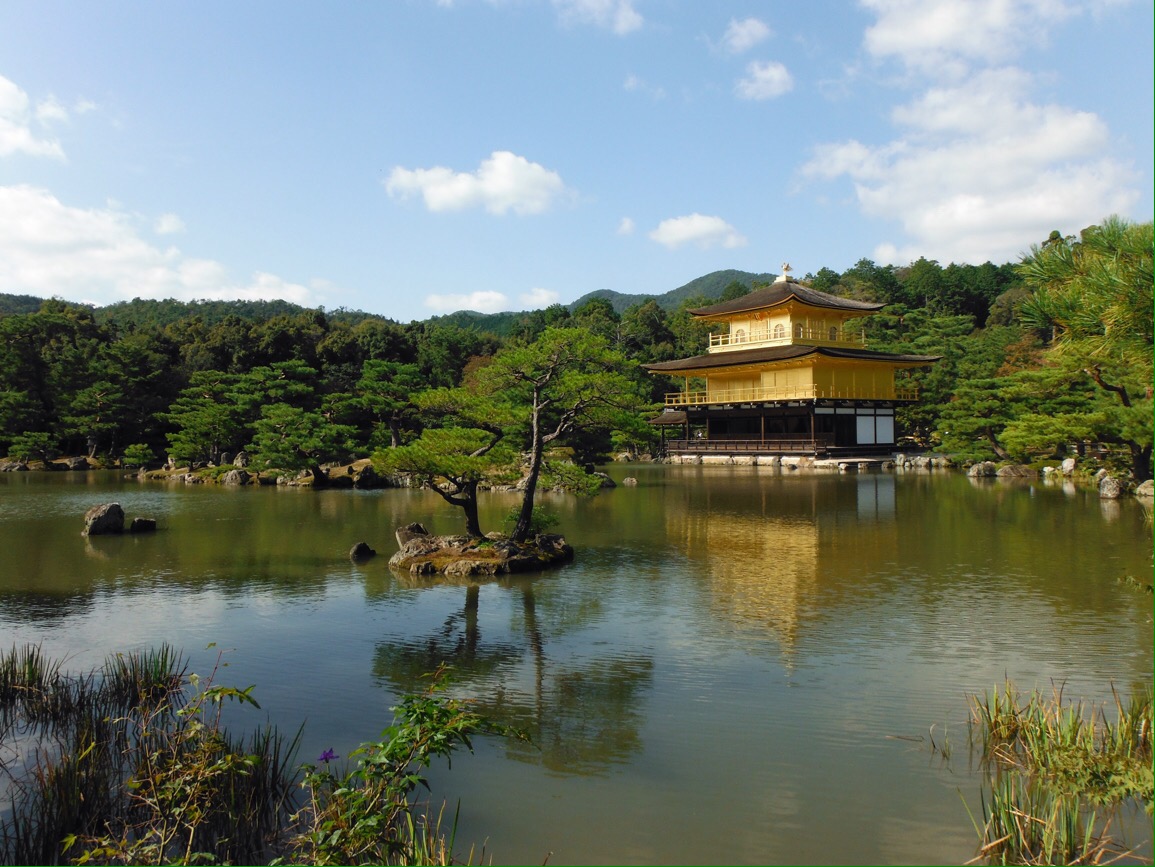
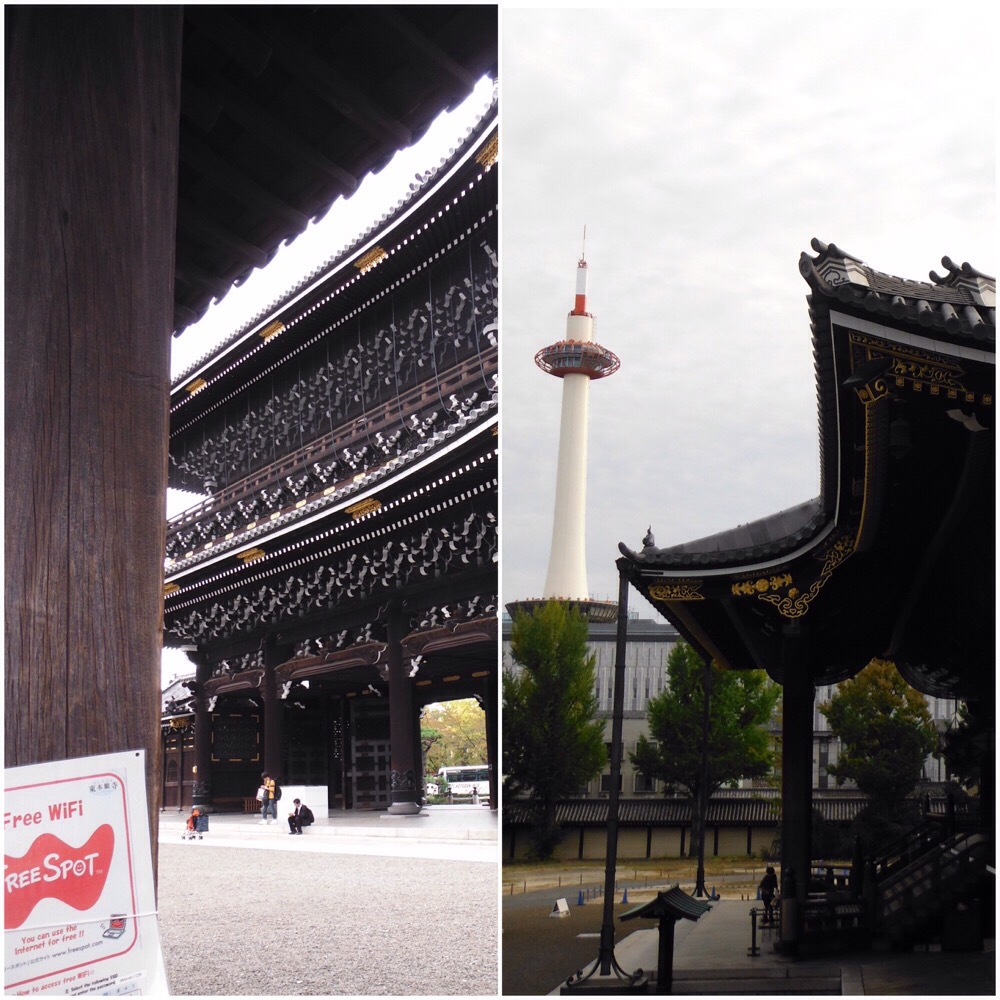
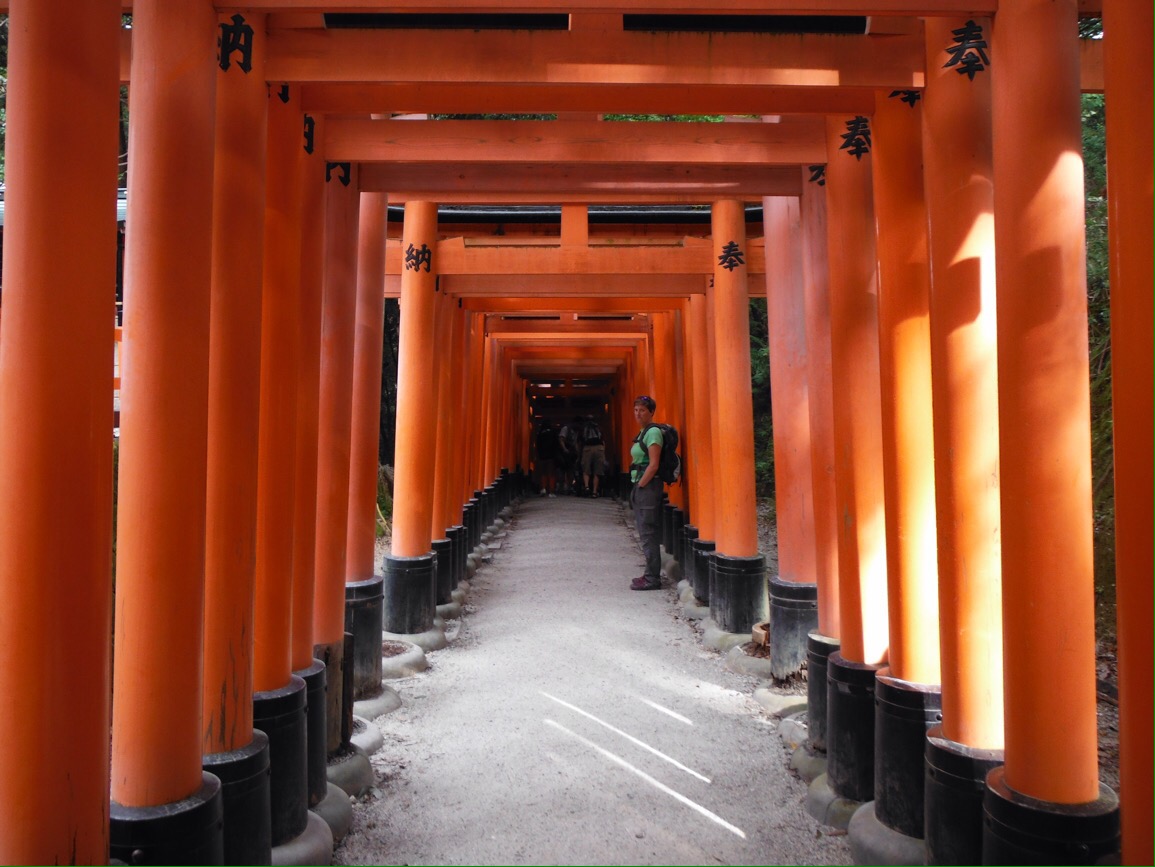
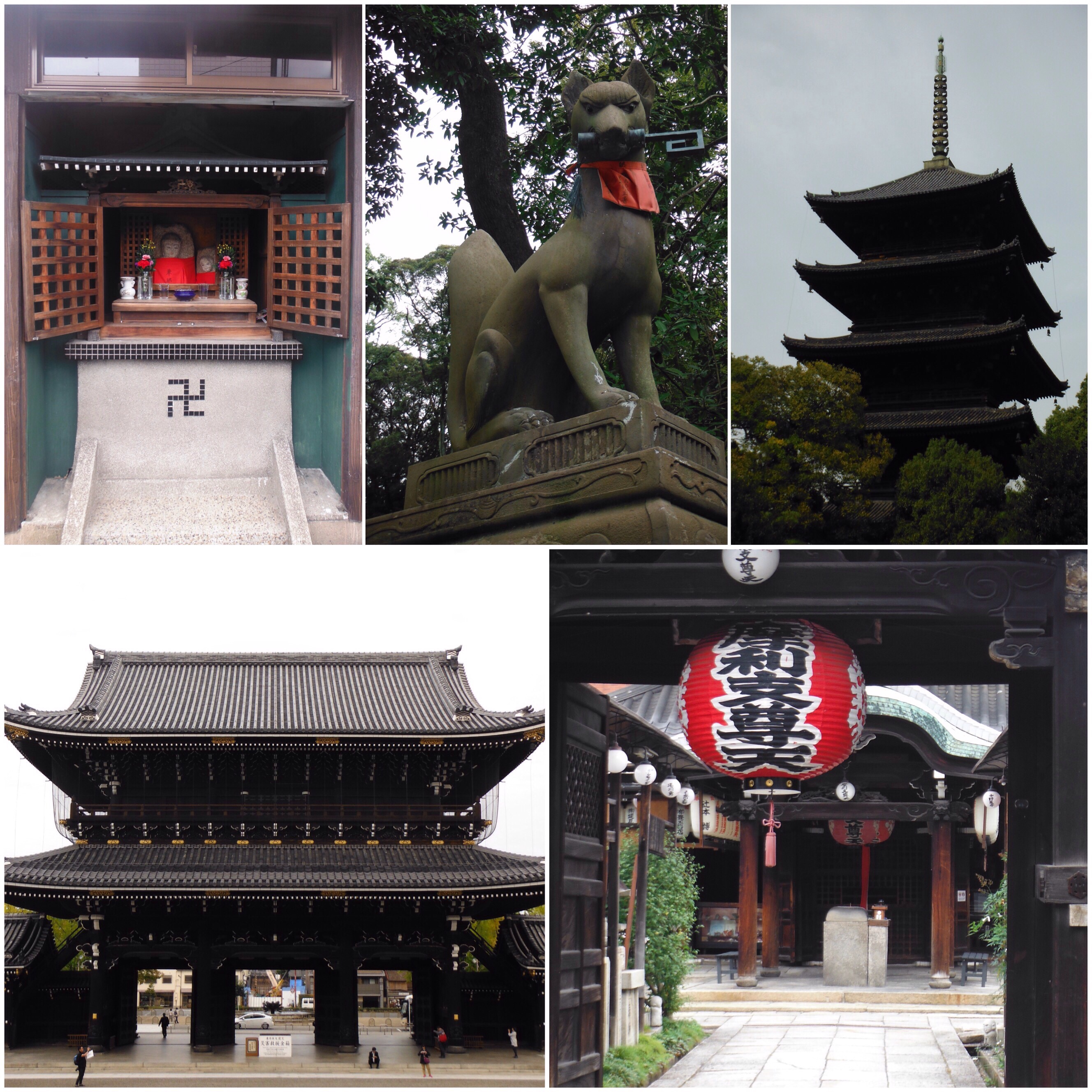
Kyoto is the former capital of Japan and is famous for an abundance of intact original shrines and temples (many elsewhere were bombed in WWII/destroyed in fires/earthquakes and so are modern reconstructions). We visited a few of the more popular ones, but they are always so busy, and there is really no need to do any special detours to see shrines and temples in Japan. We would ride past so many out on the road, often small ones tucked away up hills or between houses, and these were more enjoyable to visit as they were actually quite peaceful. But when in Rome and all that…. we walked around Higashi-ji (biggest), Kinkaku-ji (gold-est) and To-ji (tall-est) temples, Fushimi shrine (most orange gates) and a few others that we happened to pass by. I think we also went to a red one, it’s hard to keep track. Amongst all of this history, the station building shows the other side of the city – a modern glass structure that entertained us with a huge staircase that lit up with animated pictures.

Kinkaju-ji temple
Old and new Kyoto

Another reason for visiting Kyoto was to do a talk to a group of Japanese university students. We spoke to a class studying basic level English and had plenty of questions fired at us about cost, best places, food etc. Our two favourite questions were probably “how close have you come to death?” and for the first time on this trip “where are your husbands?” Quite different to the primary school kids.

The orange gates of Fushimi shrine

One afternoon in Kyoto I was in the Starbucks queue (getting water, we are still not going to big chain places) and suddenly everyone’s phone had a message alert at the same time. It was like something from a film, they all made the same sound, and everyone took their phone out and looked at it simultaneously. It was one of the most surreal things I havhe ever experienced. About 2 seconds later the ground started moving. It was an earthquake text alert. Probably the second most surreal thing I have ever experienced. For over ten seconds the ground shook – I had a mild panic for a millisecond then realised nobody seemed to care, they all put their phones away and carried on staring at their coffee, and my water bottle was filled during the shaking with the skill of an air hostess during turbulence. This is life in Japan. It was a 6.6 magnitude earthquake in the west of the country, which felt like 3.0 to us in Kyoto over 300kms away. The locals might have taken it in their stride but it was a scary reminder to us foreigners that nature is a powerful beast.

Shrines and temples in Kyoto

We had heard that Kurama, a small village about 20km north of Kyoto in the mountains, has an annual fire festival on 22nd October, the day we would happen to be leaving Kyoto. Who doesn’t want to experience a fire festival? That’s also what about 10,000 other people thought. On our way out of the city we were stood outside a supermarket and heard someone shout “Debs and Jo” from a car window. It’s strange that when you first leave home, every time you hear someone shout something that might be your name you turn round only to remind yourself that you are away from home and nobody knows you, of course they are not shouting you. After over a year we are now tuned out to any shouting – who would know us? So it was strange that someone actually did. In the car was a primary school child from the British School in Tokyo who had been in our presentation. We are famous in Japan! Almost.

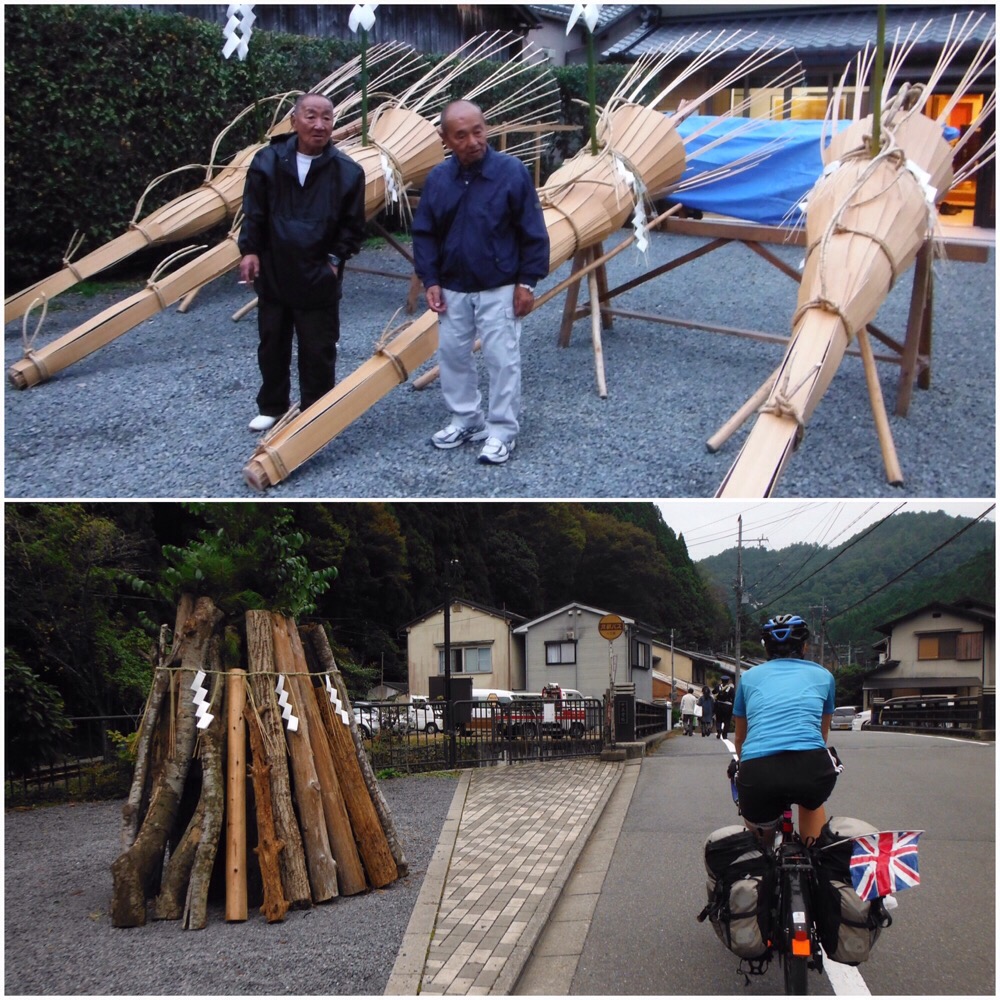
Fire festival preparations

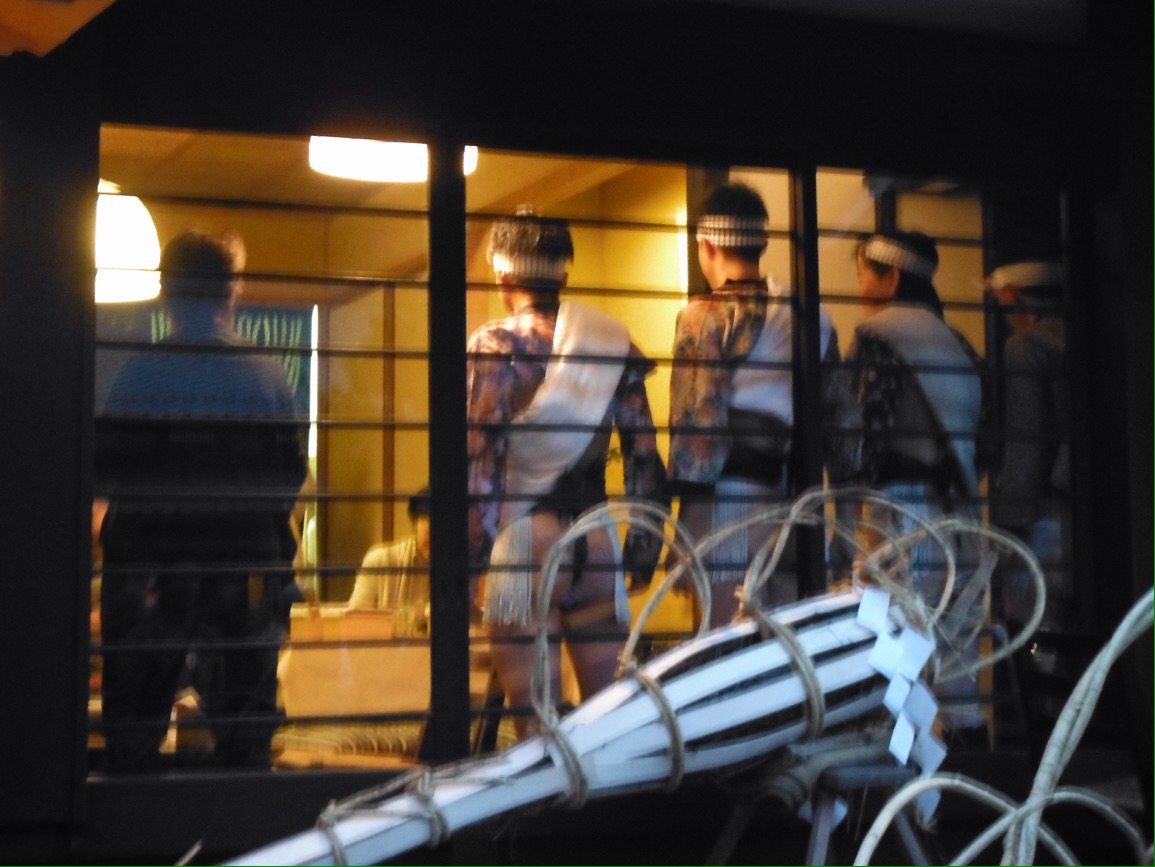
We arrived in Kurama just before 3pm as we wanted to get our loaded bikes in before the roads around the village closed. All of the houses had piles of wood or large torches ready to be set on fire later, and there were young men wandering round in traditional outfits (read: practically nothing). As it got dark the crowd grew and by 6pm things were starting to be set on fire and the place was packed. In a country where health and safety rules are rarely bent – for example, Tokyo has an Eiffel Tower replica which has to be painted orange and white, like all the masts in Japan, to meet health and safety requirements – it seemed a little risky to have so much fire on a narrow street of old wooden houses surrounded by forest, but maybe that’s just me being picky. Every policeman in the Kyoto region was on hand to control the crowds, and so you couldn’t actually stand and watch what was going on but had to walk (very slowly, 10,000 people remember) around a cordoned off loop. About 30% of this was in front of the interesting stuff, the rest was around the back of the village where you couldn’t see anything. It was all quite odd and very busy, and we didn’t see much until about 9pm when most people got back on the train to Kyoto. Then it got interesting as we could see the chanting, the marching, the carrying of fire torches and other crazy things. It was quite an incredible thing to witness.

Huge fires close to wooden buildings – no worries

About 10.30pm we managed to get back to our bikes and started to think about where we would camp. First choice was north of the village in the forest, but we had seen bear signs and the odd English-speaking local said “bear!” as soon as we mentioned we were sleeping in a tent. Not being a fan of camping with bears we were just wondering what to do when a traditionally-dressed local saw our bikes and shouted “beer” (much better than bear) so we spent the next hour sitting drinking beer and having a strange conversation with two guys in strange outfits in mime and bits of English. As soon as a young person passed by they would be grabbed, shoved in front of us and instructed to translate for a while, and only released from their embarrassment when the next potential translator arrived. When we said we were from Leicester we received the reply of “champions!” (while pointing at his foot) and “Shinji Okazaki” – it’s not just in Italy where our city can now be identified by football fans. Another guy, who turned out to be a chef, brought out a plate of sushi which was amazing as we had mistakenly assumed that there would be food available at the festival (maybe that would be a health and safety problem) and had only eaten a jam sandwich since lunch. There was just about time to witness some more chanting and fire carrying and then at 1am we finally escaped and found a patch of grass under the train line for our tent (hopefully away from the bears, but we hung our food anyway) wondering why we were bothering for four hours sleep. But the evening as a whole was well worth the lack of sleep that followed.

Just a snippet of the flesh on show in Kurama

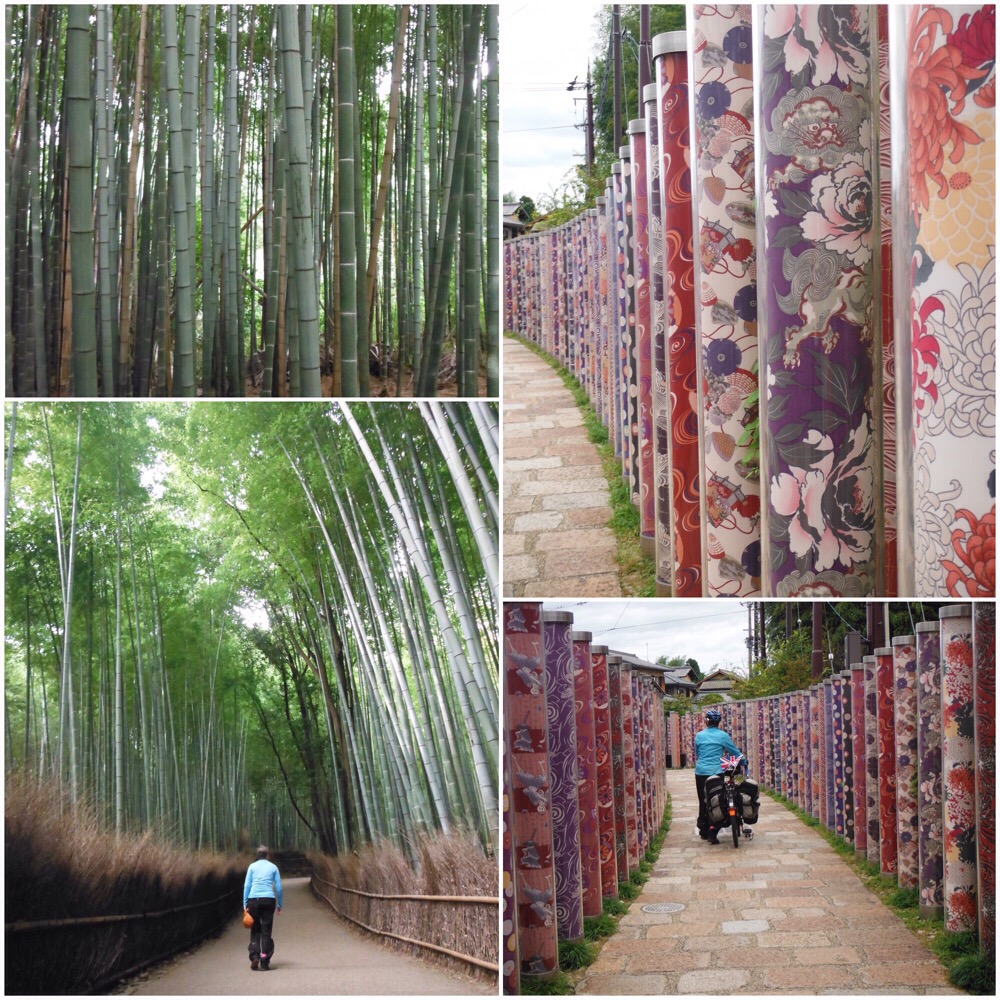
After a 5am start we rode with our eyes barely open back through Kyoto via the famous bamboo forest and the less famous kimono forest. Being up early we beat the crowds for once and enjoyed some peace and quiet. An uneventful 50km ride through busy suburbia (there is no separation between towns at all in this part of the country – one just blends into the other in an endless stream of supermarkets, car garages, convenience stores etc) took us to Mike and Tomoko’s house. Mike had cycle toured lots himself and as soon as we arrived said the magic words – “you probably want some snacks” – and that’s it, we were settled in for a few days.

Bamboo/kimono forests in Kyoto

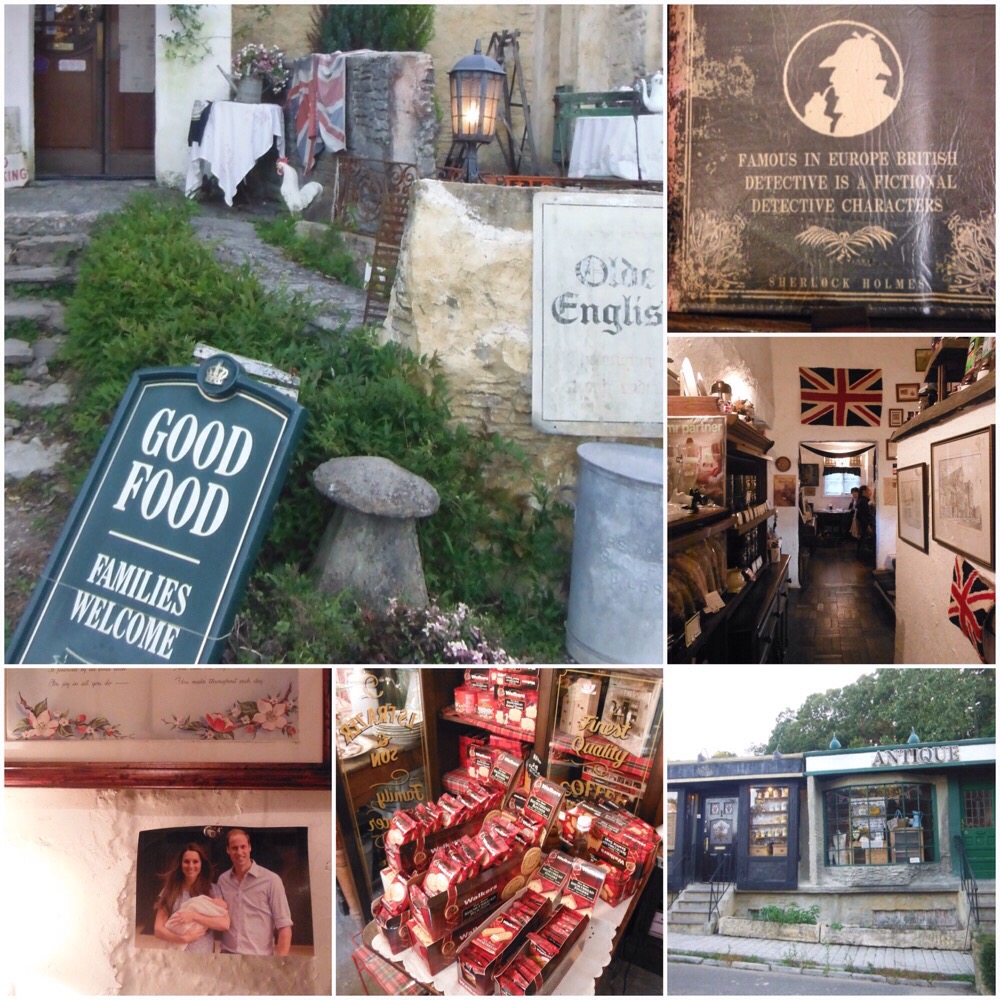
Mike and Tomoko drove us out to Dreamton, an English style theme village where the eccentric owner has built English-looking buildings and covered the place with English trinkets, including pub signs, other antiques, and a wedding dress shop. Naturally. It was all very bemusing and a lot of fun. We had afternoon tea in the Pont Oak cafe where the toilet has a picture of Wills and Kate on the wall, cut out to look like it is a photo that was maybe taken of them while they were visiting. It was fun to eat scones and lemon cake and drink Earl Grey, although Bezza would be disappointed that it wasn’t a lemon drizzle. That evening we had our first conveyor-belt sushi experience, which was all the better for being with people who could explain what is was that we were eating.

A slice of England in Japan (kind of)

Chatting to Mike and Tomoko helped us finalise plans for our last week or so in Japan. We were tired of busy, heavily trafficked roads surrounded by buildings, and set out to find some quiet scenic roads on the island of Shikoku.

Thanks to Kevin, Rob, Kurama’s Shinji Okazaki fans, and Mike and Tomoko.